

“Bad for the world – good for Venezuela”
Two months after Nicolás Maduro’s kidnapping, the people of Venezuela are hoping that Donald Trump’s US administration will lead the country out of its economic and political isolation. This presents great opportunities for German industry.
by Alexander Busch, Latin America correspondent for Handelsblatt and Neue Zürcher Zeitung
Two months ago, US military personnel kidnapped Venezuelan President Nicolás Maduro and his wife from Caracas. Since then, nothing in Venezuela has been the same.
Most people seem relieved. It is as if a nightmare has ended. Almost everyone assures you: “Trump’s violent action was right,” without any ifs or buts. There is no sign of the anti-Americanism that is otherwise so widespread in Latin America. “Trump’s action was bad for the world, but good for Venezuela,” says a European diplomat.
Support for the US action in Venezuela cuts across all social classes: student leaders, members of parliament, trade unionists, and entrepreneurs. But even the residents of the barrios, the slums, are glad that Maduro has been arrested and that the repression and paternalism have come to an end.
Today, the colectivos, the regime’s armed motorcycle militias, have disappeared. In the days after Maduro’s abduction, they still dominated the streets in a threatening manner. In other respects, too, the capital is safer than it has been for many years – safer than most other cities in South America. A few years ago, Caracas was still the city with the highest rate of violence in South America.
The US is making it clear that it has come to stay. High-ranking US representatives travel to the country on a weekly basis – but not as visitors or state guests. “They act like governors visiting a province,” says the diplomat.
Almost everyone in Venezuela says the country is under US tutelage, but that doesn’t seem to bother anyone. On the contrary. It is associated with the hope that the regime will no longer harass the people as it has done in the past and that the country will finally find its way out of the economic and political isolation in which it has been for over a decade.
But even if the US leads the opening process and gives priority to US corporations, there are also extraordinary opportunities for German industry.
There are several reasons for this:
Firstly, German companies have traditionally had a strong presence in the country’s infrastructure. This is particularly true in the areas of electricity, chemicals, and water supply. There has been little investment in these areas for years. However, much of the original hardware in power plants, refineries, and pumping stations still comes from German corporations.
Secondly, before the left-wing president took office 26 years ago, Venezuela was one of the most important locations for German industry in South America. From there, companies also covered difficult neighboring countries such as Colombia and countries in Central America and the Caribbean. Many of these companies still have small representative offices there today. However, these could quickly be expanded again.
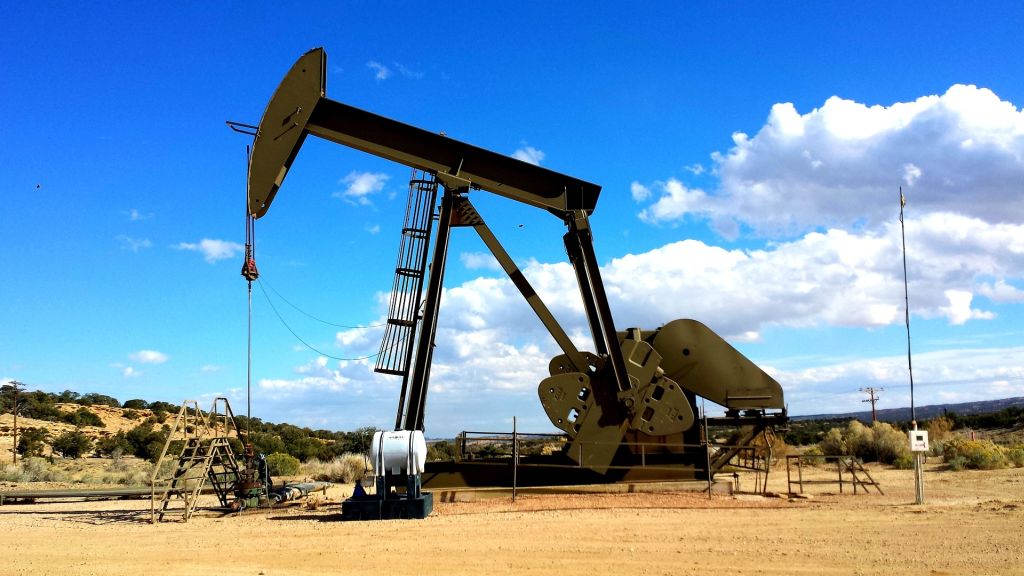
Thirdly, the oil sector is currently the focus of investor interest. Venezuela has considerable reserves in this area. The government has prepared comprehensive privatization legislation. In the future, companies will be able to produce and export oil without the state having to be involved.
German companies are not present as oil multinationals. As suppliers to the oil industry, however, there are considerable market opportunities for them, as Venezuela’s electricity sector now needs to be modernized rapidly. Only then can oil be extracted or the country’s other resources (ores) be exploited. Electricity is urgently needed to get the manufacturing industry – such as food processing, agrochemicals, and pharmaceuticals – up and running again.
A comparison shows how enormous the difference between supply and demand is in the electricity sector: Venezuela currently produces around 80 terawatt hours per year. That is about as much as Lower Saxony. However, Venezuela has around 30 million inhabitants instead of eight million and is almost as large as France and Germany combined.
Major blackouts are only avoided because the country’s industry is completely devastated. If electricity consumption rises rapidly, the energy system would collapse.
Fourthly, German companies also have privileged access to Venezuela for other reasons: in some areas, it is the US subsidiaries of German companies that would supply the equipment and machinery to Venezuela. This would be advantageous given US control over the economic and political opening process.
Fifthly, German brands and expertise enjoy a good reputation in Venezuela. Skilled workers and experts are also urgently needed for the Venezuelan economy to recover. Many engineers and technocrats in the state apparatus studied in Germany or attended the German school in Caracas. That could open doors. In Venezuela, there is renewed talk that the dual system offers the opportunity to train the necessary skilled workers within the existing higher education system. The country’s universities have suffered from a lack of support from the regime. Nevertheless, they still have a solid academic foundation.
What are the risks?
Venezuela’s opening process under US control is not yet guaranteed. No one knows when elections will take place or whether there will be authoritarian setbacks. The regime is still in power, even if the US government is currently calling the shots.
So far, local representatives have observed a specific problem for German companies in Venezuela. There is over-compliance. Companies fear that possible economic ties with Venezuela could cause them problems with US sanctions. The sanctions remain in place. However, in order to avoid any risk, companies are completely ignoring the market opportunities in Venezuela instead of even considering them, local representatives criticize the behavior of the parent companies.
Nevertheless, Venezuela remains a corrupt country. Transparency International has just ranked Venezuela as the third most corrupt country in the world.
In short, German industry finds good starting conditions in Venezuela in what remains a complicated environment. However, it will be crucial who will meet the pent-up demand in the coming months. Those who are too late could miss out.