


Europe’s industry urgently needs a strategy for Latin America

The region is increasingly orienting itself towards the Far East – not only China is becoming more and more important, but the other Asian growth countries are also rapidly gaining weight in trade and investment. Europe is losing importance.

by Alexander Busch, Latin America correspondent for Handelsblatt and Neue Zürcher Zeitung


70 kilometers north of Lima, the Chinese port operator Cosco Shipping Ports is just starting to build a new port. Investment volume: 3 billion dollars. Operations are scheduled to start in Chancay in 2023. With its capacity, it should then catch up in the future with the port of San Antonio in Chile, currently the most important Pacific port in South America.

Chancay is expected to play a key role in South America’s “natural extension” of China’s Belt and Road Initiative. It was only in 2017 that China designated Latin America as a strategic partner of the initiative. Meanwhile, 19 countries have signed an agreement with Beijing.

In Europe, it is easy to overlook the fact that it is not only trade between China and South America that will grow. The infrastructure of the new Silk Road will also accelerate South America’s exchange with the whole of Asia.

Marcos Troyjo, the Brazilian president of the New Development Bank (NDB), founded in 2015 by the BRICS countries (Brazil, Russia, India, China and South Africa) and based in Shanghai, has just pointed out in the Brazilian newspaper Estado de São Paulo that Asia is currently outstripping Europe in foreign trade with South America. According to Troyjo, Brazil alone has exported more to Asia in the last 12 months (even if China and Japan are not taken into account) than to the European Union. Troyjo compares the volumes impressively: Brazil now exports more to Singapore than to Germany. More to South Korea than to Spain. More to Malaysia than to Italy, more to India than to Great Britain. More to Thailand than to France. More to Bangladesh than to Australia, Denmark, Finland, Austria and Israel combined.

In 2001, Brazil and China exchanged a billion dollars worth of goods a year. Today, it’s a billion dollars every 60 hours, Troyjo says. It is foreseeable that the fast-growing Asian emerging markets will trigger an export boom in South America similar to what China did 20 years ago. That’s because South America’s mining and agribusiness companies provide the industrial commodities for infrastructure, metropolitan and industrial expansion in the Far East. But they also provide the commodities to feed the rising middle classes in these countries.

With exports, Asian investment in South America’s infrastructure will also increase massively. Raw materials only have value if they can be transported. The Chancay port in Peru is the latest example of this.

The loans and financing for the investments will also increasingly come from the Far East. The New Development Bank, for example, has just begun expanding its membership. As of this week, the United Arab Emirates, Uruguay and Bangladesh are new member countries in the NDB.

Europe’s industry urgently needs to develop a strategy for responding to the huge shift in global economic axes in South America.

COVID-19 in Latin America

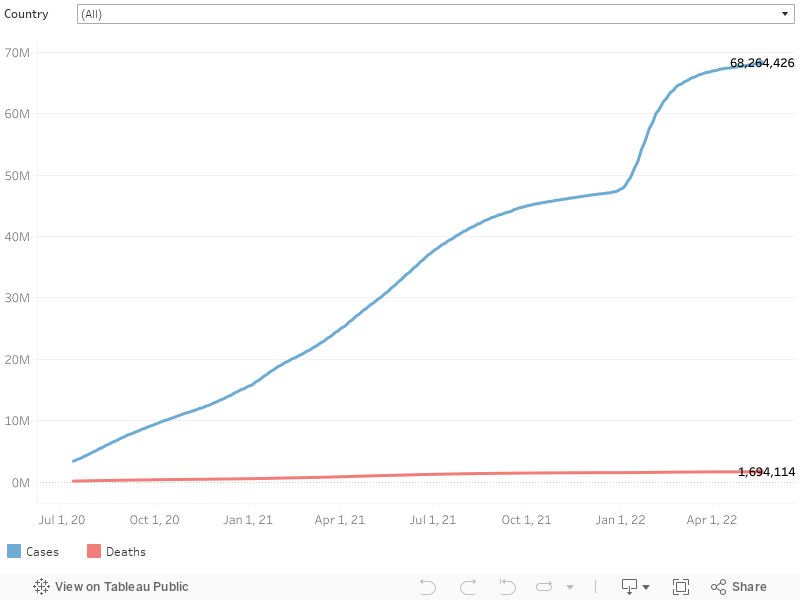
Development of case numbers in the region

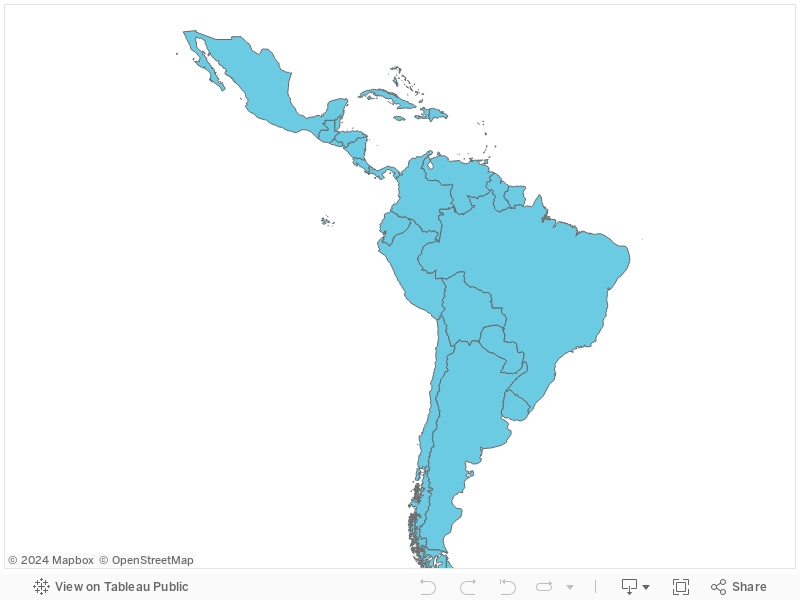
Currently reported cases in the countries

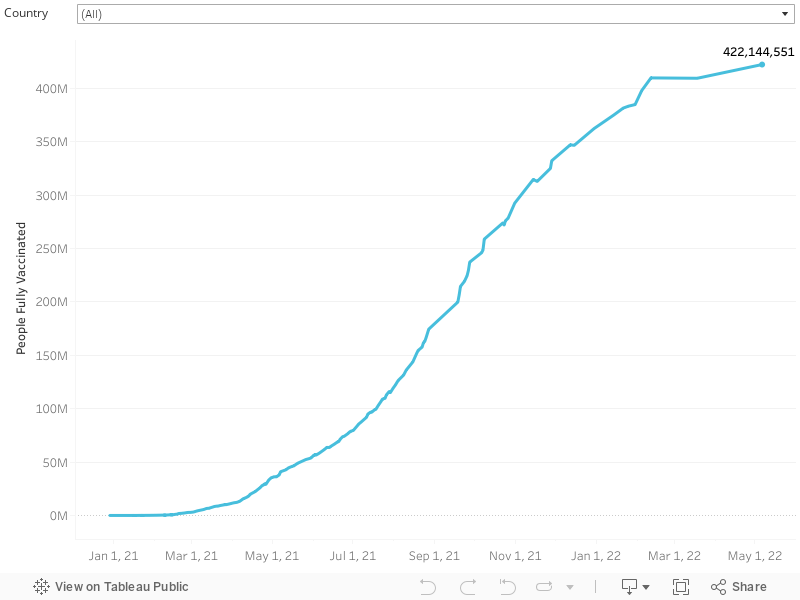
COVID-19 vaccine doses administered

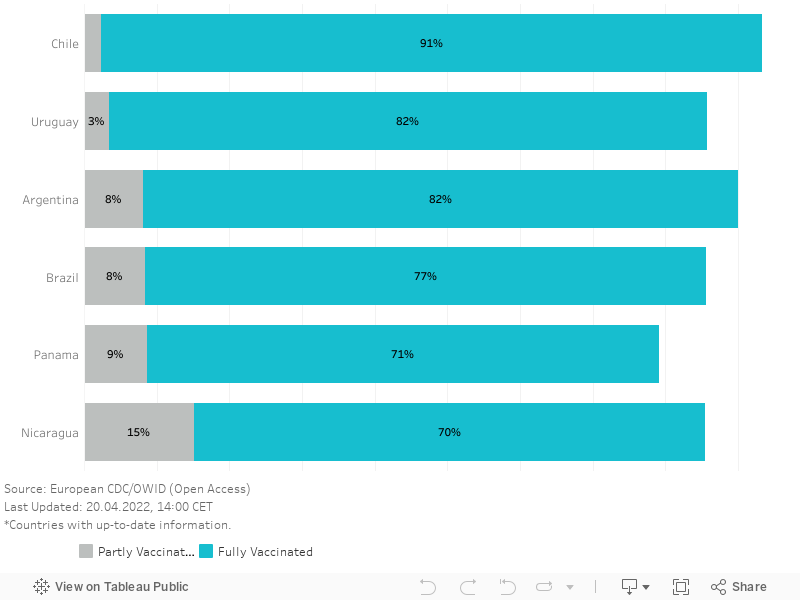
Share of people vaccinated by country
Why climate change could trigger a surge in industrialization

With the clean energy matrix and its raw materials, Latin American economies will particularly benefit from the green turn in the global economy. But for this to happen, governments would have to follow suit. This is especially true for Mexico and Brazil.

by Alexander Busch, Latin America correspondent for Handelsblatt and Neue Zürcher Zeitung


Countries and companies around the world are increasingly responding to climate change. Emission-neutral economies are the goal. Action on climate change is becoming a central issue in global competition. For Latin America, this offers a unique opportunity.

This is because the region has more sustainable energy production in many countries than the average of the industrialized nations. On the one hand, this is due to the traditionally dominant hydropower for electricity generation in the center of South America. Biofuels have also been produced and used for many years, especially in Brazil. Their importance will increase in the coming years in all agricultural regions of Latin America. This is due to new technologies that are increasingly being used to convert biomass, as well as urban waste, into fuels and electricity.

In addition, fast-growing investments in wind and solar farms are making energy production in Latin America more sustainable. In addition to high solar radiation, the region has the windiest areas in the world – and the potential of off-shore wind farms has not even been tapped yet. Industrial use of the abundant geothermal energy is also only just beginning.

Chile is currently demonstrating how solar energy can be converted into “green” hydrogen, which is not produced from conventional energy sources but from solar and wind energy. The other countries will follow. Because with the falling prices for the sustainable energy infrastructure to produce hydrogen, Latin America is likely to become a major producer in the next decade.

For Latin America, the green transition will bring high investment and create jobs. Even the much-needed productivity and industrialization boost could trigger the changes in the global economy.

This is because green hydrogen can be incorporated into the value chains of local industries and not just exported as a fuel or energy carrier. Already, companies in Europe, the U.S. and China are demanding “green” steel and copper. In addition, companies could sustainably build the entire value chain and logistics from the ore mine in the Amazon or the Andes to the ports in Europe or China with biofuels or hydrogen, i.e. CO2-neutral.

But there is a problem. While ecological change is accelerating around the world, the governments of Latin America’s two largest economies have just taken the opposite approach. In Brazil and Mexico, the presidents are not taking the issue seriously: Mexico’s government has banned sustainable energy from its list of priorities. It is relying on the traditional oil industry and refineries. In Brazil, too, the government is ignoring the opportunities presented by the shift in the global economy.

But governments are changing. In the case of solar and wind energy, too, many Latin American countries were late to jump on the bandwagon. Today, they are among the most important investment locations for the industries worldwide.

COVID-19 in Latin America

Development of case numbers in the region


Currently reported cases in the countries


COVID-19 vaccine doses administered


Share of people vaccinated by country
Despite the rapid recovery, investors remain nervous in South America

Why are the peso, real and sol so weak, although at the same time many South American countries are emerging from the pandemic recession faster than recently expected? Investors fear that rising U.S. interest rates could stop the recovery.

by Alexander Busch, Latin America correspondent for Handelsblatt and Neue Zürcher Zeitung


Almost all economies in South America are recovering faster than expected from the pandemic recession. Following Brazil and Mexico, investment banks have just raised growth forecasts for Chile this year to a surprisingly high 9.5%. The Chilean economy already reached pre-pandemic levels in June.

Like Chile, almost all South American countries are benefiting from the commodity boom. Imports are also increasing significantly – which is an indication that companies are investing again. Indeed, imports of machinery and equipment have also grown strongly, as in Brazil. Current account deficits in the region have shrunk after the pandemic year and a half. This reduces the risk of payment defaults.

Nevertheless, the Chilean peso, the Peruvian sol and the Colombian peso are among the currencies that have depreciated sharply in recent months. The real has also declined about 20% against the dollar since the beginning of the pandemic. Daily fluctuations in exchange rates have increased enormously.

This does not add up: The recovery on the one hand, and the high volatility of exchange rates and the persistent weakness of currencies on the other.

They are a clear indication that investors do not trust the recovery. The reason is the weak public finances in the region on the one hand, and the tense political scenario on the other. The prospects of a possible interest rate hike in the U.S. are also increasing nervousness in South America.

If there is an increase in global interest rates – experts at the Institute of International Finance (IIF) in Washington fear – investor confidence could quickly fade, making it difficult to avoid a scenario of continued weak growth in Latin America.

After all, the increased budget deficits need to be financed. These have grown in the pandemic as governments made social compensation payments to support the poorest in their countries. But political unrest and social tensions in Colombia, Chile, Brazil and Peru are causing governments to exceed budget targets again this year. If an interest rate hike then occurs in the U.S., central banks in South America will also have to raise key rates, and at the same time the cost of credit will become more expensive for companies and countries in the region.

This in turn would put the brakes on growth. Already, pressure is mounting on monetary authorities for a tighter monetary stance: inflation rates are rising more strongly than expected.

COVID-19 in Latin America

Development of case numbers in the region


Currently reported cases in the countries


COVID-19 vaccine doses administered


Share of people vaccinated by country
Is the rapid recovery of Latin America’s economy sustainable?

Economic activity in some key Latin American markets is picking up at a pace that did not seem possible recently. But forecasts remain difficult: With two exceptions, the population is still poorly vaccinated, and new virus variants can spread quickly. Political tensions also persist.

by Alexander Busch, Latin America correspondent for Handelsblatt and Neue Zürcher Zeitung


Investment bank JP Morgan expects “not a swoosh, but a V” for Latin America’s recovery this year: After -6.6% (2020), its economists now expect +6.4% (2021) growth. This is surprising, because Latin America is still the region worldwide that is most affected by the pandemic. Although infections and deaths are falling in all countries, the level remains high by global standards.

In terms of vaccinations, the countries have recently made good progress. However, they lag well behind in an international comparison. No country has vaccinated more than one-fifth of its population twice – with the exception of Uruguay and Chile. There, around 60% of people are fully immunized. The delta virus variant is only now beginning to spread in Latin America.

Overall, the growth forecasts are positive but varied. The most positive surprises come from the renewed improvement in forecasts for the region’s two largest economies: Mexico (+6.8%) and Brazil (+5.5%) are likely to see such a strong upturn that economic strength could reach pre-pandemic levels in the coming months.

The recovery is also underway in the Andean countries, but the further course is uncertain: Above all, the political unrest in Colombia (expected growth for this year: +7.5%) caused a break in the processing chains there in May. In Peru, the election of left-wing president Pedro Castillo is unsettling companies. There, despite the high forecast of +10.8% this year, activity is not expected to recover to pre-pandemic levels until early next year.

In Chile, too, the unclear prospects in politics (elections in November and Constituent Assembly) are causing expected growth of only +8%. Argentina, even with a forecast recovery of +6.3%, will not recover in the foreseeable future from its economic crisis, which the pandemic has exacerbated. Argentina’s GDP shrank by almost -10% last year, after several years of recession already.

An additional factor of uncertainty is the increasing inflation in most economies. Will it weaken again toward the end of the year – as some economists expect – and thus remain temporary? Or will the high energy, raw material and food prices continue, the price-increasing effects of which will be exacerbated by the weak exchange rates in Latin America?

COVID-19 in Latin America

Development of case numbers in the region


Currently reported cases in the countries


COVID-19 vaccine doses administered


Share of people vaccinated by country
Is the credit window closing for Latin America?

There continue to be successful IPOs in Latin America. Corporations from the region usually get credit abroad without any problems. This is also true for most countries. Nevertheless, it looks as if financing will become more difficult for Latin America.

by Alexander Busch, Latin America correspondent for Handelsblatt and Neue Zürcher Zeitung


The good news first: 20 companies have already successfully launched their shares on the São Paulo stock exchange this year. This is more than at the same time last year. In 2020, a record 27 companies opened their capital as shares in initial public offerings (IPO) at B3. Until recently, everything looked like there would be a new issuance record this year. After all, around 40 more companies have now registered to raise capital on the stock exchange.

But, and this is the bad news: This seems increasingly unlikely. Around 30 IPOs or secondary issues have already been canceled this year. Only one in five IPOs has generated profits for investors so far.

In other respects, too, it currently looks as if the credit window in Latin America may be narrowing. Professional investors are becoming more reluctant to invest their capital in Latin America. This is a trend that already started last year, as the Bank for International Settlements (BIS) just noted: According to the report, Latin America was already the only emerging market region where banks reduced bond volumes last year. The region lost $39 billion last year, with Brazil alone recording a $22 billion drop.

Investment bank JP Morgan expects financing for Latin America to be tighter this year. Latin American bonds have seen the sharpest losses in yields worldwide. In Brazil, Colombia and Peru, losses have even reached double digits since the beginning of the year.

This will not change anytime soon, according to JP Morgan. Continued high COVID infections and slow vaccination campaigns will continue to delay growth in Latin America. It remains possible that a third wave of Corona mutants will cause new setbacks in the region. In addition, inflation is rising, due to high food and energy prices. Central banks are raising interest rates, slowing the economy. Few governments still have financial leeway in their budgets to mitigate the social consequences of the pandemic – and if they do, it will only be at the cost of further interest rate hikes or rising debt.

Rising political tensions in almost all countries are also making Latin American bonds unattractive to institutional investors, JP Morgan said.

The good news for the region came from Washington yesterday: The U.S. Federal Reserve will not be raising interest rates anytime soon. For Latin America, that means a reprieve.

COVID-19 in Latin America

Development of case numbers in the region


Currently reported cases in the countries


COVID-19 vaccine doses administered


Vaccine doses administered by country

In South America’s politics and economy, everyday life goes on despite Corona

Many states in the region have tightened the lockdown measures again. Nevertheless, elections have now been held in Ecuador and Peru. In Brazil, the government successfully auctioned off licenses for airports, rail lines and ports.

by Alexander Busch, Latin America correspondent for Handelsblatt and Neue Zürcher Zeitung


Peru and Ecuador are the countries in South America that are suffering some of the worst consequences of the pandemic. Nevertheless, the states held presidential elections last Sunday. The completely different results do not allow us to draw any conclusions about the extent to which the Corona virus will change the political landscape in Latin America.

In Ecuador, the conservative banker Guillermo Lasso won surprisingly well ahead of the left-wing candidate Andrés Arauz. That pleases the business community. It hopes that Lasso could benefit from an upturn in oil and commodity prices, with which Ecuador generates its export revenues. In addition, the country recently reached an agreement with the IMF. To do so, Lasso will have to increase revenues for the state budget, but the heavily indebted country will hardly pay back loans for the next few years. Lasso is hoping for the goodwill of foreign investors toward a liberal, free-market government. He has only a small minority of seats in Congress.

In Peru, on the other hand, it remains open who will govern the country. The left-wing trade unionist Pedro Castillo, who was considered to have no chance in the polls, won in the first round of voting. Keiko Fujimori, already a two-time narrow failure as a presidential candidate and embroiled in corruption allegations, will run against him in runoff elections on June 6. Both candidates together won only a third of the votes cast. It is completely open what will happen to the Andean country, which has grown the most in South America in the last 20 years.

In Brazil, the government successfully auctioned off an entire package of concessions in what is known as “InfraWeek.” Corporations paid around $600 million for the licenses and have pledged investments of $1.8 billion.

Thus, companies bid for the licenses to operate 22 airports. Two licenses went to the Brazilian operator group CCR and one to the French group Vinci. The companies offered high premiums on the minimum price. With the auction, three-quarters of the nation’s air traffic will be handled in privately operated terminals in the future.

The west-east rail line (Fiol) with connected port for ore export in Bahia went to the Kazakh mining company Eurasian Natural Resources PLC (ENRC PLC). Five port terminals in Maranhão and Rio Grande do Sul, in turn, were bought at auction by local groups such as Santos Brasil. It is amazing that Brazil can attract investors for long-term projects amid the government’s unclear economic course and growing political tensions.

Nevertheless, it was accurately recorded that two groups of investors stayed away. China’s corporations, which were still active during the preparations for the tenders, seem to have withdrawn from Brazilian infrastructure projects. Long-term financial investors such as domestic and foreign pension funds were also conspicuous by their absence, despite the lack of long-term investment projects and high liquidity worldwide.

COVID-19 in Latin America

Development of case numbers in the region


Currently reported cases in the countries


COVID-19 vaccine doses administered


Vaccine doses administered by country

Brazilian virus variant spreads rapidly throughout the region

Corona infection figures are rising sharply in Latin America. The virus mutation P.1, which was first detected in Brazil, is being detected more and more frequently. Many countries are closing their borders to Brazil. At the same time, statistics are proving to be less reliable: Mexico is now suddenly the country with the most Corona deaths worldwide after the USA, not Brazil, according to official data.

by Alexander Busch, Latin America correspondent for Handelsblatt and Neue Zürcher Zeitung


“When Brazil sneezes, South America has the flu” – this saying used to apply mainly to the major influence that the Brazilian economy has on the continent: Accordingly, weak growth in Brazil often triggers a recession in neighboring countries.

Now, however, the saying also applies in the narrower sense of the word: the P.1 mutation, which was first detected in the Brazilian Amazon metropolis of Manaus, appears to be increasingly responsible for the sharp rise in the number of infections in South America. In all neighboring countries, P.1 infections are on the rise, especially in metropolitan areas and regions close to the border. In Paraguay and Argentina, health authorities even detected the P. 2 mutant for the first time in Rio de Janeiro.

Argentina, like Peru, has now for a long time blocked all flights from Brazil – as well as from Mexico and Chile. But it seems that the mutations are being introduced by land across the green borders from Brazil to neighboring countries. However, as countries such as Mexico, Colombia, but also Paraguay or Uruguay continue to leave their borders open to travelers from Brazil, the virus is likely to spread rapidly in the coming weeks.

In Chile, it turns out that a successful vaccination program does not help against the new virus either. After Israel and Great Britain, Chile is the country with one of the highest vaccination rates in the world. 36 percent of the population there has already been vaccinated once, according to Oxford-based Our World in Data. Nearly one million people there are vaccinated every day. The government aims to have 80 percent of the population immunized by the end of June.

But in March, infection rates rose sharply again: With a current average of 357 infected people per million inhabitants, infection rates are now again as high as in Brazil, where, however, only 8 percent of the population has been reached by the vaccination campaign so far. The authorities suspect that they relaxed social distancing measures too early and therefore the virus spread more quickly in the summer months.

This also seems to apply to Uruguay. For months, the country was one of the fastest responders to the pandemic in Latin America, keeping the numbers of infected and dead low. But that has changed: Uruguay currently has one of the highest infection rates in the world, with 730 infected people per million inhabitants. This could be due to the fact that Uruguay is a popular summer vacation destination for neighboring countries.

The fact that corona statistics often do not reflect reality is shown by the example of Mexico: on March 29, the Mexican Ministry of Health revised the published data on the pandemic and stated that the number of deaths caused by the corona virus is 60 percent higher than previously reported. More than 321,000 people have already died from Covid-19, it said. This would make Mexico even surpass Brazil in Latin America and number 2 in the world on the list of countries with the most deaths in the pandemic, after the United States.

COVID-19 in Latin America

Development of case numbers in the region


Currently reported cases in the countries


COVID-19 vaccine doses administered


Vaccine doses administered by country

Latin America’s politicians come under increasing pressure over Corona

In several countries in the region, people are starting to become dissatisfied because of the poor crisis management of their governments. In Paraguay, the protests could lead to the first political change of government because of Corona. In many cases, politicians are using the Corona crisis to push through laws that primarily serve their own interests. Both right-wing and left-wing populists are gaining popularity. The political center is losing.

by Alexander Busch, Latin America correspondent for Handelsblatt and Neue Zürcher Zeitung


In neighboring countries, politicians and the government are watching closely what is happening in Paraguay. Impeachment proceedings could soon be initiated against President Mario Abdo Benítez there. People have been protesting for days because of the delayed start of vaccination and corruption in the state health authorities. The situation is unpredictable, the situation unclear.

Tension is also rising in the rest of the continent. Things are still rather quiet, partly because of the lockdowns and social distancing measures that make mass protests difficult. But that could change at any moment. Because the annoyance with the politicians is growing.

Brazil is heading for 3,000 Corona deaths a day. But the government and Congress are primarily concerned with themselves: Politicians are trying to use the distraction of the people to wave through legislative packages in Congress with which they want to secure privileges and protection from the judiciary.

In Argentina, too, Vice President Cristina Fernández de Kirchner is trying to guarantee impunity for herself and her family by interfering with the judiciary. Several corruption proceedings are underway against her. At the same time, the vaccination campaign is faltering. In addition, several dozen leading politicians have been vaccinated.

The same thing has happened in Peru – the country suffering most from the pandemic and its economic consequences in South America. There, government politicians have also been exposed as vaccine pushers. Disillusionment with the political caste in the Andean country could also favor a right-wing populist candidate in the April 11 elections.

In Bolivia, following the municipal and regional elections, the judiciary arrested former interim president Jeanine Áñez and several of her ex-ministers on charges of “terrorism” and “sedition.” President Luis Arce’s party performed weakly in the elections, and apparently the government hopes to still win important electoral districts and municipalities in the runoff elections by taking action against the previous government. The European Union called on Bolivia to respect the separation of powers.

At the beginning of the election cycle in Latin America, it appears that the pandemic, with its severe social consequences as well as the economic crisis, is leading to even greater polarization in politics. At present, it looks as if candidates and politicians from the political center have fewer chances in elections or poor prospects of gathering majorities. Both right-wing and left-wing populists or anti-establishment representatives are leading in voters’ favor.

COVID-19 in Latin America

Development of case numbers in the region


Currently reported cases in the countries


COVID-19 vaccine doses administered


Vaccine doses administered by country

In Brazil, several Corona waves are hitting at once right now

In Brazil, the pandemic is coming to a head: intensive care units are overloaded in most states, and the numbers of new infections and deaths are reaching record levels. There is little prospect of this changing in the coming weeks. Due to the government’s crisis management, the Real is now also coming under massive pressure.

by Alexander Busch, Latin America correspondent for Handelsblatt and Neue Zürcher Zeitung


It is as if the second and third waves of the pandemic are rolling toward Brazil together. The number of infected people will soon reach the eleven million mark, with almost 60,000 new infections per day. This puts Brazil behind some European countries, such as France and Sweden, in terms of infection rates, with 682 new infections per million inhabitants. But in Brazil, the rate of infections is now increasing very rapidly: In two weeks, it has increased by more than 20 percent.

The Brazilian healthcare system is increasingly reaching its limits. Both in private and public hospitals, intensive care units are more than 80 percent occupied in 19 of 27 states. In Brazil, there are just two hospital beds per 1000 inhabitants. In Germany, the figure is four times higher. With the latest figure of 1726 deaths per day, Brazil has even surpassed the USA for the first time and is now still in second place worldwide with 260,000 corona victims.

As the number of daily infections continues to rise, more and more states are imposing lockdowns. Governments do not have much choice. On the one hand, the vaccination campaigns have started successfully. 7 million people have already been vaccinated, or 3.3 percent of the population. But the supply of vaccines is stagnating, and vaccinations continue to be hesitant.

At the same time, the Brazilian government has not yet presented a national strategic plan for combating the pandemic. The purchase of vaccines is proceeding slowly and with little transparency. Experts are skeptical that the vaccine quantities now announced by the health minister for the coming months will actually be available.

Meanwhile, it appears that the Ministry of Health and Amazonas state authorities are partly responsible for the rapid spread of new variants of the Corona virus, such as P1, throughout Brazil. Because of a lack of oxygen in the Amazon capital, some 500 patients were distributed from there to hospitals throughout Brazil in January without tightened isolations. In addition, traffic from the Amazon city is not controlled. Renowned epidemiologists thus explain the rapid spread of the new variants even in far-flung southern Brazil.

According to an assessment by the Bank for International Settlements, investors are now responding directly to chaotic pandemic management like that in Brazil. The Basel-based bank has compared the exchange rate impact of high rates of infection growth in countries such as Brazil, Argentina and Colombia with those in Asian countries that have been more successful in containing the pandemic. In this context, weak currencies correlate with weak crisis management in the pandemic. South American central banks are now facing the difficult situation of having to raise interest rates soon because of the weak currencies and the resulting rise in inflation – before the economies have started to grow again, however.

Brazilians currently have no choice but to hope that the federal government will quickly reach agreement with states, municipalities, and possibly in the future, companies, on a common strategy for immunizing the population.

COVID-19 in Latin America

Development of case numbers in the region


Currently reported cases in the countries


COVID-19 vaccine doses administered


Vaccine doses administered by country

Those who quickly vaccinate many people can rapidly gain popularity

So far, Latin American governments have had little success in the fight against the pandemic. But that is changing: countries like Chile, Brazil and Mexico have already vaccinated more of their total population than most countries worldwide. The only thing that must not stop now is the supply of vaccines.

by Alexander Busch, Latin America correspondent for Handelsblatt and Neue Zürcher Zeitung


For once, there is good news from the COVID front in Latin America: a few weeks after vaccinations began in about a dozen states, some countries are already in the top positions worldwide by number of first vaccinations. That’s true of Chile (5th), Brazil (8th) and Mexico (9th) by number of vaccinations per 100 inhabitants, according to Our World in Data (OWID) from Oxford University. But Brazil also ranks far ahead of Germany, France or Italy in terms of vaccination numbers administered, with nearly six million doses administered.

Chile’s record is the most impressive. With 12.43 vaccinated people per 100 inhabitants, the Andean country ranks first in the world after countries such as Israel, the United Arab Emirates, the United States and the United Kingdom. In the past seven days, only Israel has vaccinated more people than Chile.

The reason for the success is that the Chilean government already ordered vaccine doses from a large number of suppliers in the middle of last year. The government claims to have already secured 35 million doses. By June, 80 percent of Chile’s nearly 19 million people should have been vaccinated at least once.

Whether this will work cannot be estimated at present: The prerequisite is that supplies of vaccines continue.

Just how problematic the supply situation is is currently vividly demonstrated in Brazil. Although President Bolsonaro’s government has repeatedly obstructed and delayed preparations for the vaccination campaign for political reasons, almost six million people, or 2.77 out of every 100 Brazilians, have already been vaccinated in a month. But now the campaign is stalling because the serums are running out. It remains unclear when new doses can be distributed.

However, it seems likely that even vaccination skeptics will soon be in the minority in Latin America’s political arena. For politically, governments can only win with fast and efficient vaccination campaigns. This is shown by the experience in Chile, where President Sebastián Piñera, who was highly unpopular until recently, has gained five percentage points in popularity since the beginning of January, according to the polling institute Cadem. Half of the population considers the government’s work on the pandemic to be positive. Two weeks ago, only one-third of Chileans did.

With mass vaccination, normality can return to everyday life more quickly than expected. This is also shown by the surveys in Chile: Instead of two-thirds of the population, as in mid-January, only slightly more than half of the population is now worried about contracting corona, according to Cadem. That means the sooner the population is immunized, the sooner the economy will grow again. That will also give vaccination skeptics pause for thought.