

Vaccination campaigns in Latin America take off – albeit somewhat slowly

Hopes that many Latin Americans are already immune to the Corona virus have not been confirmed. This is compounded by a slowed, sometimes chaotic start to vaccination. In the best-case scenario, Latin America will be in control of the pandemic by early 2022.

by Alexander Busch, Latin America correspondent for Handelsblatt and Neue Zürcher Zeitung


When the International Monetary Fund (IMF) published its growth forecasts for 2021 a few days ago, Latin America’s economy seemed to be on the mend: the region will grow by 4.1 percent this year, the Fund estimates. That is 0.5 percentage points more than the IMF had expected just three months ago. The reason for the brighter outlook: The start of vaccination campaigns and the hoped-for further government aid programs for the populations will accelerate the return to normality, the economists in Washington predict.

But hopes have been dashed: all states in the region are suffering from a fierce second wave of infections as well as the mutations of the Corona virus. Expectations that a high rate of immunity (“herd immunity”) might already have been achieved in the urban centers of Latin America have not been fulfilled.

At the same time, vaccination campaigns are off to a chaotic start. So far, only six of the region’s largest states are reporting initial measurable vaccination coverage. Vaccines have been approved in 13 states. In principle, Latin America’s pandemic control problems are similar to those of the EU.

Nevertheless, Latin American countries are far less able to exert pressure on manufacturers or to increase the supply of vaccines in the short term with high bids. It is true that the serums from Oxford/AstraZeneca, like Pfizer/Biontech, dominate the registrations of the sanitary authorities. But emergency approvals are of little use if the companies can hardly deliver.

In addition, vaccination is off to a particularly chaotic start in Brazil and Mexico. In Latin America’s two most populous countries, governments remain reluctant to recognize the pandemic as a serious problem and to coordinate vaccination campaigns accordingly at the federal level.

China and Russia, on the other hand, are using their vacuums to negotiate political and economic advantages. For example, telecom authorities in Brazil now suddenly have no objection to the participation of Chinese state-owned telecom company Huawei in the upcoming G5 mobile phone tenders. Previously, from China had suspended the supply of the serum. Now the deliveries are to start again.

Only eight of the poorest countries in the region have any hope of receiving the World Health Organization’s (WHO) Covax vaccination program. But the campaign has not yet started either.

The WHO now expects that Latin America will probably not get the pandemic under control until early 2022.

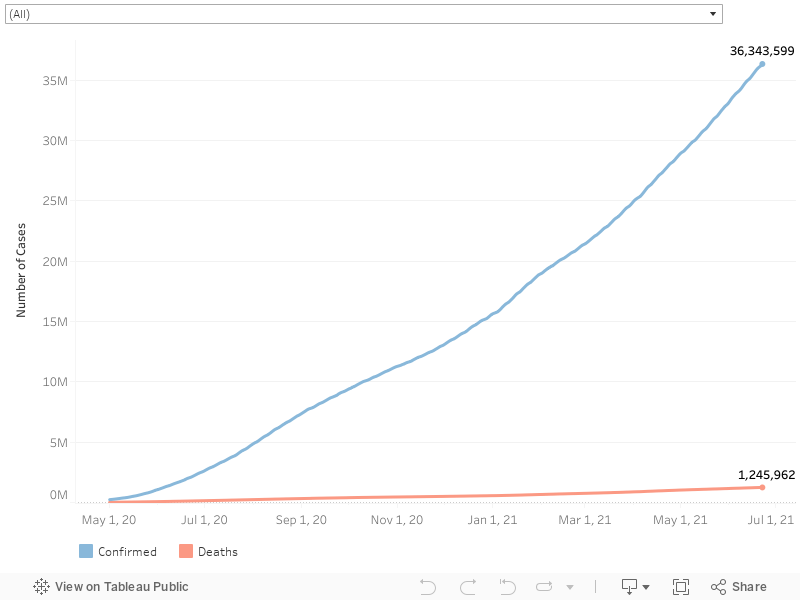
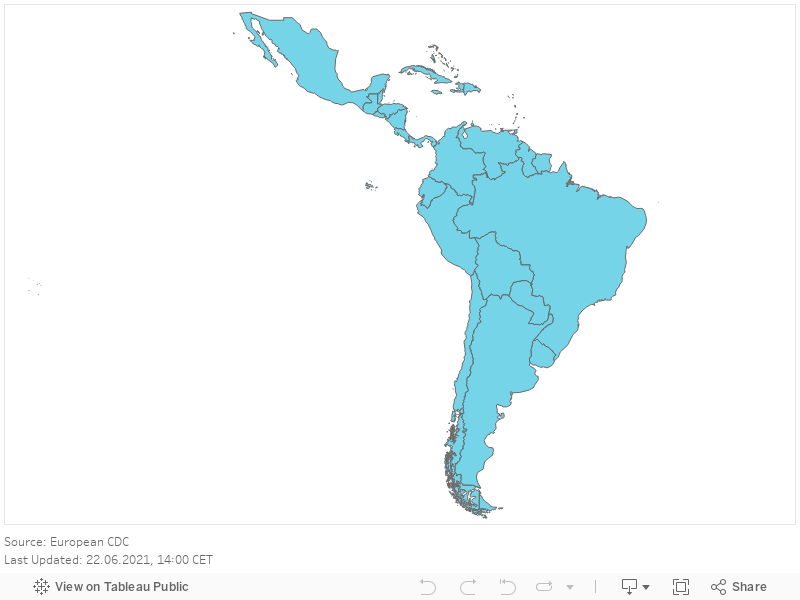
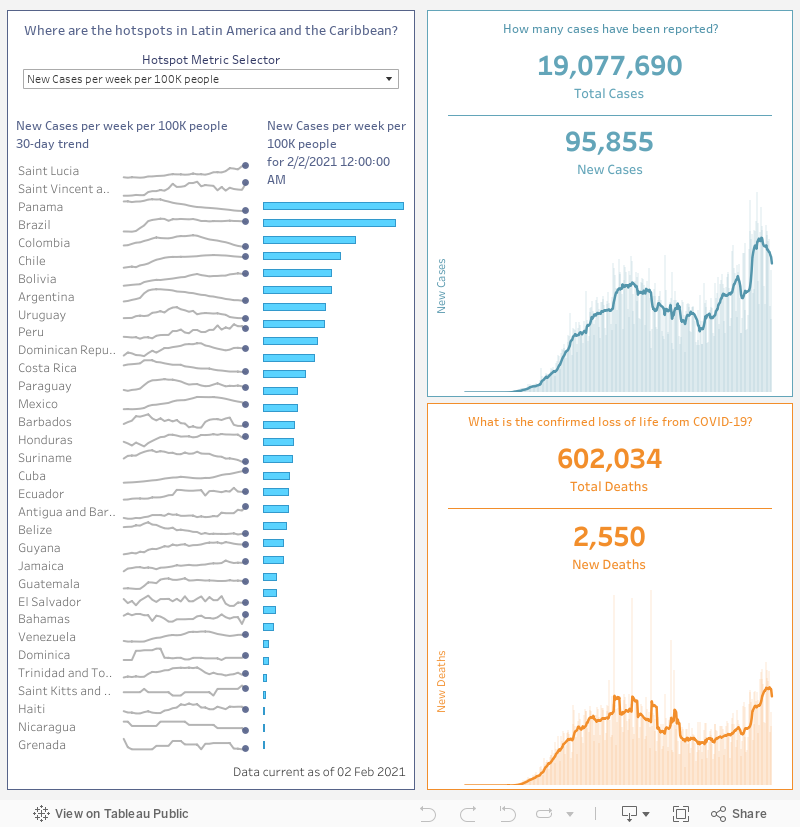
COVID-19 in Latin America

Development of case numbers in the region

Currently reported cases in the countries
The pandemic accelerates the structural change of industry

With Ford, a traditionally important group is pulling out of Brazil. This is due to the structural change in the industry worldwide, but also to the weak growth prospects in the region. Companies that want to remain competitive in South America will have to invest heavily. Some companies do not want to risk this in view of the unclear scenario.

by Alexander Busch, Latin America correspondent for Handelsblatt and Neue Zürcher Zeitung


It was not a good start to the year for Brazil’s economy. After 113 years of presence in Brazil, Ford announced it would close its three factories in Brazil. Around 5,000 employees will be affected. The announcement generated a strong response: after all, Ford is not just any carmaker in Brazil. The manufacturer was one of the first foreign groups to produce modern cars in Brazil, the consumer dreams of several generations. For years, Ford sold the most vehicles, along with GM, Volkswagen and later Fiat. Brazil was always strategically important for the manufacturer from Detroit: Henry Ford even wanted to produce the rubber for the tires in the Amazon in Fordlândia in 1920 – and failed.

But now Ford is giving up a market in which it was still successful with its compact models: Around seven percent market share in the world’s sixth-largest car market – you wouldn’t think a global manufacturer would give that up voluntarily. Why is Ford doing this?

On the one hand, Ford wants to focus primarily on electric vehicles worldwide and light commercial vehicles. This also explains why Ford is expanding the plant for the Ranger pickup in Argentina but closing its plants in Brazil. The model series for compact vehicles is to be phased out, they do not bring enough profit.

Ford would have had to invest massively in Brazil to implement its global strategy there. After all, the industry is in the midst of one of the biggest transformation processes since the invention of the internal combustion engine. It’s about the electrification and digitization of vehicles, the use of Big Data, autonomous driving. Ford has decided that it is not worth driving this change in Brazil.

Because at the same time, the market has been shrinking for seven years and it doesn’t look like things are going to improve any time soon. The lack of reforms has caused the industry’s hopes of an imminent improvement in the investment climate to evaporate.

In addition, the purchasing power of Brazilians has shrunk since 2013. Exporting is difficult. Brazil is not a cheap location; production costs are high. In addition, the market is closed, both in the region and worldwide. It is therefore not possible to create economies of scale in conjunction with other production sites.

This loss of importance of South America as a location is currently being experienced most strongly by the automotive industry. In Brazil, Mercedes has already announced the closure of its plants. Audi has stopped production. In Argentina, suppliers such as BASF, Saint-Gobain Sekurit and Honda have stopped production.

Nevertheless, the impression should not be given that the automotive industry as a whole is pulling out of South America. Volkswagen, Toyota, GM, Renault and above all FiatChrysler (soon to join forces with PSA Peugeot Citroën) are investing heavily in new models and plants there.

Commercial vehicle manufacturers such as Scania, VW, Mercedes and Volvo are currently demonstrating that state-of-the-art factories in South America also pay off: they have all invested in new models and production lines in the midst of the severe crisis and export their vehicles worldwide.

COVID-19 in Latin America

Development of case numbers in the region


Currently reported cases in the countries
Latin America is still fully in the pandemic, but an election cycle begins

The global economy could grow more strongly this year than it has for a long time. Whether Latin America will benefit depends on how long it takes to contain the pandemic in the region.

by Alexander Busch, Latin America correspondent for Handelsblatt and Neue Zürcher Zeitung


It is still difficult to assess how the current vacation season in South America will affect infection figures. With the exception of Argentina, the number of new infections appears to be falling. And vaccinations are also starting now in most countries. However, they are not likely to be used across the board until the middle of the year. So the further course of the pandemic in Latin America is still unclear. It seems difficult to imagine a normalization of everyday life in the next few months.

This could mean that Latin America will be late to benefit from the new momentum in the global economy. The forecasts of investment banks for 2021 show this: Latin America will only grow by between 3 and 4 percent this year, following a decline of 7 to 9 percent in 2020. This means that the region will once again bring up the rear in the global economy this year, according to JP Morgan’s forecast. The economic power of the region between Patagonia and Mexico is therefore only expected to grow by around half as much as the emerging markets worldwide in 2021.

The pandemic has exposed and in some cases exacerbated Latin America’s weaknesses: Weak growth is now compounded by high budget deficits due to stimulus measures during the first Corona wave. Public debt has skyrocketed. The Inter-American Development Bank expects the region’s debt to GDP ratio to currently be 74 percent, up from 57 percent in 2019. Such a high debt-to-GDP ratio undermines prospects for economic recovery. Most major Latin American economies will not return to pre-pandemic output levels until 2022 or 2023 at the earliest, according to ratings agency Moody’s.

Good governance and reforms would be necessary now – but between passivism (Brazil, Mexico) and activism (Peru and Argentina), “no country currently has convincing leadership,” Oxford Economics judges.

In addition, elections will be held again in 2021: Peru will elect a new president in April, Chile in November. Argentina (October) and Mexico (June) will hold important elections for their legislatures. The concern is that populists will come to the helm in the hitherto comparatively well-governed states on the Pacific, as in Brazil or Argentina. This would weaken the pressure for market-economy reforms throughout South America.

Colombia and Mexico are currently considered to be in the most stable position from an economic macro perspective. Brazil, on the other hand, is increasingly dependent on investor sentiment: How long will they want to continue financing the highest debt among emerging markets? The Bolsonaro government can hardly be expected to implement any more reforms in the last two years of its term in office.

Even after a possible agreement with the IMF, Argentina is unlikely to receive any loans for a long time to come. The government of Alberto Fernández, who is increasingly coming under the influence of his vice president, ex-president Cristina Kirchner, appears too erratic and haphazard.

Nevertheless, there is also some positive news from Latin America. Inflation and current account balances are under control. Rising commodity and energy prices will also provide growing export revenues in the region and at least partially replace the overall decline in foreign investment.

COVID-19 in Latin America

Development of case numbers in the region


Currently reported cases in the countries

Times are changing in Latin America – why it’s worth taking a closer look

by Andreas Renschler, LADW Chairman, Member of the Board of Management Volkswagen AG and CEO TRATON GROUP


The transformation of Latin America is in full swing, taking its lead from the new presidents of the region’s two largest economies: left-wing Andrés Manuel López Obrador in Mexico and right-wing Jair Bolsonaro in Brazil are in the process of turning their respective countries’ establishments upside down and thus altering the political and economic climate of Latin America. Despite their political differences, both heads of state make similar promises: more prosperity and sustainable growth. This would benefit the two-thirds of Latin America’s total economic output that Brazil and Mexico constitute. The growing confidence of investors from all around the world indicates that the likelihood of success is not exactly negligible. It remains to be seen what path both governments will take in order to keep their promises. Certainly, 2019 will be a decisive year.

Further south on the continent, significant presidential elections are also upcoming: in October this year, the Argentines will have to reject or approve the neoliberalism of President Mauricio Macri – with the associated possibility of polarisation, as was recently the case in Brazil. And a time bomb is ticking in the north of South America: Venezuela’s political crisis has to come to a peaceful conclusion.

It is at precisely such junctures that the question again arises: has Germany sufficiently positioned itself in Latin America yet? Should Germany and Europe not deal more strategically with the homeland of 650 million predominantly young people? There is still time to address the issue. In Latin America, cards are being reshuffled and foreign partners’ attitudes being put to the test. On the one hand, Mexico still has to walk on eggshells in its relations with the USA, on the other, Brazil is discussing an unprecedented alliance with the US that President Bolsonaro forged during the visit of his counterpart, Trump, in early March. And all the while, China is working to strengthen its position in Latin America and doing so without improvisation but with an eye to the long haul, for Beijing has a clear strategy on what is to be achieved there over the next fifty years.

In the meantime, the EU needs to consolidate. The challenges of Brexit have to be mastered. More important still is that the EU converts its economic force into political force. We are the largest economic area in the world and have a right to assert our independence before the increasingly polarised economic powers of the USA and China. We should use the potential that is to be found in a closer alliance between the EU and the Latin American economies. Together with Europe, the countries of Latin America and the Caribbean make up a third of the total votes at the United Nations. The centuries-old cultural link between these two regions furnishes the required trust. It is worth reacquiring the region as a close partner and ally.

Latin America
© Pixabay, Gerd Altmann

No Experiments in Brazil!

Shortly after the electoral count, LADW Chairman Andreas Renschler, Member of the Group Board of Management of Volkswagen AG and CEO TRATON GROUP, commented on the severely polarising election in a guest article in the Frankfurter Allgemeine Zeitung.

Mr Renschler called for swift action from the newly elected government around Jair Bolsonaro.

“It must unite a divided society and create a stable political framework. And it should bear in mind that there is no more leeway for experimentation and empty phrases, but that solid political work is required. Because the country needs growth,” he wrote.

With these elections, Brazil has opted for a fresh political start. This doesn’t just create risks. On the contrary: “We should take advantage of the opportunities offered by the upcoming fresh start,” he explained, continuing by remarking that the country is Latin America’s largest economy and accounts for about a third of the region’s GDP and population.

“There are more than enough opportunities to use the innovative strength of the German economy so as to further Brazil’s development. Industry 4.0 and new logistics and mobility concepts are just some of the fields in which the German economy is the global leader,” said the LADW Chairman.

 The complete guest article can be found on page 17 of the Frankfurter Allgemeine Zeitung, issue no. 253, October 31, 2018.

Brasília National Museum
© BDI fotolia.de snaptitude

German Companies stick with Mexico

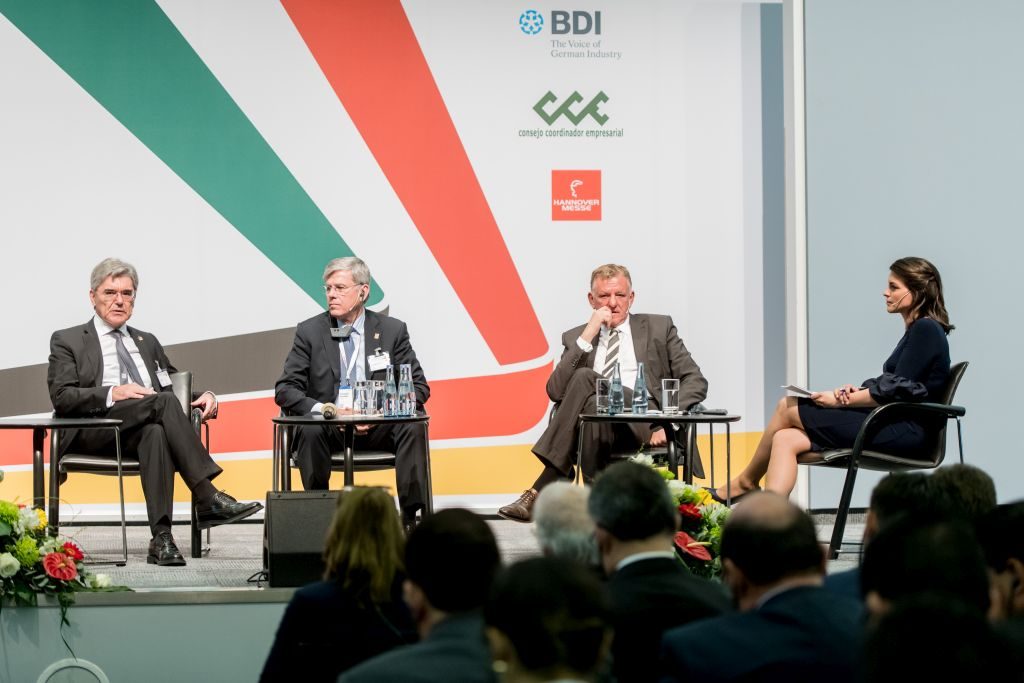
Today at the Mexican-German Business Summit 2018, LADW Chairman Andreas Renschler, Member of the Group Board of Management of Volkswagen AG and Chief Executive Officer of Volkswagen Truck & Bus stated that “Mexico has become an important component of German industry abroad in recent decades and is to remain one in the future.”

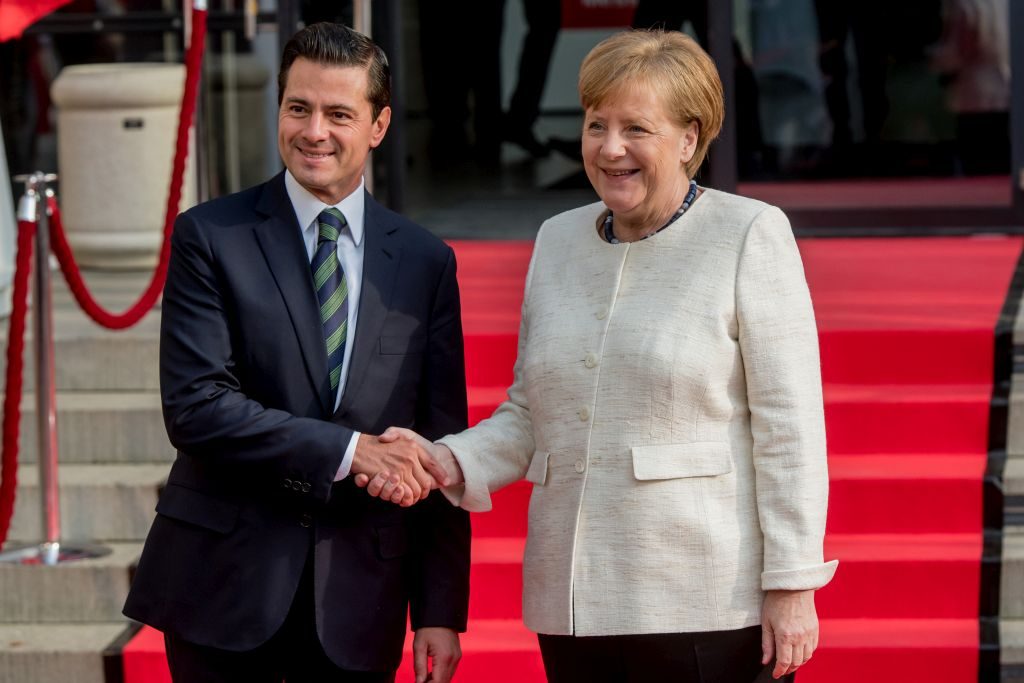
The conference, featuring Chancellor Merkel and Mexican President Peña Nieto and organised by the BDI and HANNOVER MESSE, focused on trade policy opportunities through bilateral cooperation in an era of increasing protectionism.

In a panel discussion with Mexican entrepreneurs and Siemens CEO Joe Kaeser, Renschler called for an intensification of cooperation with Germany’s largest trading partner in Latin America, invoking the near 2000 German companies in the country and investments of 30 billion euros – especially in key sectors such as the automobile and automobile supply industries and the pharmaceuticals, chemicals and electronics sectors. These companies employ 215,000 people.

The news that the EU and Mexico had been able to conclude the modernisation of the EU-Mexico Global Agreement shortly prior to the meeting livened up its proceedings. “This modernisation is also the order of the day in the light of Nafta negotiations,” said Renschler. Expansion in important issues, such as non-tariff barriers to trade, rules of origin, public contracts and the protection of intellectual property, he continued, are of great significance to German industry.

© Christian Kruppa
© Christian Kruppa

New opportunities through digital transformation in Brazil

Select business and political representatives met at the Kaminabend held by the Latin America Committee of German Business (LADW) in Berlin on March 15, 2018. They discussed a new wave of business opportunities for German companies that can be expected in the region thanks to the Internet of Things (IoT). As high-ranking guests from the BNDES Brazilian Development Bank reported that evening, Brazil wants to achieve a productivity leap by 2022 with a solid IoT action plan. Here, approaches from the “Industry 4.0” concept are highly welcome.

“It’s important to position ourselves punctually as a reliable partner in this process. Because, as in the traditional industries, the competition isn’t asleep here, either. The LADW wants to afford the impetus for this today,” explained Andreas Renschler, Chairman of the LADW, Member of the Group Board of Management of Volkswagen AG and Chief Executive Officer of Volkswagen Truck & Bus.

The predominantly young, two hundred and ten million Brazilians bring the necessary openness to new technologies: With its eighty million smartphone users, the country ranks fourth internationally (Germany is seventh) and is the world leader in terms of time spent online.

LADW Kaminabend 15 March 2018
© Christian Kruppa