


Argentina and Brazil move closer to Russia and China

A geopolitical shift is currently taking place in relations between South America and the rest of the world. Argentina and Brazil are taking advantage of the opportunities presented by the increasing confrontation between China, Russia and the West.

by Alexander Busch, Latin America correspondent for Handelsblatt and Neue Zürcher Zeitung


For example, Argentine President Alberto Fernández has been on a state visit to China and Russia in recent days. In China, he concluded an investment agreement as part of the Belt and Road Initiative (BRI). Over the next few years, China plans to invest $23 billion in the infrastructure of the Pampas region, including Argentina’s fourth nuclear power plant.

This makes Argentina the number 20 country in Latin America that is closely linked to China. Among the major countries, only Mexico, Brazil and Colombia are not linked to China via a BRI agreement.

In Russia, Fernández declared that Argentina would disrupt the dominance of the United States and the International Monetary Fund. He also touted his country as a bridgehead for Russian investment in South America.

This was a diplomatic faux pas: A few days ago, Argentina concluded an agreement with the Fund that was extremely advantageous for both the government and the economy of the South American country. This was done with the express blessing of the USA, but also of the EU, which calls the shots at the Fund in Washington.

Brazil’s President Jair Bolsonaro also plans to visit Russia’s President Vladimir Putin next week. No concrete agreements are currently planned. It seems that the two heads of state want to use their meeting primarily as a welcome opportunity to show that they are not isolated in the world.

If you look at the diplomacy of the two South American heads of state, it can certainly be justified strategically: Both states want to be independent, talk to everyone, trade and attract investment.

Moreover, in the Corona crisis, they just realized that China and Russia, with their vaccine supplies such as Coronavac and Sputnik V, made the first vaccinations in South America possible in the first place. For a long time, no support in the pandemic came from Europe and the USA in the form of vaccines.

So it all looks like Brazil and Argentina are currently moving away not only from the USA but also from Europe. Both states are the most important South American economies. They also dominate Mercosur, with which the EU has concluded a free trade agreement. The agreement could be called into question simply with Argentina’s accession to the BRI – as with Uruguay’s before it.

This is not good news for the European-South American relationship.

COVID-19 in Latin America

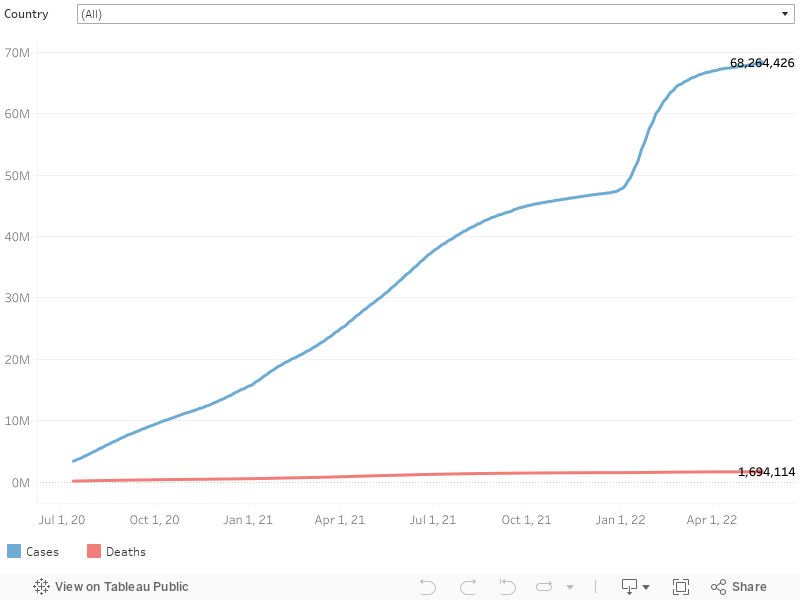
Development of case numbers in the region

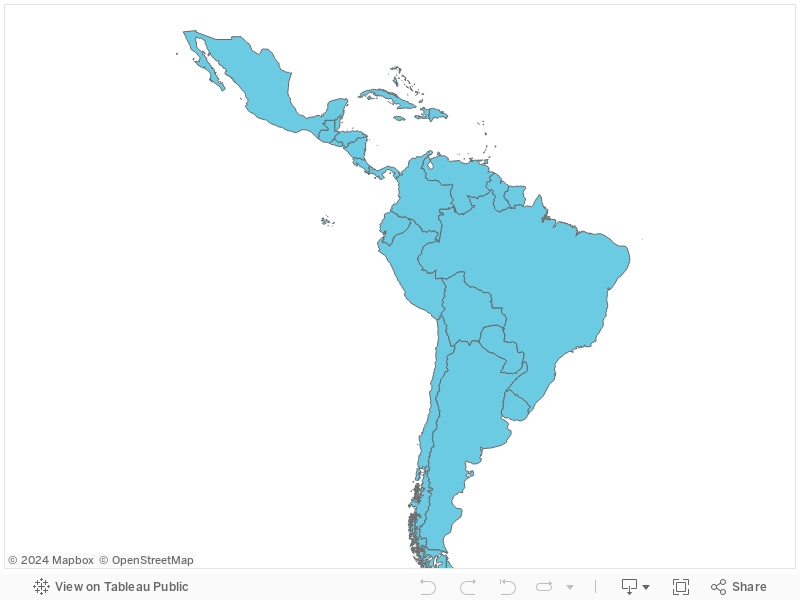
Currently reported cases in the countries

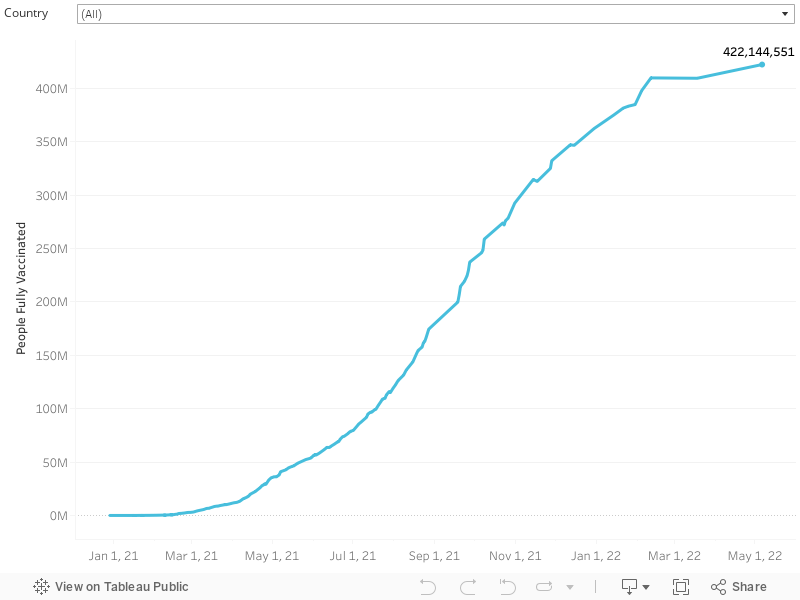
COVID-19 vaccine doses administered

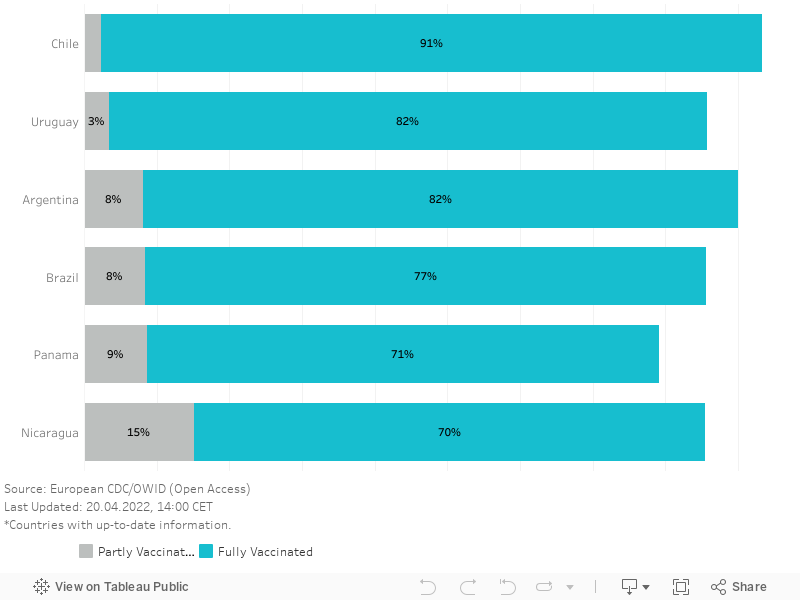
Share of people vaccinated by country
An OECD offer to South America

The Organization for Economic Cooperation and Development (OECD) is holding out the prospect of membership to Argentina, Brazil and Peru. For the countries, this is a rare chance to get their necessary reforms underway. The lure is investment and production profits.

by Alexander Busch, Latin America correspondent for Handelsblatt and Neue Zürcher Zeitung


This is good news for South America: the OECD has accepted the applications of Argentina, Brazil and Peru and invited these countries to begin negotiations to join the international organization.

This came as a surprise. Until now, the U.S. in particular had resisted speeding up the admission process – while Europe was more in favor of a faster expansion of the club of the wealthier 38 member states worldwide.

Along with the three South American countries, invitations have also gone out to the heads of government of Bulgaria, Croatia and Romania. In Latin America, Mexico (since 1994), Chile (2010), Colombia (2020) and Costa Rica (2021) are members so far. On average, countries and the OECD take between three and four years to complete negotiations. However, negotiations for Colombia’s admission most recently took almost seven years.

In South America, Brazil in particular believes it has a good chance of joining the OECD club by 2026 under the next government. Since 2017, Brazil has already been working on gradually adapting its laws to the OECD requirements. Around 40 percent of all rules are already compliant.

Under liberal President Mauricio Macri, Argentina has pushed hard for OECD membership. Whether his successors will still be interested in the next few years remains to be seen. The same applies to Peru.

The South American countries have difficulties above all with their tax systems and the equal treatment of foreign investors and capital. In addition, the economies of Argentina and Brazil are strongly closed to imports. Argentina also currently has an exchange rate regime. Brazil also taxes capital inflows from abroad differently. None of this is allowed under Paris Club rules.

For the countries, possible OECD membership is above all an opportunity to tackle the repeatedly postponed reforms in the financial sector and economy, but also in the fight against corruption or in environmental protection. Admission to the OECD, which stands for market economy and democracy, is like a seal of approval for the location and means a significant production gain for the economy in the medium term.

COVID-19 in Latin America

Development of case numbers in the region


Currently reported cases in the countries


COVID-19 vaccine doses administered


Share of people vaccinated by country

COVID-19 is back – also in Latin America

Predictions about the impact of the rapid spread of infection are difficult, as they are everywhere in the world. It is quite possible that this year’s high inflation could have a greater impact on the region’s economies than the virus.

by Alexander Busch, Latin America correspondent for Handelsblatt and Neue Zürcher Zeitung


As has been the case so far in the course of the pandemic, the new wave of infection is reaching Latin America with a delay of about two months. But now with full force: At the turn of the year, the investment bank Goldman Sachs still estimated the number of infections in the entire region at 100,000 cases. But in Argentina alone, which currently seems to be the frontrunner in infections with the Omikron variant, there are currently more than 135,000 cases every day. In Brazil, there are around 100,000 cases – although the number of tests is vanishingly small and the statistics are hardly reliable since hackers crippled the computers of the state health authority.

The exploding infections are leading to higher utilization rates in hospital wards. Authorities in the countries are betting that the increase will be similarly severe but less protracted and deadly. As in the United Kingdom or South Africa. In the current summer in South America and after two years of pandemic, governments are reluctant to impose new lockdown measures.

Still, forecasting the impact of the Omikron surge is difficult: Goldman Sachs, for example, expects new infections to weigh on economies in the near term, as voluntary and mandatory lockdowns on services and mobility are likely to be reintroduced. “However, the low risk of hospitalizations and deaths and the declining willingness of policymakers to enforce stringent measures, as well as further progress on vaccination, should limit the impact on economic activity.”

For Oxford Economics, Latin America remains the world’s most at-risk region – even though many countries have far more people vaccinated than, say, Europe: people in Chile (90%), Argentina (85%), Uruguay and Ecuador (both %80), and Brazil (78%) have received at least one vaccination. Still, the population is at risk because of weak health infrastructure. Record numbers of infections also lead to severe courses of disease. This is now particularly noticeable in the remote regions of South America, where vaccination has not yet been carried out at all.

Nevertheless, some economists see high inflation as a greater threat to growth in Latin America than the new wave of covid infections. For example, inflation rates in Brazil (10%) and Mexico (7.4%) are at their highest levels in twenty years. The price increases for food and energy are the decisive reasons.

Central banks will have to raise interest rates far above average to stop further demonetization. And yet it will be uncertain whether the monetary measures will take effect quickly. This is because inflation in these countries is increasingly being imported.

COVID-19 in Latin America

Development of case numbers in the region


Currently reported cases in the countries


COVID-19 vaccine doses administered


Share of people vaccinated by country

A startup investment boom is transforming Latin America’s economy

Brazilian startup Nubank went public this week and is now the most valuable bank in Latin America. The financial industry in the region is experiencing the most powerful upheaval in its history. But the same thing is happening in other industries right now. Latin America’s economy is gaining productivity.

by Alexander Busch, Latin America correspondent for Handelsblatt and Neue Zürcher Zeitung


Brazil’s Nubank started with free credit cards eight years ago and is still only making losses. Nevertheless, as of this week it is worth more than the Brazilian private bank Itaú-Unibanco, which was previously the leading institution by market capitalization in the region.

With the IPO, Nubank is also playing the pioneer of an entire industry on Wall Street: Nubank’s successful IPO is now seen as a reference for other global neobanks such as Chime from California or Revolut from the UK, which also want to open their capital.

But Nubank is not alone: there are now about two dozen fintechs in Latin America that are competing with the established banks. Stone, PagSeguro or XP from the Brazilian financial sector have also listed their shares in New York.

This displacement process is also taking place in other sectors: Quinto Andar or Loft are shaking up the Brazilian real estate sector. Rappi from Colombia or ifood have completely changed the food industry. Loggi is rolling up the logistics sector. Ualá from Argentina is successful as a fintech and is now going to Mexico. Satellogic from Uruguay is the first unicorn among the AgTechs – i.e. a startup that is worth over a billion dollars after the first financing rounds.

The value of fintechs like other startups in the region is driven both by the general hype around neobanks worldwide and the interest of venture capital investors in high tech companies in Latin America: between January and November this year alone, $14 billion of capital flowed into these companies. That’s three times more than the previous record year of 2020, and the number of unicorns in Latin America has doubled every year since 2018. Today, 26 startups are considered unicorns.

Japanese investment conglomerate Softbank has just increased its Latin America fund to a total of eight billion dollars. Softbank has stakes in 48 startups in Latin America, 15 of which are unicorns.

In the meantime, traditional investors are also putting their money into Brazilian fintechs: Warren Buffet’s US investor Berkshire Hathaway invested in Nubank in the middle of the year. At C6 in Brazil, for example, JP Morgan took over 40 percent of the capital.

For Latin America, this is good news: If governments have barely managed to reform for years, the biggest productivity gains at the moment are likely to come from digital transformation.

COVID-19 in Latin America

Development of case numbers in the region


Currently reported cases in the countries


COVID-19 vaccine doses administered


Share of people vaccinated by country

Is the region heading for another decade of weak growth?

Investment banks’ forecasts for Latin America next year are mixed. Morgan Stanley (MS) expects below-average growth for the region next year. Governments must decide how to finance growing social demands: That’s through tax increases or growing budget deficits. Both inhibit investment and reduce productivity. Central banks must also raise interest rates to counter rising inflation. That slows growth. Currency devaluation should be under control again from 2023, but until then it will reduce mass purchasing power.

by Alexander Busch, Latin America correspondent for Handelsblatt and Neue Zürcher Zeitung


This scenario applies particularly to Brazil: high inflation, growing budget deficits and a high key interest rate will ensure growth of a meagre 0.5% next year, which will also see presidential elections that will cause political tensions. Brazil will not return to the growth trend (of 1.8% per year) until 2023.

Mexico will benefit from the recovery in consumer demand as well as global supply chains. MS expects 3.2% growth next year.

Argentina: Will the government still tackle reforms in the two remaining years and agree with the IMF on a debt restructuring? The chances are not good. Growth forecast: 1 %.

Colombia will benefit from higher oil prices and rising employment, leading growth in the region at 3.9%. Presidential elections will be held at the end of May. The outcome is completely open.

Chile is experiencing fierce political times with elections and a constitutional assembly meeting in parallel. After overheating as a result of consumer stimulus (pension fund withdrawals), the economy will grow by only 2.4% next year (after 11.8% this year) due to tight monetary policy.

In Peru, too, growth will be weaker in 2022 (3.2%) after the strong upturn this year (10.6%).

In both Andean countries, the expected global economic slowdown could lead to lower copper prices and political uncertainty could also cause a decline in capital expenditure.

Conclusion: With political calls for more government welfare benefits unlikely to prove temporary, MS believes it is likely that Latin America could face another decade of below-average growth.

COVID-19 in Latin America

Development of case numbers in the region


Currently reported cases in the countries


COVID-19 vaccine doses administered


Share of people vaccinated by country

Isolated Latin America?

In recent days, Latin America’s most important heads of government have demonstrated how little interest they have in global issues or in exchanges with the world. As a result, companies are responding to the political isolation with their own initiatives.

by Alexander Busch, Latin America correspondent for Handelsblatt and Neue Zürcher Zeitung


The last ten days have seen the G20 summit in Rome, followed by the COP26 environmental summit in Glasgow. These were the first top-level meetings of their kind after almost two years of pandemic – so a unique opportunity for each head of state to network, to promote understanding, to explain, to take positions.

But what are the three most important heads of state from Latin America doing?

Mexican President Andrés Manuel López Obrador did not even make the trip.

Argentina’s head of government, Alberto Fernández, set off for Europe with a 100-strong delegation. But instead of making his mark as the visionary statesman from Latin America on environmental issues, Fernández tried to convince every head of government that Argentina’s debt problems were unjust and that the country deserved special treatment from the International Monetary Fund. Fernández was only interested in the environment and climate change if they could be used to reduce debt.

Brazil’s Jair Bolsonaro was in Rome but largely stayed away from the official events. He wasn’t interested in the summit. But the other heads of government obviously didn’t want to be seen with him either. Bolsonaro didn’t even fly to Glasgow.

It is clear that foreign policy is always also domestic policy, in other words it takes place with the voters in mind. But when Latin America’s most important heads of state demonstrate that they are quite indifferent to the global agenda and don’t even try to present themselves as states to be taken seriously, they are harming their countries with this isolation.

Businesses are responding to the increasing nationalistic introversion of their governments with their own initiative: both domestic and foreign companies in Latin America are beginning to look after foreign markets themselves and to develop strategies beyond their national borders. This is due to the weak growth in the region, but also because many business models, especially in the digital sector, only work above a certain size. Examples can be found in all industries.

In addition, companies are aligning their value chains with ESG criteria in order to be sustainable in environmental, social and governance terms – even if national regulators do not require these criteria at the moment. This process has intensified in all Latin American countries over the last twelve months.

COVID-19 in Latin America

Development of case numbers in the region


Currently reported cases in the countries


COVID-19 vaccine doses administered


Share of people vaccinated by country

Great interest of investors in Brazilian infrastructure projects

Major auctions of infrastructure projects will take place in Brazil until the end of the year. Investor interest is high.

by Alexander Busch, Latin America correspondent for Handelsblatt and Neue Zürcher Zeitung


From today until the end of the year, auctions of licenses in infrastructure, which have been prepared for some time, will take place in Brazil and will be among the most extensive in recent years. Surprisingly, interest seems to be high – from both domestic and foreign investors.

For example, the trunk roads between Rio and São Paulo, between Minas Gerais and Espírito Santos, and in Paraná are being offered. In these concessions, the companies are committing to investments of around €10 billion. In addition to the leading local concessionaires Ecorodovias and CCR, foreign groups and investors from Spain and Australia are also planning to participate in the auction for the first time.

A total of nine port terminals will also go under the hammer by the end of the year. In the port of Santos, three terminals will be put out to tender: Two for fuel, one for containers. Here, too, competition between Asian and European port operators is likely to be fierce. The remaining licenses are distributed among ports throughout Brazil.

For the auction of 5G mobile licenses, a surprising 15 companies have submitted their bids, some alone, some united in consortia. Telecom regulator Anatel had expected far less interest. In the auction, which will start on November 4, the companies commit to a total investment of around €8 billion.

It is unclear whether the licenses of the inland airports of São Paulo (Congonhas) and Rio de Janeiro (Santos Dumont) will still be put out to tender under the current government. In the case of train routes, it is also not yet clear whether the new licensing procedure for operators can still be implemented. According to this procedure, private operators can submit applications for railway lines which they will then be able to operate without restriction. There are applications from companies under the new railway concept (“Pró-Trilhas”) worth €13 billion.

Since 2019, a total of 74 licenses have been given to private parties, who will invest €11 billion in projects over the next few years. A total of 34 airports, 29 port leases and 99 other permits for terminals for private use, six railways (concessions, renewals and cross-investments) and five motorways have been handed over to private investors.

COVID-19 in Latin America

Development of case numbers in the region


Currently reported cases in the countries


COVID-19 vaccine doses administered


Share of people vaccinated by country

Faster post-pandemic recovery of the region

The International Monetary Fund has surprisingly raised its growth forecasts for Latin America this year. Brazil and Mexico, however, disappoint. From 2022 onwards, growth in the entire region will fall back somewhat.

by Alexander Busch, Latin America correspondent for Handelsblatt and Neue Zürcher Zeitung


The growth outlook for Latin America has improved significantly, according to the International Monetary Fund (IMF) in its latest World Economic Outlook. Compared to April, the Fund has raised its forecasts for Latin America by the most in the world. At 6.3% growth this year, Latin America will grow about as fast as the average for emerging markets worldwide. This is mainly due to high commodity prices and vaccination campaigns in the countries, which are now quite advanced. In Brazil, where the federal government delayed the vaccination campaign for a long time, more people have now been vaccinated against Corona at least once than in Germany.

Chile (11%), Peru (10%), Colombia (7.6%) and Argentina (7.5%) will lead the recovery among the larger economies in the region this year. However, the forecasts for Brazil are disappointing: This year, Latin America’s largest economy will still grow 5.2%; for 2022, the IMF expects growth of only a meager 1.5%. Mexico’s economy will also grow at a below-average rate of 6.2% this year and 4% in 2022.

Overall, the outlook for Latin America as a whole for the coming year is gloomy: At 3% for Latin America as a whole, the region brings up the rear among the world regions on the scale of growth forecasts. Colombia (3.8%), Peru (4.6%) and Mexico (4%) will grow at an above-average rate, according to IMF forecasts.

The biggest risks that the IMF sees for growth in the next few years apply particularly to Latin America: On the one hand, there is the risk of new Corona variations, which could make new lockdowns necessary. The gaps between supply and demand for many goods and service providers – from food and gas to truck drivers and semiconductors – could also lead to a decline in growth. Rising inflation – which at 9.3% in Latin America this year is well above the emerging-market average (5.5%) – is weighing on the economy. Last but not least, social tensions and elections (in Argentina, Chile, Colombia, Brazil in the next twelve months) could have a dampening effect on the economies.

COVID-19 in Latin America

Development of case numbers in the region


Currently reported cases in the countries


COVID-19 vaccine doses administered


Share of people vaccinated by country

Is Latin American integration on the move?

Mexico wants to lead a new attempt at integration in Latin America. That’s a good idea, because all other integration projects in the region are at a standstill. But it doesn’t look like the economy can benefit from the initiative.

by Alexander Busch, Latin America correspondent for Handelsblatt and Neue Zürcher Zeitung


This was surprising news at the meeting of the Community of Latin American and Caribbean States (CELAC) two weeks ago: Mexican host President Andrés Manuel López Obrador declared that his country wanted to relaunch the integration process in Latin America. The EU, he said, was the model. These were the first publicly announced multilateral integration intentions in Latin America in a long time.

It seems that Mexico wants to fill the vacuum left by Brazil in the region. For almost a decade Brazil has been concentrating more on itself and has kept cooperation within Latin America to a minimum.

Mexico’s government has already become active in foreign policy in recent weeks as a supporter of the negotiation process between the Venezuelan opposition and the regime.

Nevertheless, the prospects for a new push for economic integration are slim: CELAC is divided. The community, founded ten years ago but hardly active, sees itself as a political alternative to the Organization of American States (OAS), of which Canada and the USA are also members, but not Cuba.

Thus CELAC acts primarily as a platform for the more left-wing governments, which also shy away from pointing out the democratic deficits in Venezuela, Nicaragua or Cuba. Thus the presidents of Chile, Colombia and Argentina were not represented at the Mexico meeting. Brazil, under President Bolsonaro, has already left CELAC at the beginning of 2020. With the exception of Mexico, the economically most important states in the region are therefore not active there.

But all other integration efforts in Latin America are currently asleep as well Mercosur’s integration projects with the EU, EFTA, Canada and Singapore are not moving. There is also discord within the South American community. Uruguay wants to start its own negotiations for an agreement with China. The Pacific Alliance, founded by Chile, Peru, Colombia and Mexico, is constantly expanding with new members. But synergies between the countries of the community hardly emerge.

Nevertheless, Mexico’s attempt to revive political integration could well succeed: For that to happen, left-of-center candidates would have to win in the next elections in Colombia, Chile, and Brazil; which could well happen. Still, a widespread slide to the left in Latin America is unlikely to accelerate economic integration.

COVID-19 in Latin America

Development of case numbers in the region


Currently reported cases in the countries


COVID-19 vaccine doses administered


Share of people vaccinated by country

Drought weighs on post-pandemic recovery in Latin America

The increasingly frequent and intense droughts are having more and more a negative impact on the economy. Agriculture, mining, energy and transport are affected.

by Alexander Busch, Latin America correspondent for Handelsblatt and Neue Zürcher Zeitung


In the centre of South America, the lack of rainfall continues in a fatal chain reaction on the economies. The drought in the southern Amazon and in the Pantanal region is the worst in the last 50 years. But the lower rainfall in central Brazil every year is not only a burden on the farmers in Mato Grosso. Because the Paraná River is carrying less water than it has for a long time, the dams in the southeast of the country have run dry. If it doesn’t start raining in the next few weeks, power rationing could be necessary by the end of the year – as it was last 20 years ago. The Amazon is suffering from the worst drought in almost a century.

In Argentina and Paraguay, too, a lack of rainfall is putting a strain on agriculture. As recently as 2018, farmers in the Pampas suffered the worst drought in 50 years. But now rivers are increasingly failing as transport routes. Argentina exports 80% of its grain from inland ports around Rosário to the Atlantic. In Paraguay, it is 95% of all exports. At present, however, the ships can load less and less, and the farmers have to switch to trucks, which bring the harvest to the ports on the Atlantic. The consequences are rising food prices.

Drought is also on the increase in the Andes: there has been too little rainfall for years, so that the fruit-growing regions of Mendoza in Argentina and Valparaíso in Chile will experience heavy losses this year. In Chile, a water emergency has been declared in four of 16 regions. Cities and farmers are becoming more dependent on glacial water. But the ice fields are also shrinking.

In Mexico, 70% of the country is experiencing drought, and 25% of the country is even affected by extreme drought. Here, too, it is the farmers in the north and west who are first to complain about crop losses. The country increasingly has to import maize.

According to a study by the World Bank, Chile’s and Argentina’s gross domestic product could fall by around one percentage point each this year due to the drought alone. For Brazil, investment banks have just lowered growth forecasts for 2022 to below one percent – but the drought is only one reason for the economic stagnation. If an energy crisis with electricity rationing does indeed occur – which is not yet certain – Brazil’s gross domestic product (GDP) could even shrink next year.

It is therefore surprising that climate change and its consequences for the economy and society have so far tended to be marginal issues on Latin America’s political agenda. However, this is likely to change quickly.

COVID-19 in Latin America

Development of case numbers in the region


Currently reported cases in the countries


COVID-19 vaccine doses administered


Share of people vaccinated by country