

In Latin America, hawks sit at the central bank levers

Inflation rates in Latin America are also through the roof. But unlike the rest of the world, the peak seems to have been reached here. This is mainly due to the rapid reactions of the central banks last year. The monetary guardians are reacting so quickly because inflation fears are still omnipresent in South America.

by Alexander Busch, Latin America correspondent for Handelsblatt and Neue Zürcher Zeitung


As here, inflation rates in Latin America have also risen rapidly in recent months: This applies not only to Argentina, where inflation will be well over 70 percent by the end of the year. There, government spending is increasingly being financed with the printing press.

But even the more stable economies – especially those in the Andean countries – are experiencing rapid inflation rates: In Peru, Chile and Colombia, food and energy prices are rising at a rate not seen in decades. Investment banks are also revising inflation forecasts in Brazil and Mexico.

Nevertheless, it is surprising that inflation expectations for the end of 2022 are in single digits in almost all countries – with the exception of Argentina and Venezuela. The financial services provider Oxford Economics estimates that inflation rates in Latin America have currently peaked. That would be far earlier than in Europe or the USA, for example.

The reason: Central banks in Latin America began raising interest rates as early as the middle of last year in order to curb inflation rates.

It seems that in Latin America, the still present experience of inflation or even hyperinflation in the past decades ensures that monetary policy hawks sit at the central banks’ levers. The monetary guardians in Latin America are quicker to slam on the brakes than those in Europe or the USA when inflation rates rise.

By way of comparison, the last period of high inflation was in the USA more than 40 years ago. In Latin America, by contrast, inflation is an everyday occurrence. Argentina has experienced only two years with inflation below 10 percent since 2002. In Buenos Aires, it is evident how unsuccessful governments are that do not succeed in curbing monetary devaluation. In Brazil, Chile and Peru, too, periods of high inflation and their negative consequences for society, the economy and politics are still deeply anchored in the consciousness of the population.

But the early and severe countermeasures taken by the monetary guardians have come at a price: high interest rates are putting the brakes on growth. The investment bank JP Morgan hardly expects any more key interest rate hikes this year. But experts fear that central banks will have to maintain their tough monetary stance until 2023.

As a result, growth in Latin America will also be weaker next year – and may even shrink by half compared with 2022 (1.3 percent instead of 2.1 percent), according to JP Morgan. Large economies such as Brazil (-0.2 percent) and Mexico (1.5 percent) will grow even less next year than in 2022, but even the economies with the highest growth rates, such as Colombia and Peru, will only grow by 2.5 percent.

Brazilian Real
© Pixabay/Joelfotos

Latin America’s economies continue to lose competitiveness

As expected, the seven largest economies in the region fared poorly in the latest IMD World Competitiveness Report. However, because the region’s markets are significantly larger than those of most countries worldwide, they remain interesting for foreign investors.

by Alexander Busch, Latin America correspondent for Handelsblatt and Neue Zürcher Zeitung


Since 1989, the International Institute for Management Development (IMD) in Switzerland has published its annual ranking of the competitiveness of countries. For this purpose, the IMD World Competitiveness Center surveys entrepreneurs, investors and managers in 63 countries worldwide according to numerous criteria with which competitiveness can be measured.

Latin America performs particularly poorly. With the exception of Chile, the other six countries in the region are among the bottom performers in the economies surveyed. Peru (54), Mexico (55), Colombia (57), Brazil (59), Argentina (62) and Venezuela (63) perform worse than almost all locations worldwide.

However, even Chile, which has a better rating, is only in the bottom third of the ranking at 45th place. The Andean country has even dropped ten positions in the ranking over the last five years. It is followed by Argentina and Colombia, which have been overtaken by six and five countries respectively. Overall, however, all seven of Latin America’s largest economies have lost positions over the past five years. Only Venezuela has been at the bottom of the IMD report since 2017.

However, other countries are also at the bottom of the rankings on individual points. Brazil, for example, occupies the worst position among 63 countries in terms of workforce training. Argentina brings up the rear in terms of entrepreneurial friendliness and the treatment of foreign investors.

The legal framework for entrepreneurs is poor in almost all countries. The low level of legal certainty, in turn, is the decisive reason why investors do not invest their capital in infrastructure. They fear that the laws could suddenly change and they would have to write off their investments, as has happened in Argentina and Venezuela.

Basically, investment in infrastructure is not only below average in a global comparison. Latin America also falls far behind in human capital and technology.

However, it is striking that foreign companies and investors continue to invest above average in the region. This is particularly true of Brazil and Mexico, the largest economies in Latin America, which account for around half of the population and economic power.

This could be due to the importance of the domestic markets. Looking at the market sizes of the seven most important economies, they remain well above the midfield of the countries surveyed worldwide.

The conclusion suggests itself that Latin America remains attractive to foreign companies primarily because of its large domestic markets – despite the region’s structural shortcomings.

Competition
©Pixabay/Pexels

Will Latin America benefit from the withdrawal of US companies from China?

Hopes for positive effects of nearshoring in Latin America are high: The Inter-American Development Bank expects the region to benefit in the short and medium term. But for this to happen, governments must create the right conditions.

by Alexander Busch, Latin America correspondent for Handelsblatt and Neue Zürcher Zeitung


Increasing environmental concerns, the pandemic, trade disputes between the U.S. and China, and Russia’s recent invasion of Ukraine have shaken up value chains around the world. Companies in industrialized countries are considering locating their suppliers closer to home.

According to estimates by the Inter-American Development Bank (IDB), nearshoring in Latin America and the Caribbean could lead to additional exports of goods and services worth $78 billion annually in the short and medium term. This applies above all to the automotive, textile, pharmaceutical and renewable energy sectors.

This would be an important tailwind for Latin America, because integration into global value chains increases the productivity of the local economy through technology and knowledge transfer and creates high-quality jobs. If a country increases its global integration by 10 percent, per capita GDP increases by 11 to 14 percent, the IDB estimates.

But the states, for their part, must do something about it in order to become an attractive alternative to locations in the Far East.They should invest in improvements to the business climate and the capacity of investment and export promotion agencies. The IDB estimates that every dollar invested in investment promotion results in nearly $42 in foreign direct investment.

Improving transportation and logistics infrastructure is critical in the short term: the IDB estimates that a 10 percent reduction in international transportation costs increases the value of exports by at least 30 percent.

In addition, the region needs to deepen its regional integration: The 33 existing bilateral and -regional trade agreements between North and South America alone should be harmonized. This alone would lead to an increase in intraregional trade of almost 12 percent.

If we look at the potential calculated by the IDB for the individual countries of Latin America, the largest increases in relation to the size of the economies will occur in Mexico, Central America and the Caribbean. The process can already be observed now: In fact, U.S. investment in Mexico in 2021 tripled from the previous year. Even during the pandemic, foreign direct investment barely declined.

But otherwise, the reality of foreign investment so far looks quite different. According to the latest surveys by UNCTAD, the World Conference on Trade and Development, foreign direct investment increased by 56 percent in Latin America last year, but by much more in South America: by 74 percent. They have thus neutralized the 45 percent decline in the first pandemic year 2020.

This is because foreign companies are investing primarily in raw materials, energy and local markets. Brazil in particular has increased its foreign investment by 78 percent. This puts it in sixth place on the list of countries in which foreign corporations have invested the most worldwide. Mexico continues to rank 10th, but is stagnating.

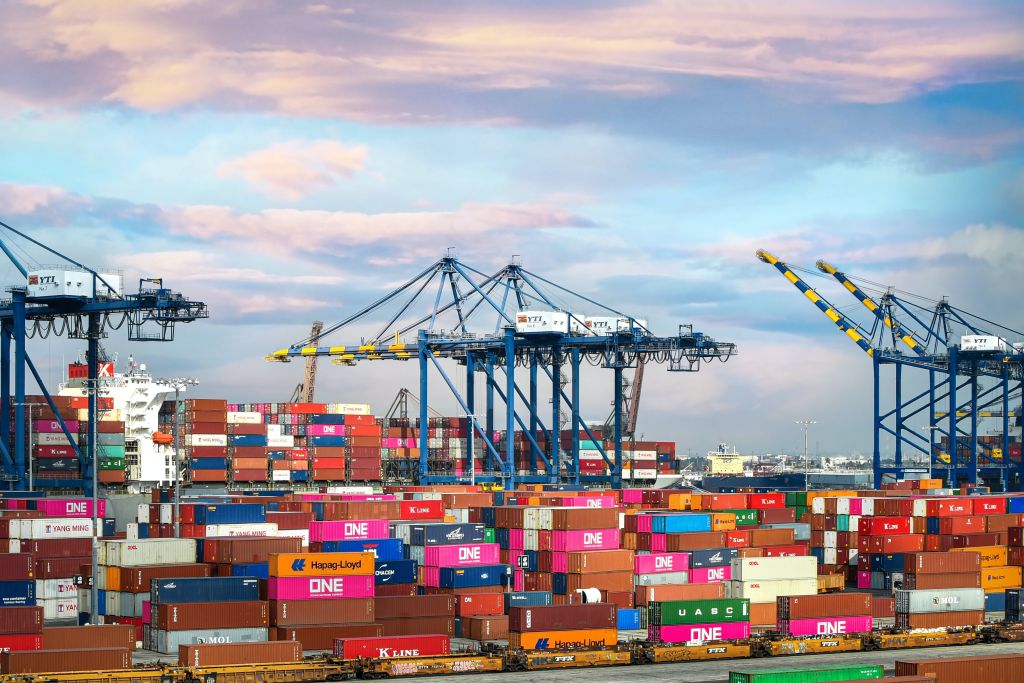
Port of Los Angeles
© Unsplash/Barrett Ward

Election forecasts become difficult in Latin America

The surprising result of the first round of elections in Colombia shows how unstable the political situation is in Latin America. Outsiders in particular have a chance of winning the election. But they have no political base and can hardly implement anything of what they have promised

by Alexander Busch, Latin America correspondent for Handelsblatt and Neue Zürcher Zeitung


Since the beginning of the year, it seemed likely to most Colombians that leftist Gustavo Petro would win in the first round in the elections at the end of May. His party had seen large gains in the vote in the parliamentary elections before that. Petro would be the first leftist to lead Colombia.

But things turned out differently: Petro won the first round of the elections with a clear majority of 40 percent of the vote. Nevertheless, it is now unlikely that he will become Colombia’s next president.

This is because the non-party entrepreneur and former mayor Rodolfo Hernández has surprisingly won 28 percent of the vote. The third-place candidate from the conservative camp has already urged his voters to vote for Hernández. This means that the largely unknown 77-year-old populist Hernández has 52 percent of the vote in purely mathematical terms – and now has a good chance of becoming the country’s next president.

This is not good news: Because Hernández has no political base in Congress and a confused political program. Colombia is a country full of complicated political, social and economic problems and really needs someone at the top of the country who can forge alliances between the political camps.

This only repeats in Colombia what has already happened in the Andean countries in the last elections: In Peru, the completely unknown village school teacher Pedro Castillo narrowly won the elections a year ago. Since then, he has shown little ability to hold office and has already changed his cabinet several times. It is unlikely that he will govern to the end of his term.

In Chile, the far-right politician José Antonio Kast also surprisingly won the first round of voting, losing only in the runoff to former student leader Gabriel Boric. Both Boric and Kast are not political outsiders. However, they do not belong to Chile’s traditional parties.

To simplify, it can be said that in all of these elections, those who were furthest away from the political establishment surprisingly had the greatest success. The problem for their governments now, however, is that they all have a weak base in their parliaments and can therefore implement little of what they promised beforehand. That is why Boric and Castillo have rapidly lost popularity.

For Latin America, this means that the political situation is becoming unpredictable and more unstable.

Latin America seeks neutrality in geopolitics

Since the beginning of the Ukraine conflict, the region has increasingly kept its distance from the global power blocs. The U.S. is therefore now threatened with a serious embarrassment at the Summit of the Americas in June. For us in Europe, this should be a warning sign.

by Alexander Busch, Latin America correspondent for Handelsblatt and Neue Zürcher Zeitung


Two deputy secretaries of state from the U.S. State Department just visited Brazil – and for several days at that. The goal of their diplomatic offensive is to persuade President Bolsonaro to attend the Summit of the Americas in Los Angeles in June. However, Bolsonaro has not said whether he will travel to California.

Preparations for the ninth Summit of the Americas are also faltering in other respects. Washington wants to host a Summit of the Americas for the first time since 1994. From June 6 to 10, all the states of the double continent are to gather in Los Angeles.

But that’s where the controversy starts: Joe Biden’s administration only wanted to invite democratic states. The regimes in Nicaragua, Venezuela and Cuba were not to receive invitations. In the meantime, that is no longer certain.

Because Mexico’s President Andrés Manuel López Obrador declared last week that he would only come if all the states in the hemisphere were invited. Bolivia, Honduras and some Caribbean countries followed suit.

The U.S. is now facing a serious setback: If well over half of the 660 million Latin Americans, including Brazil, Mexico and a few other countries, are not represented at the summit, it will have failed before it has even begun.

This is an embarrassment. The U.S. would like to show that it is the dominant great power in the Americas – even south of Texas. But they are less and less so: The Latin American states are less and less willing to subordinate themselves to the U.S. or to let Washington dictate anything. The Ukraine conflict has also enhanced the region’s status as a global supplier of raw materials and energy. The states are increasingly behaving neutrally in the disputes between the global power blocs.

The decisive reason, however, is that the U.S. under Biden offers too little. On the region’s most pressing issues – migration, trade and growing poverty – the Biden administration has no proposals, joint projects or solutions for Latin America in its quiver. Biden continues Trump’s Latin America policy – distancing himself from dictators in Latin America and a restrictive migration policy. So far, Biden has not set his own course.

Latin Americans have not forgotten that Trump did not even show up at the last summit in Peru in 2018, and the U.S. barely helped Latin America with vaccine shipments during the pandemic.

For us in Europe, the events in Washington are a warning sign. We, too, could soon feel a growing indifference from Latin America. After all, Germany and the EU also offer Latin America few foreign policy and economic options for a new, closer partnership. We have neglected the countries in the pandemic in much the same way as the United States. And we like to criticize the shortcomings in the region’s democracies and environmental standards – while this seems to bother us little in the case of many states with which we cooperate around the world.

COVID-19 in Latin America

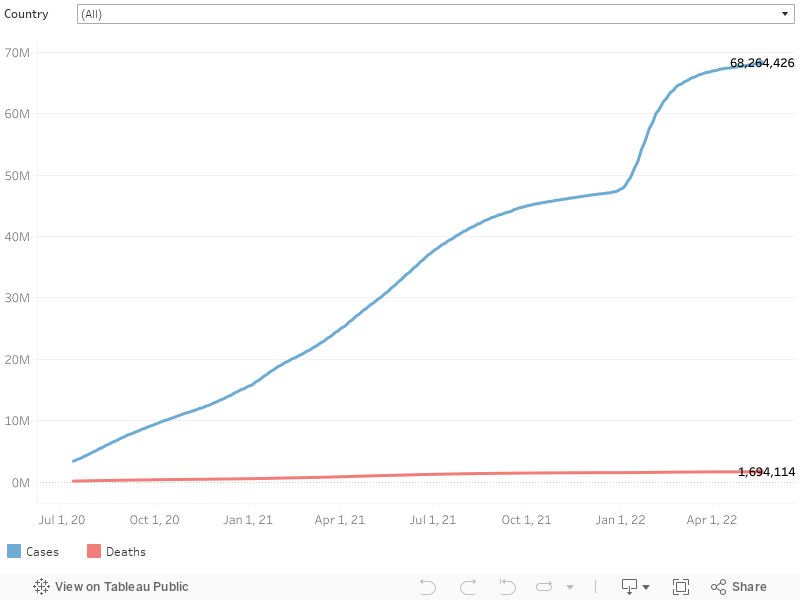
Development of case numbers in the region


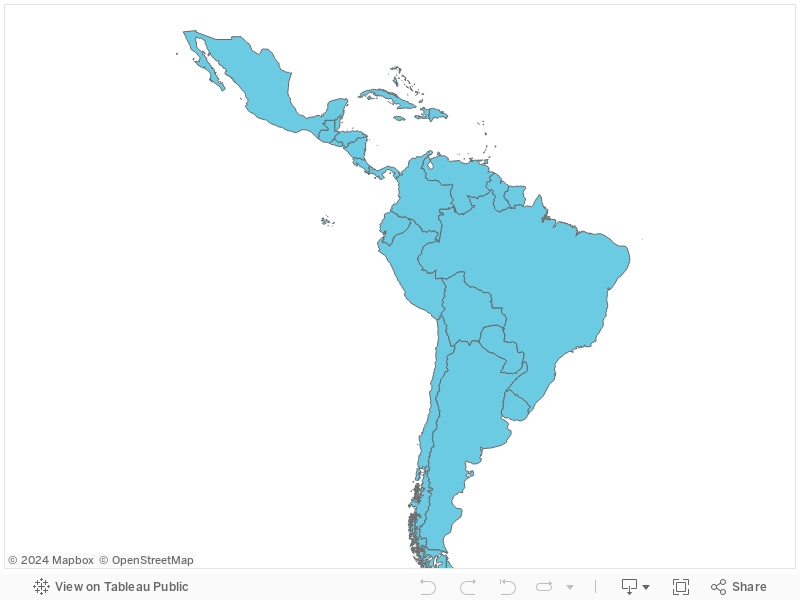
Currently reported cases in the countries


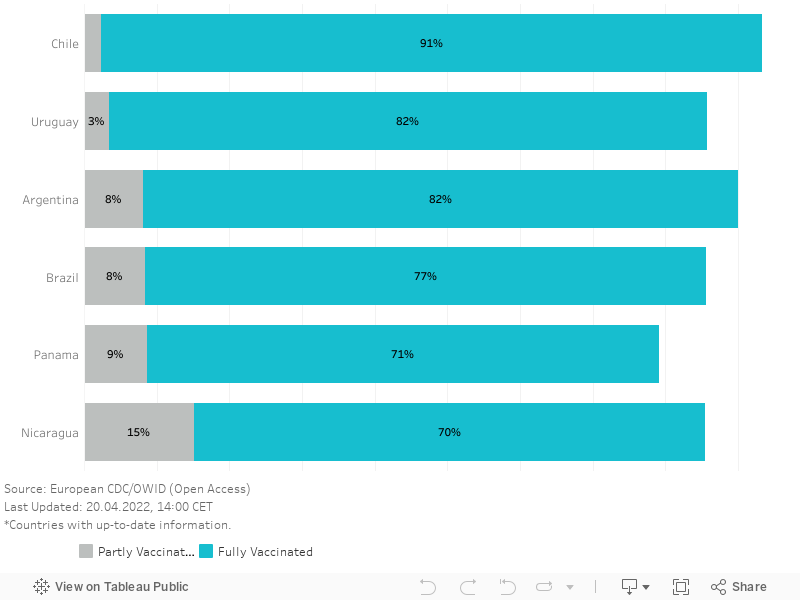
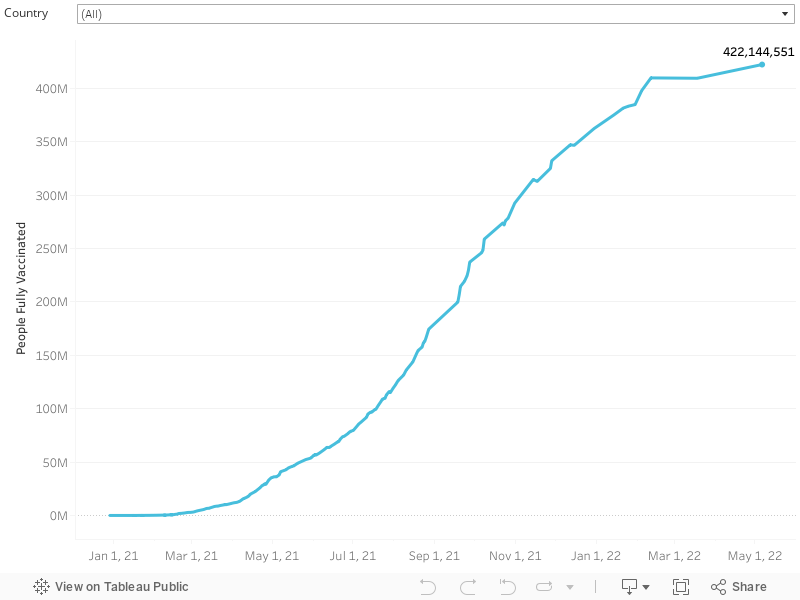
Share of people vaccinated by country

Uruguay and Costa Rica global role models as democracies

Democracy in Latin America is under pressure. The region continues to be the continent outside Western Europe and North America with the highest density of democracy in the world. Uruguay and Costa Rica even rank ahead of many European countries and the USA.

by Alexander Busch, Latin America correspondent for Handelsblatt and Neue Zürcher Zeitung


The bad news first: in the Economist Intelligence Unit’s (EIU) annual Democracy Index, the quality of democracies in Latin America fell for the sixth consecutive year. “Not only was this the sharpest decline recorded by the index in the world in 2021,” the EIU said, “it was also the largest deterioration experienced by any region since the Democracy Index was launched.”

The coronavirus pandemic has heightened frustration with politics. Democratic governments seem increasingly unable to respond adequately to social and economic problems. As in previous years, there were large protests throughout Latin America in 2021.

At the same time, tolerance of authoritarian governments has grown. The popularity of governments that openly oppose democratic institutions, such as those of Jair Bolsonaro in Brazil, Andrés Manuel López Obrador in Mexico, or Nayib Bukele in El Salvador, demonstrate this.

In total, five Latin American countries were downgraded in the 2021 Index: Chile, still a “full democracy” in 2019, became a “flawed democracy” again as a result of the pandemic. Ecuador, Mexico and Paraguay dropped to the status of “hybrid regimes. Haiti joined the group of authoritarian regimes Nicaragua, Venezuela and Cuba.

The good news is that Latin America – along with Western Europe and North America – remains the region with the highest average democracy score. Around 80 percent of the 664 million people there live in democracies.

The top position of some countries in the index is astonishingly positive: Uruguay, for example, is in 13th place, two places ahead of Germany. Uruguay is one of the few countries worldwide that has improved its democracy in the index for more than 15 years. Costa Rica is the second Latin American country among the 22 complete democracies of Latin America, on the same level as Austria. And Chile, ranked 25th in the world, is also on the same level as Spain, for example, in the quality of its democracy.

By comparison, all three countries are well ahead of the USA, Italy or Belgium on the EIU’s index.

After the sometimes highly polarized 2021 elections in Ecuador, Chile, Peru and Honduras, decisions are due this year in Latin America in Colombia and Brazil. These will be fiercely contested, with candidates on the right and left of the political spectrum with little in common.

For the further development of democracies in Latin America, the course and outcome of the elections and the formation of governments in these two countries will be key events for the entire region.

COVID-19 in Latin America

Development of case numbers in the region


Currently reported cases in the countries


Share of people vaccinated by country

Why Brazil and South America are becoming more important for us due to the Ukraine conflict

Brazil and the rest of South America could benefit from the war in Europe. The economies there are gaining from rising energy and commodity prices. In addition, the current geopolitical shifts are increasing South America’s weight in the world. We should not be passive bystanders to these changes and offer strategic partnerships now.

by Alexander Busch, Latin America correspondent for Handelsblatt and Neue Zürcher Zeitung


Looking at economic developments after Russia’s invasion of Ukraine, it is surprising to note: Few other countries around the world have since experienced a positive boost like Brazil. This is similarly true for Chile, Peru, Colombia and even Argentina. Evidence of this can be seen in the currency and stock markets in these countries, which have appreciated strongly since then.

There are several reasons for this unexpected development: For example, the countries’ export industries are benefiting from rising prices for raw materials and energy. This applies to agricultural commodities such as soy, corn and wheat, but also to ores and metals. In addition, with the exception of Chile, the countries mentioned are largely self-sufficient in their energy production or even export oil.

It is true that prices for energy and food are also rising in South America. With the lack of fertilizers on the world market, the price level for agricultural products will even increase worldwide. However, supplies are not under existential threat, as they would be in the event of a Russian gas supply freeze for European and, above all, German industry. Nor are food shortages to be expected, as may soon be the case in Middle Eastern countries dependent on Russian and Ukrainian grain supplies. Moreover, the South American central banks have responded more quickly to inflationary pressures by raising interest rates than the European Central Bank or the Fed in the USA.

Brazil in particular is currently benefiting from the fact that fund managers around the world are currently reallocating their investments: They are withdrawing their capital from companies, industries or regions that could be negatively affected by the war or because they are complying with Western sanctions against Russian corporations. Capital inflows to Brazil have grown at a record pace in the first three months. This is also true to some extent for the Pacific Rim countries of South America.

Brazil is also partially protected from the consequences of the Ukraine crisis in the global economy. This is because the country is one of the most closed major economies. The decisive factor for economic growth is local consumption, not foreign trade.

The geopolitical weight of Brazil, but also of South America, could now even grow in an increasingly polarized world: Each of the world’s power blocs – the USA, China, Russia, the EU – will try to win Brazil and South America over as partners.

In terms of foreign policy, Brazil and Argentina have usually understood how to use the various offers for partnerships in their interest without tying themselves too closely to one of the powers – or upsetting them. The diplomatically clumsy governments of Presidents Bolsonaro and Fernández are an exception.

The question, however, is whether we in Germany and Europe want to stand by while other powers assert and increase their influence in South America, or whether we want to become active and offer strategic partnerships.

Because it’s quite simple: We need reliable suppliers of raw materials, food and – green – energy more urgently than ever. We need markets for our products and the global exchange of personnel. And last but not least, we need democratic partners in the world. South America has it all.

We just need to get ourselves going and harness that potential before it’s too late and others are doing it.

COVID-19 in Latin America

Development of case numbers in the region


Currently reported cases in the countries


COVID-19 vaccine doses administered


Share of people vaccinated by country

Mexico’s future prospects darken, but economic conditions are solid

The government in Mexico is putting pressure on rule-of-law institutions, rolling back sustainable energy reform and ignoring the economy. In Europe, this is hardly noticed. Nevertheless, Mexico’s finances remain surprisingly solid overall.

by Alexander Busch, Latin America correspondent for Handelsblatt and Neue Zürcher Zeitung


The news from Mexico is currently mixed. For example, the outlook for the country’s economy is worsening. In view of stubborn inflation, which at 7.3 percent is now at its highest level in two decades, the central bank is set to raise interest rates more sharply – and thus put the brakes on the economy. It is true that inflation is expected to fall again by the end of the year. But because of the high interest rates, investment banks are forecasting growth of 1.5 to 2 percent this year. This means that Mexico’s economic output will remain below the level at the beginning of the Corona crisis for even longer.

Since 2020, the government has initiated hardly any measures to alleviate the social and economic consequences of the pandemic. The poverty rate has now risen significantly to over 44 percent of the population.

At the same time, the government is intervening more and more actively in economic policy – to the distrust of the business community. For example, Mexico’s sustainable energy reform is being gradually rolled back. In addition, the country’s state-owned petroleum industry is once again being given top priority in the purchase of electricity.

With the decree, according to which state infrastructure projects enjoy priority and are approved without the usual rules on transparency in public tenders, the government is also opening the door to corruption, which is endemic in Mexico. Rumors are also growing that close members of the president’s family are involved in corruption. Mexico ranks 124 out of 180 countries among the most corrupt states in Latin America according to Transparency International.

Oil producer Mexico is benefiting little from the high oil prices caused by the Ukraine crisis: Mexico imports almost twice as many energy products in value as it exports crude oil.

In addition, President Andrés Manuel López Obrador’s attacks on the rule of law are increasing. On April 10, for example, he now wants to hold a referendum on the possible revocation of his six-year mandate. The president expects a high approval rate. Among other things, he hopes that this will give his candidates a tailwind in the gubernatorial elections in six states on June 5. But for the first time, López Obrador’s high approval ratings have dropped (to a still-high 54 from 60 percent at the beginning of the year).

As in some other Latin American countries, state pressure on democracy and the economy in Mexico could increase significantly before the next presidential elections in 2024. But unlike similar trends in Brazil or Argentina, this is hardly noticed in Europe.

On the other hand, Mexico’s finances and foreign trade accounts are surprisingly solid by regional standards. Higher oil revenues stabilize the budget. With a deficit of 3.5 percent of GDP, the state is solidly financed. The central bank has even been able to increase foreign exchange reserves by 12 percent since the beginning of the pandemic. With a debt ratio of around 50 percent of GDP, Mexico is not facing a debt crisis.

Foreign investment also remains stable – albeit at a low level. The automotive industry in particular is benefiting from the recovery in demand. Mexico will tend to benefit from the fact that US corporations prefer to have their suppliers on their doorstep in Mexico rather than in the Far East.

COVID-19 in Latin America

Development of case numbers in the region


Currently reported cases in the countries


COVID-19 vaccine doses administered


Share of people vaccinated by country

Latin America votes surprisingly united against Russia

In the run-up to the UN General Assembly, some presidents had hesitated to condemn Russia. It is still unclear how the Ukraine crisis will affect the economies in the region.

by Alexander Busch, Latin America correspondent for Handelsblatt and Neue Zürcher Zeitung


When 141 states condemned Russia’s attack on Ukraine at the UN General Assembly on March 2, the overwhelming majority of Latin American countries were among them. No state spoke out in support of Russia. Cuba, Bolivia, El Salvador, and Nicaragua abstained. Venezuela, which stands by Russia, was without voting rights because it had not paid its dues.

This unity, with which the states of Latin America demanded Russia’s withdrawal, was surprising: for in the days since Russia’s attack on the neighboring country, important heads of state in the region had hesitated to condemn the invasion.

The left-wing nationalist and authoritarian governments of Cuba, Nicaragua, and Venezuela previously called the invasion of Ukraine legitimate. This was to be expected. Russia is an important arms supplier and creditor for these countries.

It was unexpected that El Salvador dropped out and did not condemn Russian aggression. It is suspected that the authoritarian president wants to make nice with Russia. He could offer El Salvador, with its state sponsorship of cryptocurrencies, as a conduit to circumvent sanctions. Russia could, for example, trade raw materials and other goods via digital currencies uncontrolled through the Central American country – fear US authorities.

Mexico and Brazil sought a balancing act in the crisis before the vote. Left-wing populist Andrés Manuel López Obrador declared that Mexico wanted to be on good terms with all states worldwide and that the country would therefore not support sanctions against Russia.

Shortly before the start of the Russian offensive, Brazil’s right-wing populist President Jair Bolsonaro had declared his “solidarity with Russia” during a visit to the Kremlin and publicly affirmed that he did not want to get involved in the conflict. His country was also economically tied to Russia through extensive fertilizer imports, he said. Nevertheless, the foreign ministers of both countries, with their parallel statements that were much harsher against Russia, ultimately ensured in the UN vote that both states officially condemned Russia’s aggression after all.

Surprisingly, the heads of state in Panama, Paraguay, Peru as well as Honduras could not bring themselves to condemn the Russian invasion.

Clear criticism of Russia came, as expected, from the more conservative governments in Colombia, Uruguay and Ecuador. Chile’s leftist President Gabriel Boric, who takes office this week, also clearly condemned the aggression.

A new foreign policy development has been triggered by the Ukraine crisis between Venezuela and the USA. The actual arch-enemies have begun to talk about energy and political rapprochement. Venezuela has the world’s largest oil reserves, but is producing well below potential because of its government’s anti-business stance. The U.S. could do with a supplier close by, and the government of autocrat Nicolás Maduro is hoping for relaxed sanctions against his country.

The economic impact of the sanctions on Russia on Latin America is difficult to forecast: On the one hand, commodity exporters such as Argentina, Brazil, Chile and Peru could benefit from rising prices for agricultural goods such as metals. Oil exporters such as Ecuador and Colombia also benefit from high oil prices.

The increased energy prices are bad news for all net importers of oil and gas – especially in the Caribbean and Central America. The now sharply reduced fertilizer exports from Russia, Ukraine and Belarus could also lead to crop declines for agricultural producers in South America in the medium term.

Overall, the significant rise in inflation rates will also lead to an increase in poverty and reduced growth in Latin America.

COVID-19 in Latin America

Development of case numbers in the region


Currently reported cases in the countries


COVID-19 vaccine doses administered


Share of people vaccinated by country

Surprisingly good outlook for Latin America’s economy

Corona infections have reached their all-time record high in Latin America since the beginning of the year – but without the feared dramatic consequences as before. Foreign investors are putting more capital into Latin America’s financial markets than they have in a long time.

by Alexander Busch, Latin America correspondent for Handelsblatt and Neue Zürcher Zeitung


The covid omicron wave has also reached its zenith in Latin America: after record high new infections as recently as January, the number of hospitalizations and deaths is falling. One reason could be that Latin America is now the continent with the highest vaccination coverage in the world. The waning of the pandemic is having a partially positive effect on the general economic situation.

Colombia and Chile, for example, were able to continue their growth trends from before the pandemic. However, the economies of Mexico, Brazil and Peru are still developing more weakly than two years ago.

Argentina remains the underdog among the big six economies, with expected growth of four percent and inflation of 56 percent at the end of this year.

New clouds are appearing on the horizon: Economists in the rest of Latin America are also worried about inflation. But unlike in Europe or the U.S., central banks here are already taking clear steps against inflation. In Brazil, Chile and Colombia, central banks have already raised interest rates so significantly that economists expect inflation rates to fall from the end of this year. Nevertheless, rising commodity and energy prices will exert further pressure on the general price level.

What is new, however, is that foreign financial investors are not being deterred by the uncertain outlook at the moment – on the contrary: since the beginning of the year, foreign capital in particular has been moving the stock markets in the region. The stock exchanges in Brazil, but also in Peru, Colombia and Chile, have made significant gains since the beginning of the year. This is in stark contrast to the leading stock markets in Europe, the USA and Asia.

Venture capital investors continue to focus on Latin America. Last year, about $15 billion flowed into Latin America as venture capital. That’s about three times as much as in the previous record year of 2019. By comparison, venture capital funds invested about $25 billion in Asia (excluding China) last year. In January, these investors again increased their inflows.

At the same time, many investors expect commodity prices to rise and are betting on mining and agricultural companies, of which there are many in Latin America.

The influx of capital has led to a strengthening of the region’s purchasing power: In Brazil, but also in Peru, Mexico and Chile, currencies have appreciated strongly against the dollar.

Political crises and tensions in almost all countries of the region remain an important factor of uncertainty. In Peru, it seems increasingly unlikely that Pedro Castillo’s government will survive the next few months. In Chile, Gabriel Boric will be the first left-wing president to take office in March, while at the same time the constitution is being revised. In Argentina, the government is split over whether to sign an agreement with the IMF. And in Brazil, as in Colombia, elections will be held this year, adding to the political tensions in these countries.

COVID-19 in Latin America

Development of case numbers in the region


Currently reported cases in the countries


COVID-19 vaccine doses administered


Share of people vaccinated by country