

EU-Mercosur Agreement: Is 2023 the last chance?

At its summit meeting a few days ago, Mercosur showed itself to be divided. If Brazil does not soon provide impetus for a new integration in South America, then the agreement with the EU will hardly be salvageable.

by Alexander Busch, Latin America correspondent for Handelsblatt and Neue Zürcher Zeitung


Mercosur presented a sad picture at its traditional meeting. As at summits in recent years, Brazilian President Jair Bolsonaro was absent. Uruguayan President Luis Lacalle Pou handed over the temporary presidency for the next six months to Alberto Fernández of Argentina.

But there was little sign of harmony at the summit. The Argentine president strongly criticized Uruguay. This is because the country is not only negotiating a free trade agreement with China – which is not allowed under the Community’s statutes. Only together can the four member states conclude negotiations with other partners. Lacalle Pou also announced at the summit that Uruguay had applied for membership of the Trans-Pacific Partnership (TPP). This is the large Pacific Rim alliance of eleven Asian and American states, which China could also soon join.

In response to criticism from Argentina, Uruguay’s representatives stated, mutatis mutandis, that Mercosur was increasingly becoming a burden for their country. Mercosur’s lack of will to conclude new agreements with other regions or countries would limit Uruguay’s potential in world trade. Mercosur has not negotiated an agreement with any of the ten largest economies in the world.

The Argentine president, in turn, declared these days that he wanted to renegotiate the agreement with the EU. The Argentinean automotive industry needs more protection than is provided for in the agreement. Otherwise, European carmakers in particular would flood the country with their exports. The fact that many of the car factories in Argentina belong to European manufacturers – that did not seem to be a contradiction to the Argentine president.

Argentina is also the country within Mercosur that impedes imports from partner countries the most: Of the 87 market access restrictions imposed on Brazilian exporters worldwide, twelve originate from Argentina.

At the same time, Josep Borrell, the EU’s foreign affairs representative from Spain, is campaigning hard these days in South America to inject a new dynamic into the agreement between Mercosur and the EU. “The Brazilian presidency of Mercosur and the Spanish presidency of the EU in the second half of 2023, offer a great opportunity to give the necessary new impetus to the relationship between the EU and Mercosur.”

The decisive factor, however, is likely to be the position of Brazil under Luiz Inácio Lula da Silva, who takes up his presidency on January 1, 2023. So far, all Lula has said about the agreement with the EU is that it will have to be renegotiated.

Lula’s designated foreign minister, Mauro Vieira, has now stated in his first detailed press briefing that the president’s first international trips will be to Argentina, the United States and China. Otherwise, in addition to South and Latin America, Africa would be the new government’s main priority. Vieira mentioned Europe and Mercosur only in passing.

So it is likely to be decided in the next few months whether the agreement between the EU and Mercosur can be given new life – or should be abandoned for good.

Buenos Aires
© Pixabay/Herbert Brant

Geopolitical relaxation with the USA makes Venezuela interesting again

For four years, Venezuela was an international pariah. That is changing. In the medium term, Venezuela could also become interesting for German companies.

by Alexander Busch, Latin America correspondent for Handelsblatt and Neue Zürcher Zeitung


Last week, the U.S. announced a special permit for national companies to operate in Venezuela: Effective immediately, U.S. oil company Chevron, as well as North American oil industry service companies (Halliburton, Schlumberger, Baker Hughes and Weatherford), will be allowed to restore oil facilities and produce oil in Venezuela. Chevron must export the oil it produces to the United States. This is to pay off Venezuela’s accumulated debt to the California company. The Venezuelan state may not levy any taxes or royalties on the production.

This is an u-turn in U.S. policy toward Venezuela. In 2018, U.S. President Donald Trump had imposed tough sanctions on the West’s richest oil country after rigged elections. All trade with Venezuela in dollars is banned to this day.

But now the West is looking for new sources of oil after the loss of Russian oil on the world market. And Maduro is up to his neck in water. For a long time, he was able to circumvent the sanctions with the help of Russian banks. But this channel has been closed since the start of the Russian war in Ukraine.

Thus, since the start of the war in Ukraine, there has been a steady rapprochement between the U.S. and Venezuela: In principle, Washington is concerned with obtaining commitments from Maduro to democratic elections. In return, the U.S. offers a gradual lifting of sanctions.

It is still completely open whether Venezuela will experience a renaissance as a major oil producer for the West. The decisive factor is whether Maduro is willing to hold fair and clean elections. In eight years, five negotiating groups have tried to reach an agreement. However, Maduro has never been willing to make concessions.

The thaw in relations with the USA could also open up opportunities in Venezuela again for other companies – including German ones. That’s because Venezuela is experiencing growth again this year for the first time after a severe decade-long recession that saw the economy shrink by 80 percent. The Economic Commission for Latin America and the Caribbean expects growth of 12 percent this year (2023: 5 percent). By allowing the dollar as a second currency, Maduro has been able to curb inflation since 2019. The local consumer market has also reawakened since then. Consumer goods have been entering the country, especially from the U.S., since the government lifted import tariffs.

It is true that foreign companies are only allowed to supply pharmaceutical and food products to Venezuela – all other imports are banned due to US sanctions. But those who produce in the country are not affected by the sanctions. Investments in the energy, telecommunications, agro-industry and tourism sectors are considered promising.

It seems that the German business community should look at Venezuela again.

maracaibo
© Pixabay/David Mark

The Inter-American Development Bank faces a change in leadership

In the next few days, a decision will be made on the new presidency of the leading development bank for Latin America. This is important: the IDB needs new motivation and an urgent boost of energy.

by Alexander Busch, Latin America correspondent for Handelsblatt and Neue Zürcher Zeitung


On Sunday, the Board of Governors of the Inter-American Development Bank (IDB) will elect the new presidency for the next five years. This is a key and important decision for the region.

With lending of $23.4 billion in 2021, it is the most important multilateral financier for the region alongside the World Bank and the Latin American Development Bank CAF. Alongside the U.S., which calls the shots with a 30 percent share, Brazil and Argentina are the most influential members with an 11 percent voting share. But Germany, for example, also has a 1.9 percent stake in the bank, and Japan holds five percent.

It is completely open who could make the running: Ilan Goldfajn, who is currently responsible for Latin America at the International Monetary Fund (IMF) in Washington, is applying from Brazil. Many consider him the most suitable candidate because of his experience as ex-central bank chief in Brazil and at the head of leading private banks. Whether Brazil’s recently elected President Luiz Inácio Lula da Silva will support his candidacy remains unclear.

Nicolás Eyzaguirre Guzmán, former Chilean finance minister and Goldfajn’s predecessor at the IMF, has also thrown his hat into the ring. He has worked with left-of-center governments in Chile and is therefore considered a suitable interlocutor for the new leftist governments in South America. Mexico, Trinidad and Tobago and Argentina have also nominated candidates.

The election comes just two years after the last one. Mauricio Claver-Carone, who was almost single-handedly pushed through by President Donald Trump, had to vacate his post because he had violated compliance rules. According to an investigative report by the bank, he allegedly had an affair with a female employee, whom he also approved two hefty pay raises in one year.

The appointment of the US-American Claver-Carone in 2020 contradicted the unwritten rule that had been observed since the bank was founded in 1959: Presidents have always come from Latin America – but it is primarily the U.S. that calls the shots at the Washington-based bank. Trump broke the rule with the support of Brazil, ruled by President Bolsonaro.

Claver-Carone had set out to put the bureaucratic, expensive bank, which was riddled with political cronies, back on its feet. He failed, however, mainly because he had no networks in Latin America and knew little about the region.

Latin America would now benefit from a more agile development bank that is more willing to take risks and would also be endowed with greater capital. This time, there are competent candidates for the post at the head of the most important multilateral donor.

Dollars
© Pixabay/pasja1000

Positive signals for democracies worldwide come from Brazil

The elections in Brazil have halted the increasing erosion of democracies in the West for the time being. The rule of law in the world’s fifth-largest country has held its ground.

by Alexander Busch, Latin America correspondent for Handelsblatt and Neue Zürcher Zeitung


Brazil’s democratic institutions have earned top marks in recent days: Three hours after the polling stations closed, the election results were known on Sunday – in the world’s fifth-largest country with 215 million citizens. By comparison, in the midterm elections currently taking place in the U.S., the final result is not expected for days.

In Brazil, immediately after the results were announced, the leaders of the Chamber of Deputies, the Senate and the Supreme Court declared that the election had been clean and that there was no reason to challenge the results. It is highly unlikely that the result will be questioned in the judiciary after all. At the same time, the bureaucracies and politicians in Brasília have smoothly begun preparing for the transfer of power.

Even when radicalized supporters of Bolsonaro blocked the highways in the days after the elections because they believed the elections to be rigged, the Supreme Electoral Court always maintained control of the situation: It ordered the security forces to crack down – which they did. Numerous influential supporters of the president and election loser Bolsonaro from politics, business and society called for an end to the protests.

These demonstrations have currently lost momentum, although there could well be further unrest before the transfer of power on January 1, 2023. The transfer of power could still be bumpy. The close result of the elections has left many of Bolsonaro’s supporters in Brazil disappointed.

Another positive aspect is that Brazilian democracy is showing signs of dynamism. The shift to the right in society that has taken place in recent years has now also reached Congress and the institutions. In contrast to some democracies around the world, such as in Europe, Brazil’s political system is showing itself to be integrative. New political actors have the chance to reach the levers of political power through democratic elections.

After a long time, this is once again good news from the global south, which few had expected.

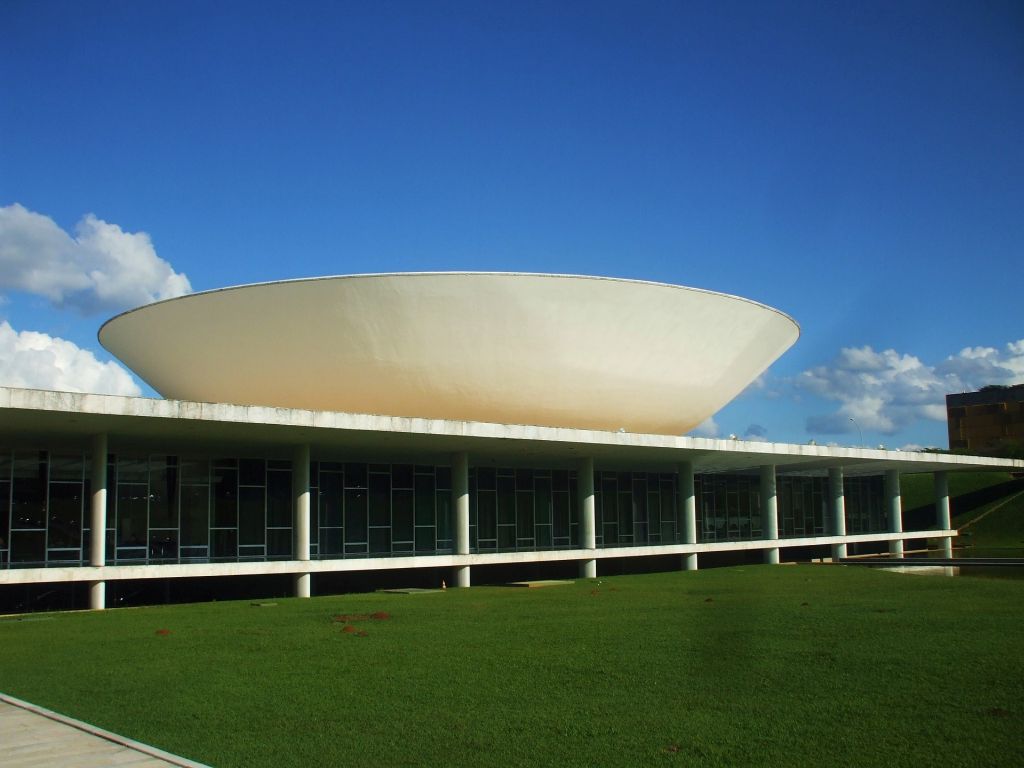
Brasilia Congress
© Pixabay/Daiana Sou

Latin America’s economy caught in the maelstrom of the ailing global economy

In Latin America, the economic outlook is becoming gloomier. The weaker global economy is depressing growth forecasts for the region. The advantage is that the central banks in Latin America have already completed the cycle of interest rate hikes that Europe still has ahead of it.

by Alexander Busch, Latin America correspondent for Handelsblatt and Neue Zürcher Zeitung


The United Nations Economic Commission for Latin America and the Caribbean (CEPAL) has just published its latest growth forecasts for the region. According to these, growth will fall from 3.2 percent in 2022 to 1.4 percent as early as next year. The two most important economies on the continent in particular will stagnate: Brazil and Mexico will – according to CEPAL – each only grow by around one percent next year. Chile’s economy could even be the only country in the region to slip into recession (-0.9 percent).

The reasons for the weaker growth in Latin America than recently forecast are to be found less in the region than in the global economy. For example, investors’ risk assessments have risen worldwide. This is linked to the consequences of the Russian war against Ukraine, which is unsettling both companies and consumers. The outlook for the global economy has clouded over significantly.

Higher energy prices worldwide are continuing to fuel inflation. Central banks in industrialized countries are raising interest rates to curb price increases. As a result, less capital is automatically flowing into emerging markets such as Latin America.

The extent to which Latin America is dependent on the mood in the industrialized countries is particularly evident in the example of Mexico. There, it is primarily the remittances of emigrants from the USA that stabilize the economy. Remittances have doubled in the past twelve months. The Mexican central bank estimates that Mexicans in the U.S. could remit $60 billion south this year. That’s about as much capital as foreign investors and companies will invest in Brazil this year.

However, this dependence on remittances from the U.S. makes Mexico’s economy vulnerable: Currently, around four percent of economic output (gross domestic product) consists of remittances from the U.S.. But the U.S. economy will grow at a slower pace in 2023. As a result, emigrants will probably be able to remit less to their homeland next year – which will also cause Mexico’s economy to stagnate.

One positive aspect for Latin America, however, is that central banks in the region have made further progress in combating inflation. The interest rate hike cycles in Brazil, Chile, Colombia, but also in Peru and Mexico are coming to an end – this means that the region is much further ahead than Europe or the USA in fighting inflation.

Across the region, banks have raised interest rates faster and more sharply than has happened in the rest of the world. Brazil, for example, raised its key interest rate from 2 to 13.75 percent in one year. Inflation has fallen from 12 to 8 percent in the process.

This is positive for the region: falling interest rates will boost investment and consumption in Latin America more quickly than in Europe and the USA.

Santiago de Chile
© Pixabay/likesilkto

The Brazilian elections have already changed the political map of Latin America

The right-wing around President Jair Bolsonaro has won a landslide in the first round of elections in Brazil. Ex-President Lula continues to lead. Europe must adjust to a changed partner country.

by Alexander Busch, Latin America correspondent for Handelsblatt and Neue Zürcher Zeitung


The elections in Brazil were eagerly anticipated throughout Latin America. What happens in Brazil politically and economically has a strong impact on the region because of the dominance of the Brazilian economy and the size of the country and population.

After the first round of voting on October 2, changes have already taken place that will be decisive for South America regardless of the outcome of the runoff elections on October 30.

There were two surprises: On the one hand, President Jair Bolsonaro won significantly more votes than predicted in the polls. Instead of around 34 percent, 43 percent of voters opted for him. On the other hand, the right around President Jair Bolsonaro experienced a nationwide landslide victory in Congress and the states.

This means that a political turning point is currently taking place in Brazil: Bolsonaro has proven that he is not a right-wing populist flash in the pan politically. Like his role model Trump in the U.S., he has firmly anchored Brazil’s conservative turn, which is partly radical right-wing, sometimes economic liberal or simply conservative in values, in politics.

In doing so, he has put the brakes on the leftward turn that is otherwise taking place in South America. Currently, only the small states of Ecuador, Paraguay and Uruguay are governed conservatively. In Chile and Colombia, left-wing governments have been elected to power this year.

The changed political constellation in Brazil will endure even if Bolsonaro himself is not elected on October 30. This is because ex-president Luíz Inácio Lula da Silva still has a good chance of winning in the runoff elections at the end of the month. He received 48.4 percent of the vote. He fell just short of two million votes for a victory in the first round of voting. However, Bolsonaro’s election victory is also still very possible.

The financial markets reacted positively to the result: the stock market rose, the dollar fell and risk premiums on Brazilian bonds declined.

On the one hand, the positive reaction can be explained by the fact that the business community, in which many back Bolsonaro, now continues to hope that the president will win the election.

On the other hand, Lula has not now received the blank check he had hoped for. So far, he has only been evasive about his choice of personnel and ideas about the economy. Lula must now show his economic colors in order to win more votes from the center and the business community.

Moreover, with the conservative Congress and many states in the hands of Bolsonaro confidants, Lula has been presented with powerful controllers: He must negotiate, form coalitions and cannot simply govern through.

For Europe, however, the political conservative turnaround in Brazil also means that the politically sensitive issues on the common political agenda will not simply disappear with Bolsonaro’s ouster. On the contrary, after the shift to the right in politics, it hardly looks as if laws and institutions can be revived in the foreseeable future to protect the Amazon or the environment.

In the event of Bolsonaro’s election victory – which remains a possibility – the president could even push through his ideas much more easily in his second term with a majority in Congress and many states.

Europe should start thinking about how it wants to respond to the changed Brazil.

macaw
© Pixabay/Vinicius Oliveira

Brazil’s economy is surprisingly positive

For months, the October general elections have dominated the headlines on Brazil. This overlooks how well the country’s economy is currently doing.

by Alexander Busch, Latin America correspondent for Handelsblatt and Neue Zürcher Zeitung


Brazil is experiencing the finale of a tense election campaign that could end with the first round of voting on Oct. 2 if a candidate for president wins a majority of valid votes. However, runoff elections are likely to take place on October 30.

As governors, deputies and some senators are elected at the same time as the president, politics in Brazil has dominated the public’s attention for months.

Brazil’s surprising economic recovery is often overlooked. After all, instead of stagnating, as many economists recently predicted, Brazil will grow 2.6 percent this year. Unemployment has fallen below ten percent. That is the lowest rate since 2015. Today, as many people are in work as last in 2012 – when Brazil was still a growth pole in the global economy.

Inflation is already falling again because the central bank responded early with interest rate hikes. By the end of the year, inflation could stand at six percent. That is little for a country with a history of inflation like Brazil.

At the same time, more foreign capital is flowing into Brazil than has been the case for a long time. In 2021, Brazil was already the world’s No. 5 location receiving the most foreign direct investment – only the USA, China, Hong Kong and Canada had more foreign companies investing there. Investment bank JP Morgan estimates that around 56 billion dollars in direct investment will come to Brazil in 2022, another ten percent increase on the previous year.

The reason: It is not only the energy transition and the need for green energy and raw materials that make Brazil attractive as an investment location. Brazil is also a beneficiary of the Ukraine conflict. On the one hand, in addition to green and conventional energy (oil and ethanol), the country also has agricultural products and industrial raw materials whose prices have risen sharply as a result of the Ukraine crisis.

Now, moreover, financial investors are coming to Brazil again. They are looking for investment opportunities in a large market that is as far away as possible from the conflict in Europe and whose companies are also not affected by it.

Together with the high surplus in the trade balance, Brazil is currently one of the few emerging markets in the world that can easily compensate for its current account deficit.

All of this boosts the value of the real. It has been one of the hardest currencies in the world this year. It has gained around ten percent against the US currency since the beginning of the year, despite the strength of the dollar. This, in turn, is benefiting Brazilian stocks and bonds. The Bovespa index is one of the world’s best performing stock indices this year.

It is true that part of the higher growth can be explained by the economic stimulus provided by the government of President Jair Bolsonaro. But this campaign aid with social and economic stimulus programs is a tradition in Brazil.

What is crucial now is that the next government from the beginning of 2023 uses the political capital to ensure a sustainable economic recovery.

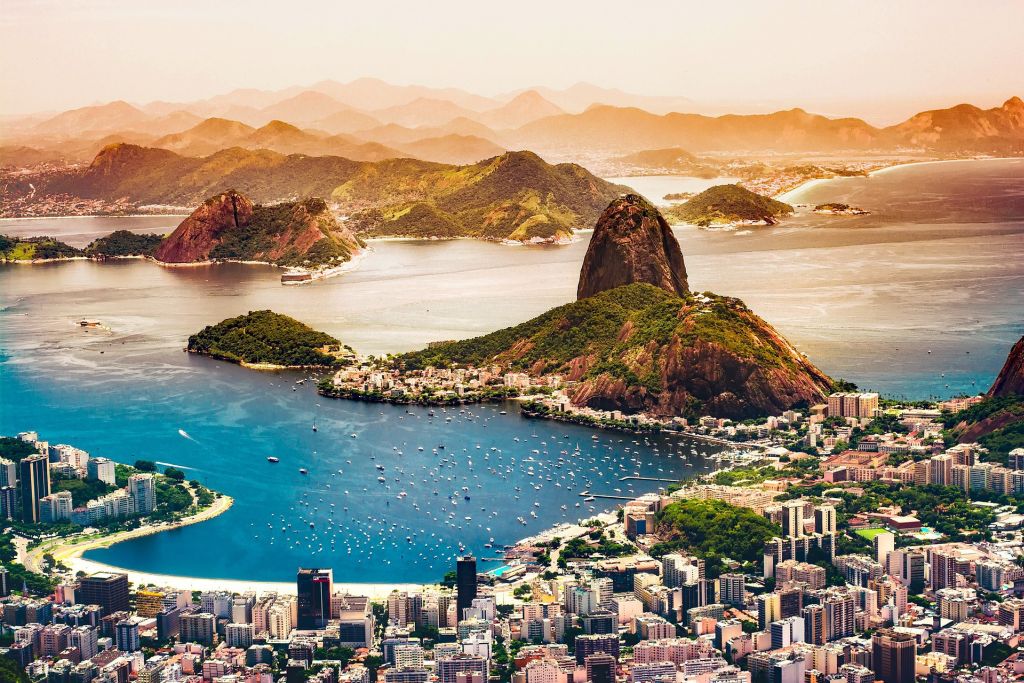
Rio de Janeiro Brazil
© Pixabay/David Mark

Foreign corporations cautious about investing in Latin America

Foreign investors have held back in the latest infrastructure tenders in Brazil. The political uncertainty and the mixed growth expectations in the region are the reason – this currently affects almost all countries.

by Alexander Busch, Latin America correspondent for Handelsblatt and Neue Zürcher Zeitung


The Brazilian government celebrated the Congonhas airport tender as a success last week. Spanish airport operator Aena was awarded the contract with double the minimum bid. Congonhas in São Paulo is Brazil’s second busiest airport and one of the most important in Latin America.

Nevertheless, the auction performed below expectations: Aena was the only interested company. All other potential competitors did not participate. In recent years, Zurich Airport, Fraport from Germany and Vinci from France had repeatedly stated that they were interested in expanding their existing portfolio in Brazil.

The restrained interest of foreign companies in investing is also evident in neighboring countries: Argentina, Chile, Peru or Colombia are also recording declining investments by foreign corporations.

There are different local reasons for this – but some trends can be identified. For example, in a survey of ten Latin American economies, the Brazilian Instituto Brasileiro de Economia da Fundação Getulio Vargas (FGV Ibre) found that sentiment about the economic outlook for the coming months has deteriorated massively. At present, growth prospects are worse than market participants saw them in the midst of the global financial crisis in 2009.

In fact, most investment banks expect the Latin American economy to stagnate in 2023. Inflationary pressures will persist. As a result, the cost of investment is rising. At the same time, central banks are raising interest rates, which is restricting consumption.

But there are also political reasons that are currently deterring investors from investing in Latin America. This applies to countries such as Argentina, which are in the midst of severe crises. There, it is unclear whether the government will still manage to govern until the end of the legislative period. At the same time, it massively controls capital movements, so that investors cannot estimate how and when they will be able to withdraw their capital or receive dividends.

In Chile, on the other hand, mining companies in particular have put their investments on hold. They want to know what framework conditions will allow them to invest in the future. This is because the new constitution, which will be voted on September 4, provides for significant restrictions on concessions and tax increases. However, these have yet to be implemented in any case by simple legislation. According to the mining association, investments worth $30 billion are currently blocked.

In Brazil, on the other hand, investors are waiting to see whether there will be a change in the October elections. Brazil’s bad reputation, especially in Europe, because of the environmental and Amazon policies of the current government of President Jair Bolsonaro is discouraging investors from making a major commitment.

The last infrastructure tenders for trunk roads in 2021 already showed that new investors are shying away from coming to Brazil at present. Only companies that have already invested in Brazil are expanding their involvement.

Plane
© Unsplash/Lukas Souza

The course for the future of democracies in South America is currently being set

In Colombia, a historic turning point is currently taking place with the change of president. In Chile, the draft constitution will be voted on in a few weeks. Brazil will hold its elections in October. These are all decisive events for the future of democracies in South America.

by Alexander Busch, Latin America correspondent for Handelsblatt and Neue Zürcher Zeitung


South America is in the midst of a political epochal change. This is currently particularly true of Brazil, Chile and Colombia. With 284 million people, around two-thirds of South Americans live there.

A new political era began in Colombia last week when Gustavo Petro took office. He is Colombia’s first left-wing president after many years of conservative governments. The experienced politician will have to prove that he can pacify the divided, violent country.

Colombia is one of the countries in the region with huge problems – from income concentration to drug mafias, from corruption to lack of security. But it is also one of the countries in South America with enormous economic potential, should Petro succeed in reducing tensions and bringing peace to the country.

In Chile, the population votes on the new draft constitution on September 4. The social reforms in the new charter meet the demands of the majority of Chileans. The economy is concerned about increasing state influence. If Chileans reject the draft, there could again be violent protests.

Even if Chileans approve the draft, the decisive factor will be whether the government of President Gabriel Boric succeeds in reducing the frustrations of both conservative and left-wing opponents in implementing the new constitution.

If he succeeds, then the experiment with a new constitution should be a model for many states in Latin America where people are demanding more rights and influence. If the peaceful constitutional reform in Chile fails, it will be a bad omen for democracy in South America.

But there is also a lot at stake for Chile as a business location: The Andean country is one of the countries in the region that has experienced an unprecedented economic boom over three decades. If the government can continue the constitutional process with a high level of acceptance among the population, Chile will continue to benefit from its top position as a supplier of raw materials to the world.

Finally, in Brazil, Brazilians will vote in general elections in October for, among other things, the next president: Right-wing populist Jair Bolsonaro wants to stay in office for another four years and is in second place in the election preferences. Currently, left-wing ex-president Luiz Inácio Lula da Silva is leading in the polls.

President Bolsonaro considers the electronic voting system unreliable and attacks the Supreme Court. Ex-President Lula, in turn, served time in prison for corruption. The verdict was subsequently declared invalid for formal reasons. In Brazil, too, the pressure on democracy and the rule of law has risen sharply for the first time since the end of the dictatorship in 1985.

The next government must succeed in restoring business confidence in what is by far the most important economy on the continent. In Brazil, too, stable policies combined with reforms could trigger a growth boom in a short time.

In short, 2022 will be a key year for the political and economic future of South America.

Bogota
© Pixabay/German Rojas

Mercosur is orienting itself towards Asia

The South American economic community Mercosur has concluded a free trade agreement with Singapore and Uruguay is seeking a free trade zone with China. However, the member states are not in agreement.

by Alexander Busch, Latin America correspondent for Handelsblatt and Neue Zürcher Zeitung


After four years of negotiations, Mercosur wanted to celebrate the conclusion of negotiations with Singapore on a free trade area last week at its 60th presidential summit. The city-state is to become a kind of outpost of the South American member states of Mercosur in the Far East. Companies from Singapore have invested in infrastructure (airports, shipyards) and basic industry in South America.

But the celebration was cancelled: At the meeting in Asunción, the host Paraguay had every effort to mediate between the different interests of the members.

This was easiest for Brazilian President Jair Bolsonaro. He did not even show up for the meeting – the first time in the history of the group, which was founded in 1991 and consists of Argentina, Brazil, Paraguay and Uruguay. Bolsonaro offered no explanation for his absence. But his absence was no real surprise either: Since the beginning of his term in office in 2019, the Brazilian president has made it clear on several occasions that he thinks little of the economic community.

Uruguay, for example, intends to stick to its plan to conclude a free trade agreement with China before the end of the year. The smallest country in the EU has been pursuing this goal for some time.

In the past, the large countries Argentina and Brazil were able to convince the much smaller Uruguay time and again not to open up to China. But now Uruguay desperately wants the agreement with China in order to benefit from lower import prices and investment from the Far East.

The larger states in the zone fear competition from the Far East: They have their own industries and want to protect their markets. It remains open how Mercosur will continue as an economic community if China gains free access to Uruguay.

The rapprochement with China poses an additional problem for the economic community, because Paraguay is traditionally one of the few remaining countries in the region that continues to maintain official diplomatic relations only with Taiwan rather than with China.

Nevertheless, Mercosur’s new opening momentum toward Asia is likely to continue: Mercosur is negotiating with South Korea. These negotiations are currently stagnating, as are those with Canada. But this could change quickly if new governments in South America want to expand the bloc’s trade relations.

This is because Mercosur’s 2019 agreements with the EU and EFTA – the free trade organization of Iceland, Liechtenstein, Norway and Switzerland – are stuck. This is mainly because the Europeans reject an agreement with Brazil under President Bolsonaro because of his environmental and Amazon policies.

A group of EU parliamentarians has just been to Brazil. It declared at the end of the trip that it wanted to increase the pressure on Brazil because of the misguided environmental policy.

In the medium term, Mercosur will probably have no alternative but to open up to the Far East.

Singapore
© Pixabay/Jason Goh