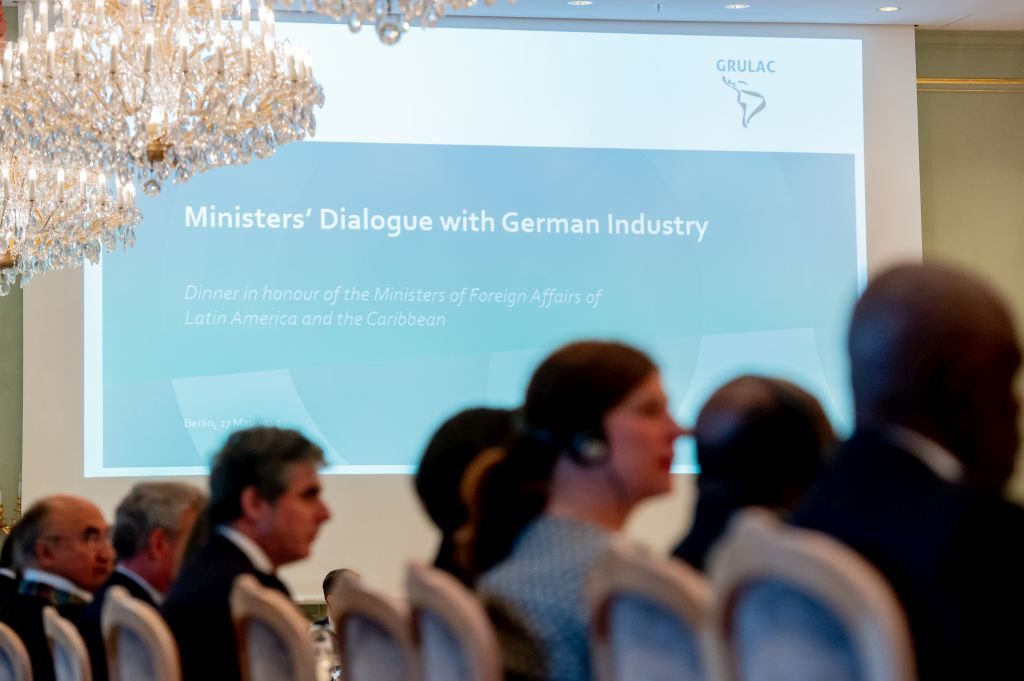
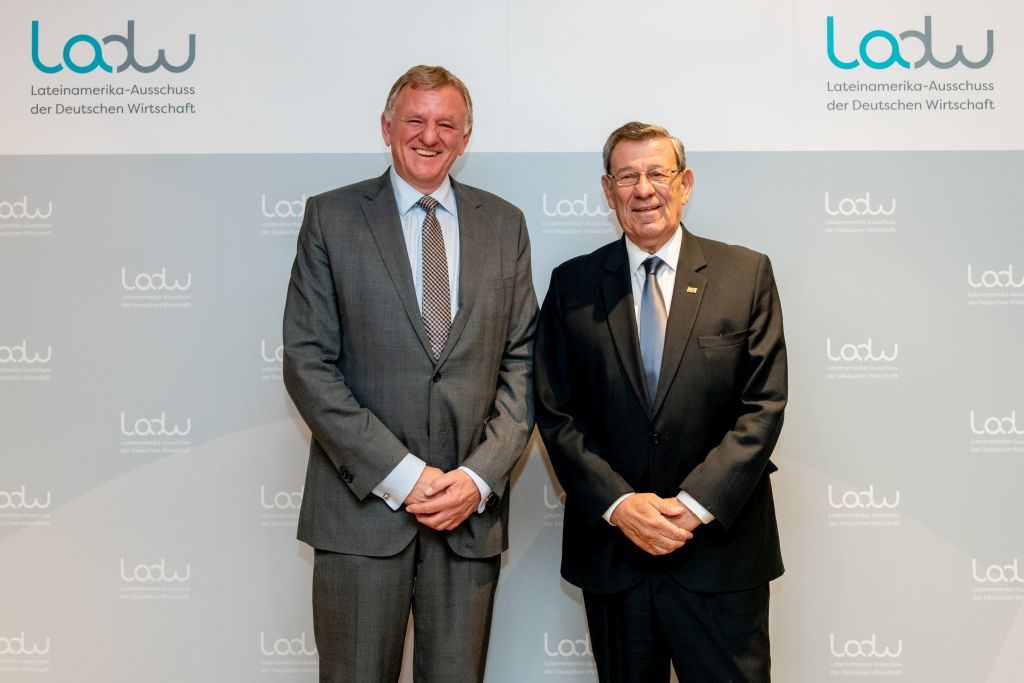
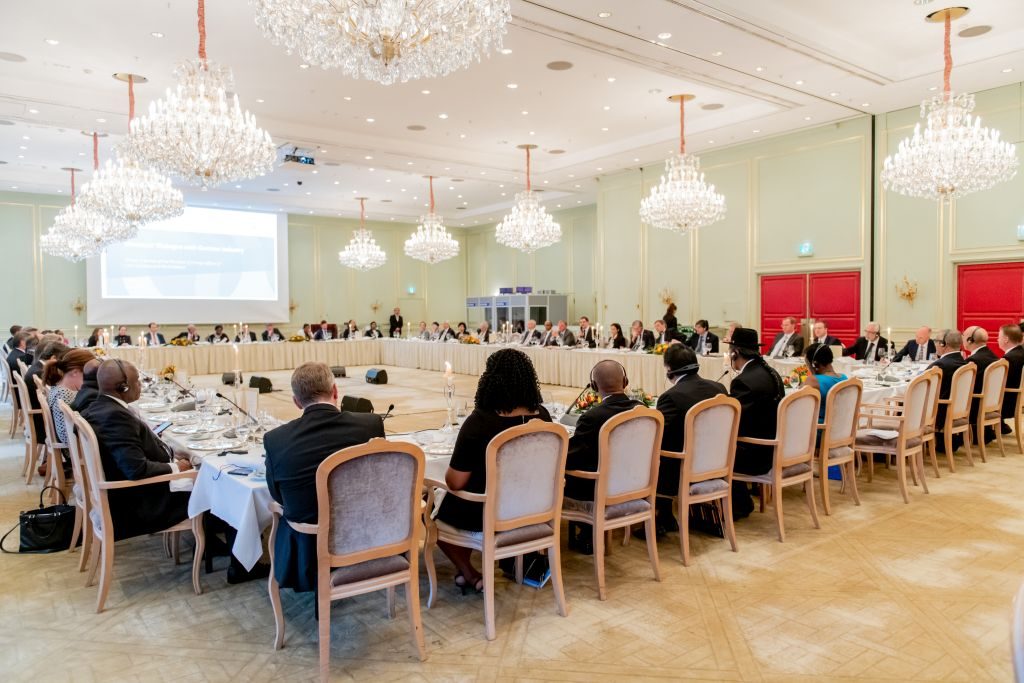
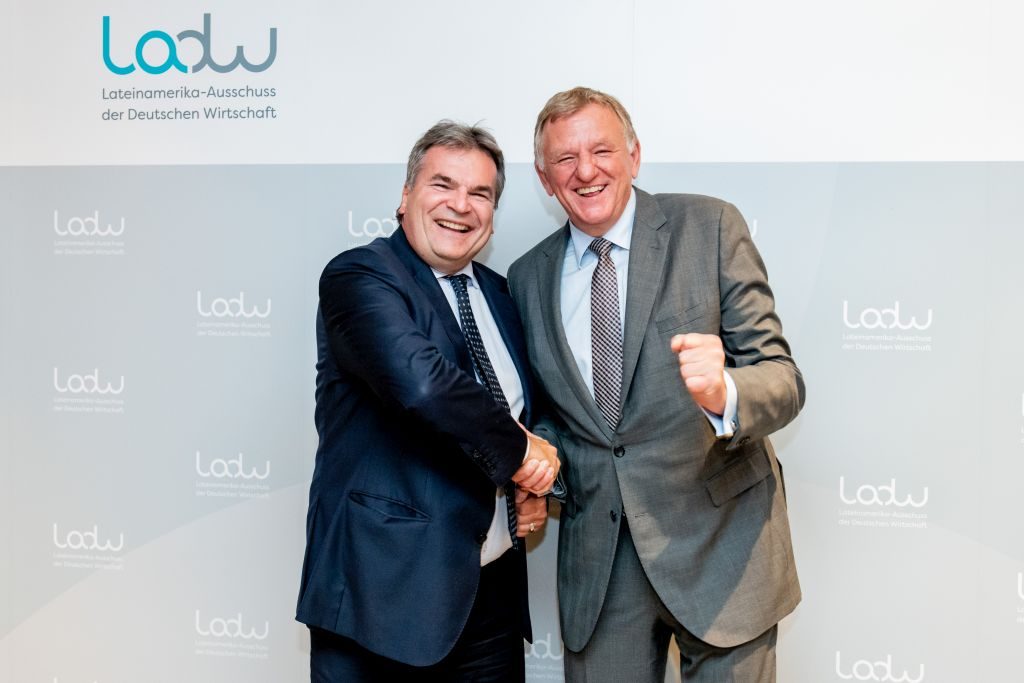
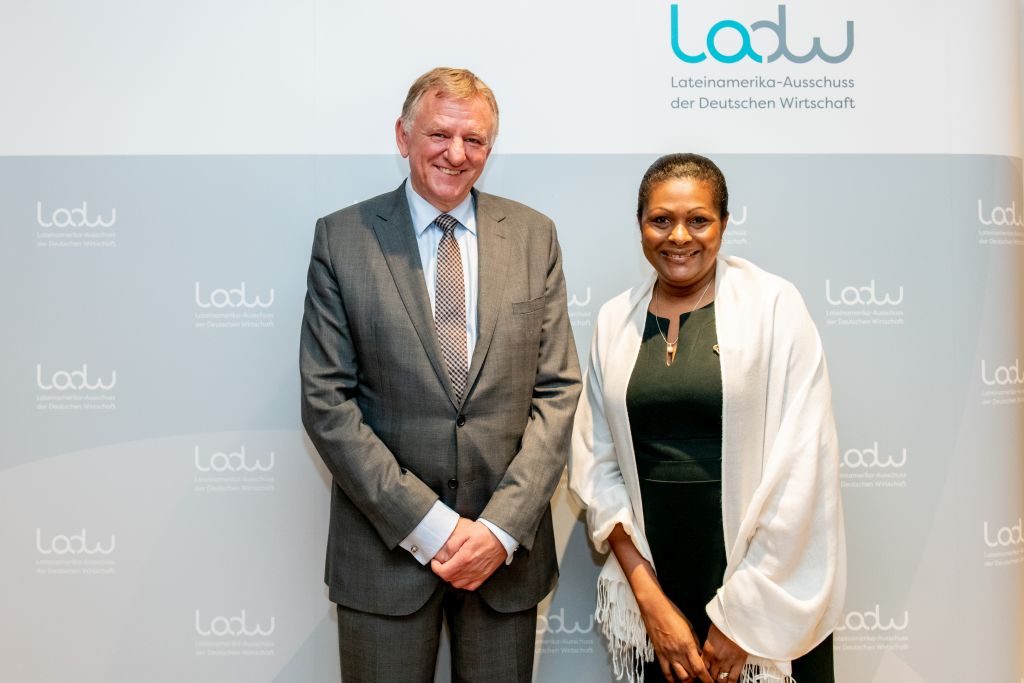
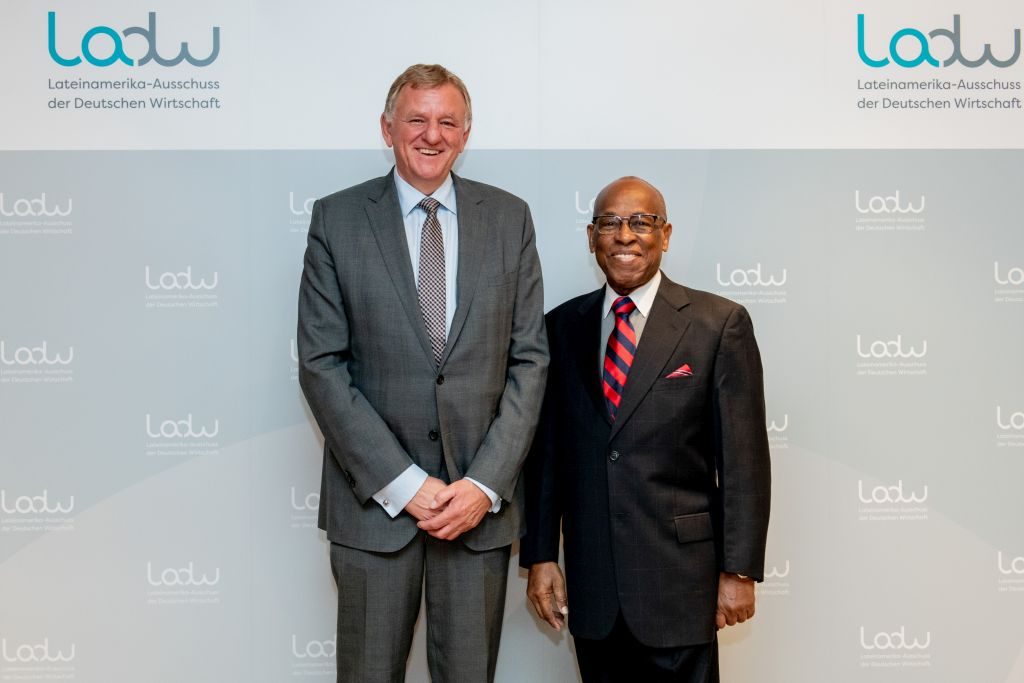
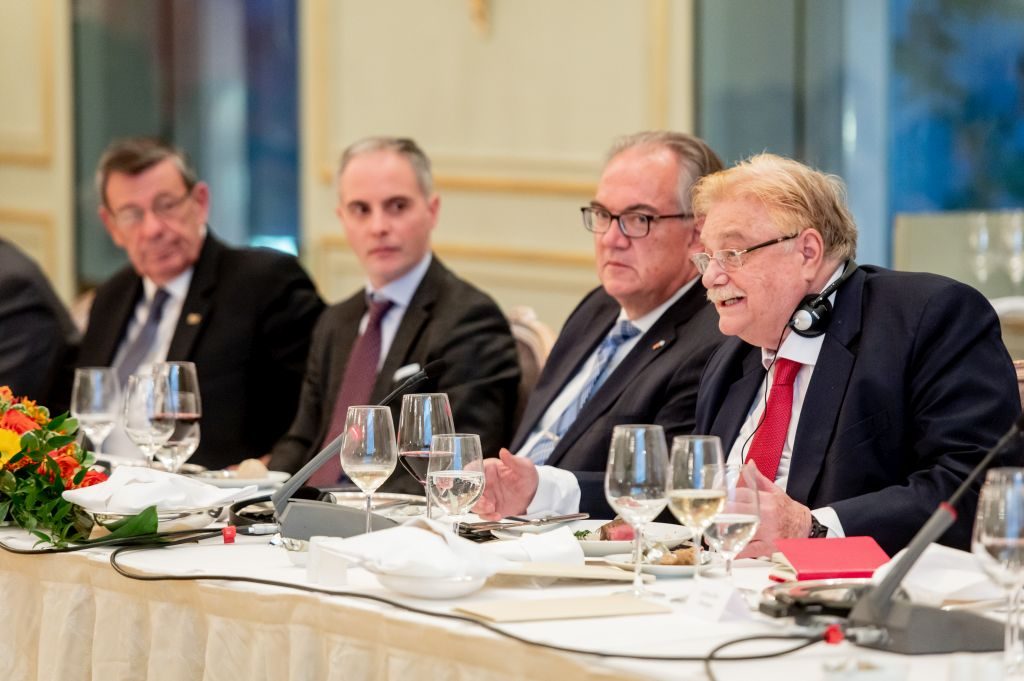
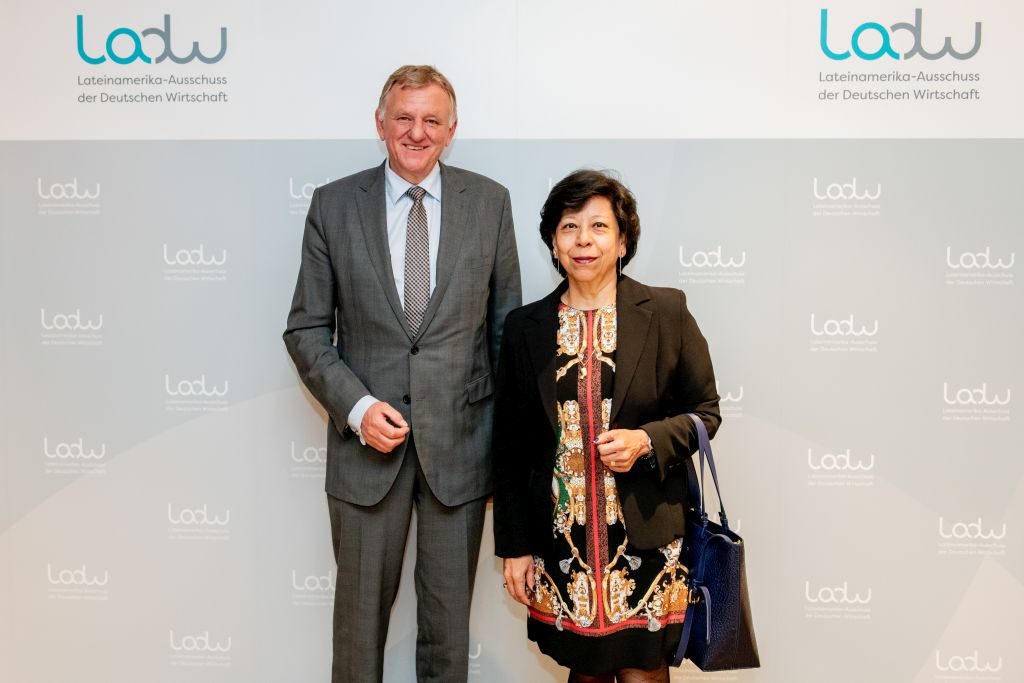
Ministers from Latin America and the Caribbean meeting the LADW

Ministers' Dialogue with German Industry
Uruguay's Minister of Foreign Affairs Rodolfo Nin Novoa
Hotel Adlon
Hotel Adlon
Cornelius Baur Managing Partner Germany McKinsey
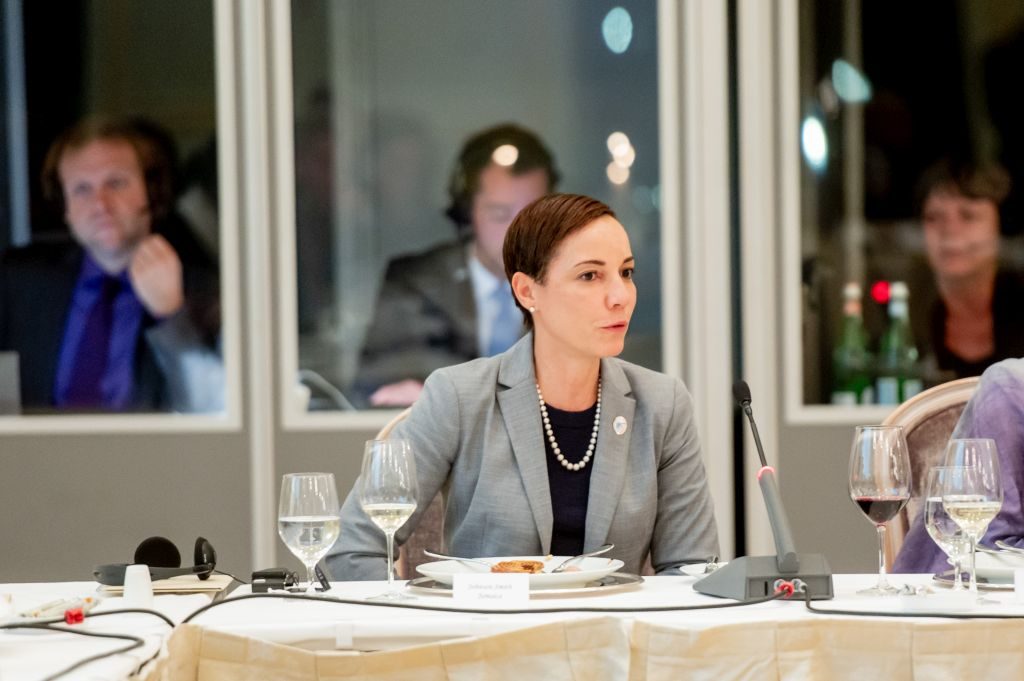
Jamaica's Minister of Foreign Affairs Kamina Johnson Smith
Barbado's Minister of Foreign Affairs Jerome Walcott
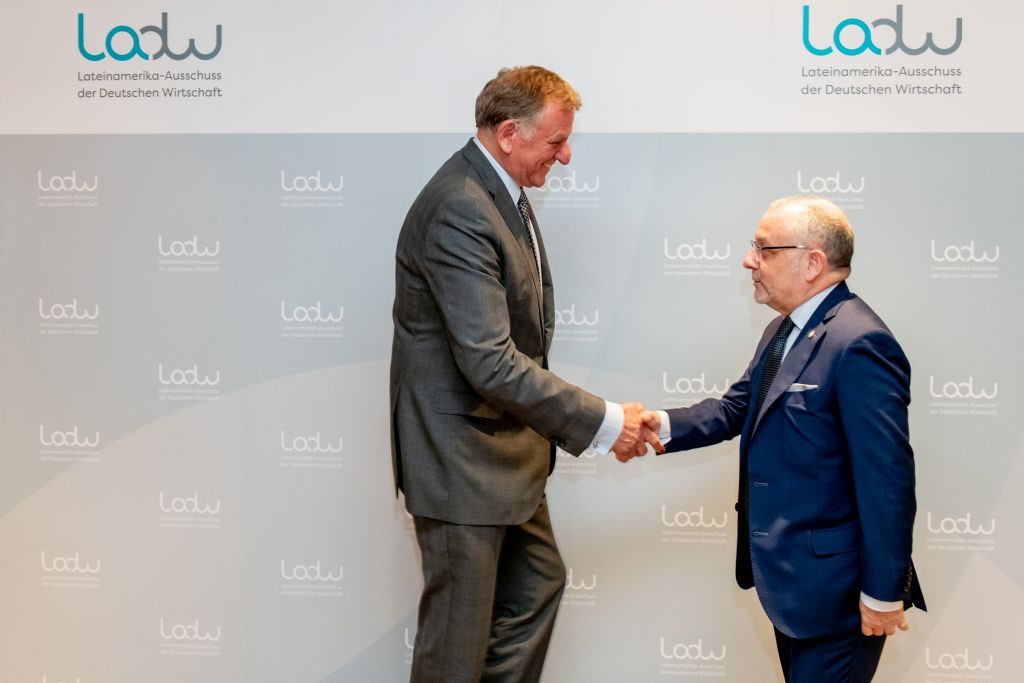
Argentina's Minister for Foreign Affairs Jorge Faurie
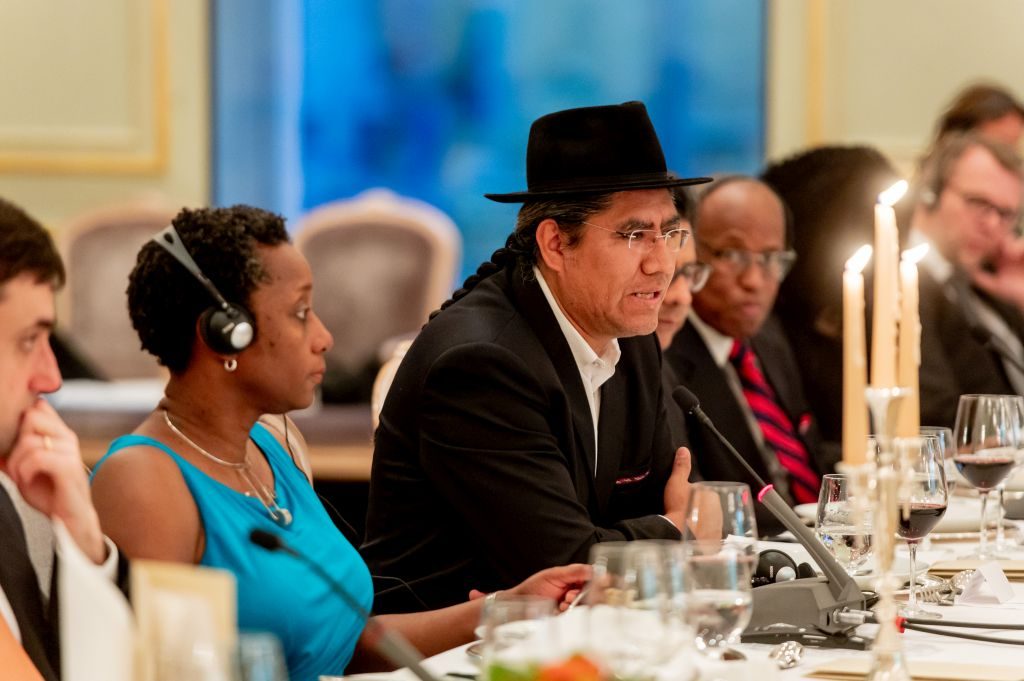
Bolivia's Minister of Foreign Affairs Diego Pary Rodríguez
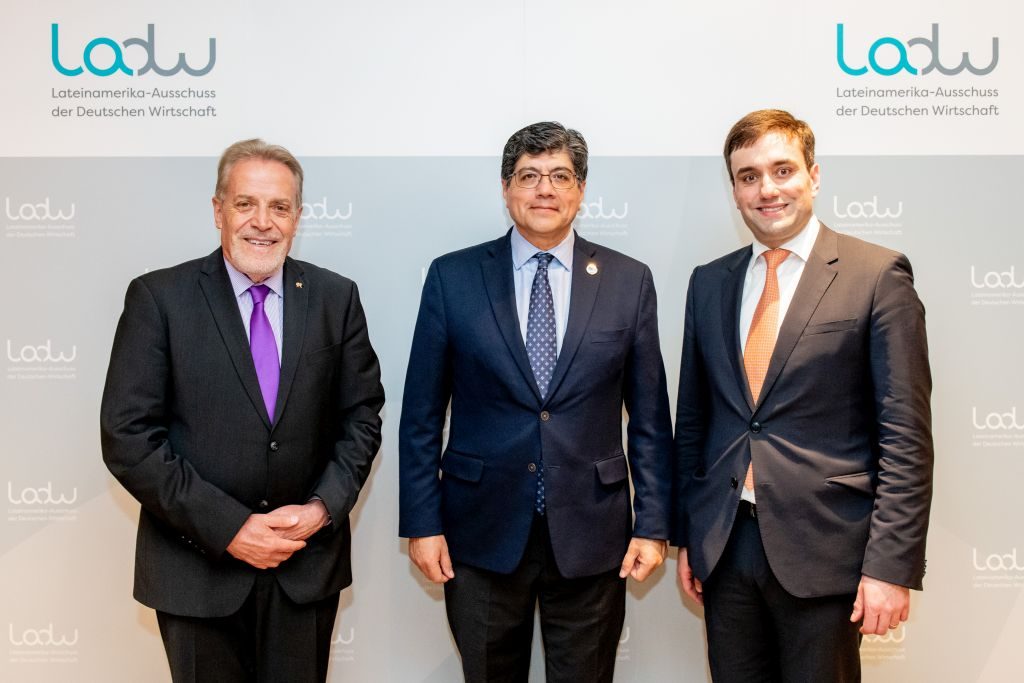
Ecuador's Minister of Foreign Affairs José Valencia Amores
Ecuador's Minister of Foreign Affairs José Valencia Amores (center)
Federal Vice-Minister of Finance Wolfgang Schmidt
Minister of Foreign Affairs of the Bahamas Darren A. Henfield
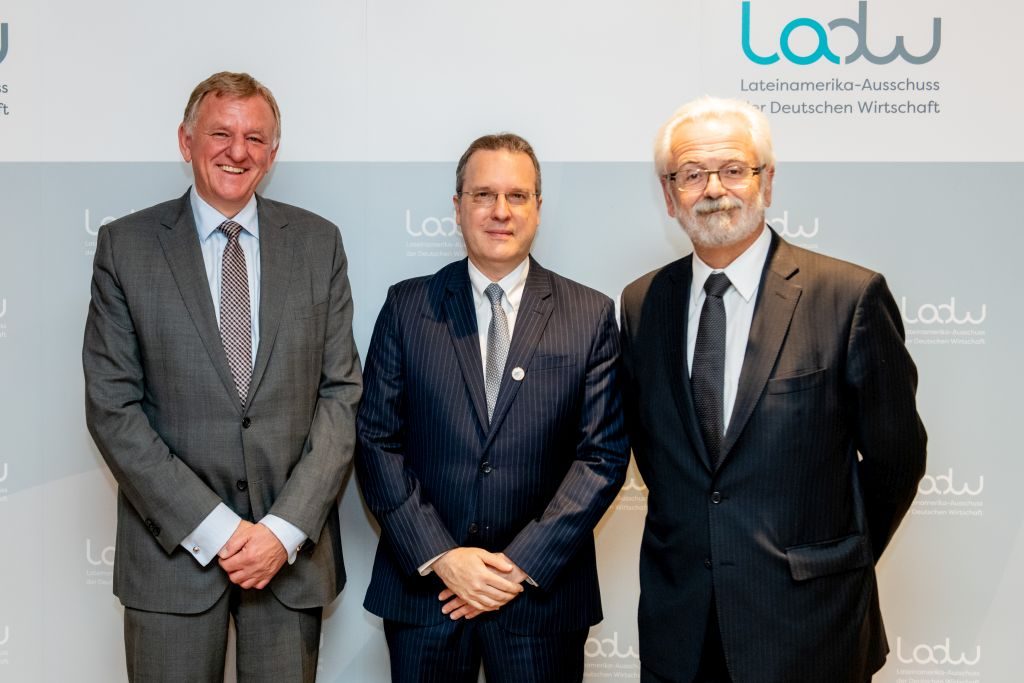
Brazil's Vice-Minister of Foreign Affairs Nóbrega and Ambassador Jaguaribe
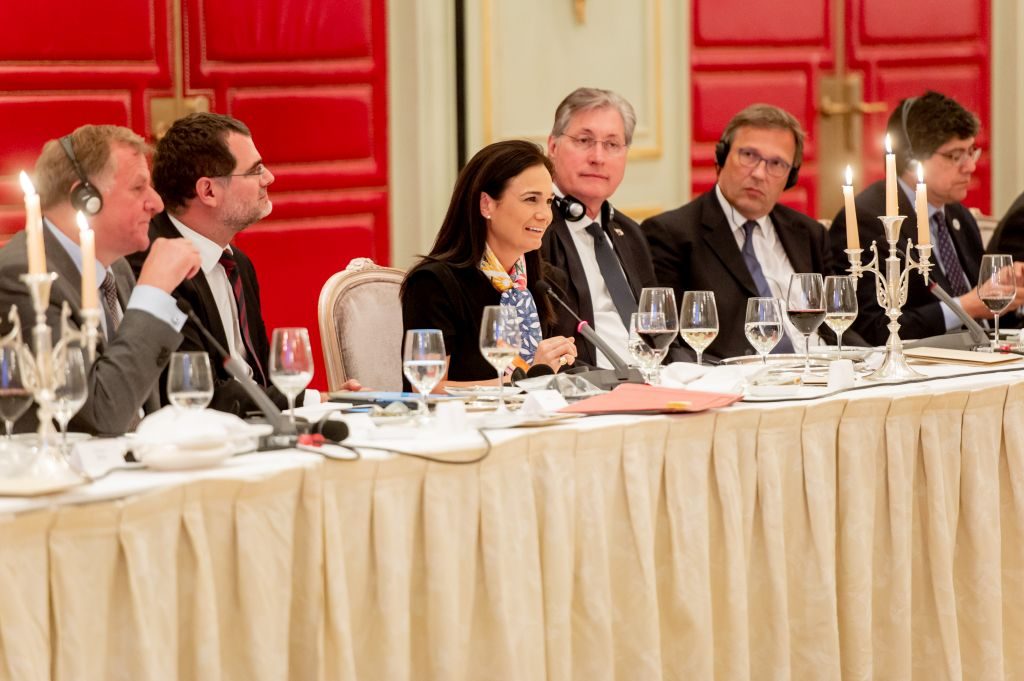
Panama's Vice-President Isabel Saint Malo
Minister of Foreign Affairs of St. Lucia Sarah Flood-Beaubrun
Suriname's Minister of Foreign Affairs Yldiz Pollack-Beighle
Deputy Prime Minister St Vincent and the Grenadines Louis Straker
Nicaragua's Minister for National Policies Paul Oquist Kelley
Nicaragua's Minister for National Policies Paul Oquist Kelley (right)
Vice-Minister of Foreign Affairs of Colombia Luz Stella Jara Portilla

© Christian Kruppa

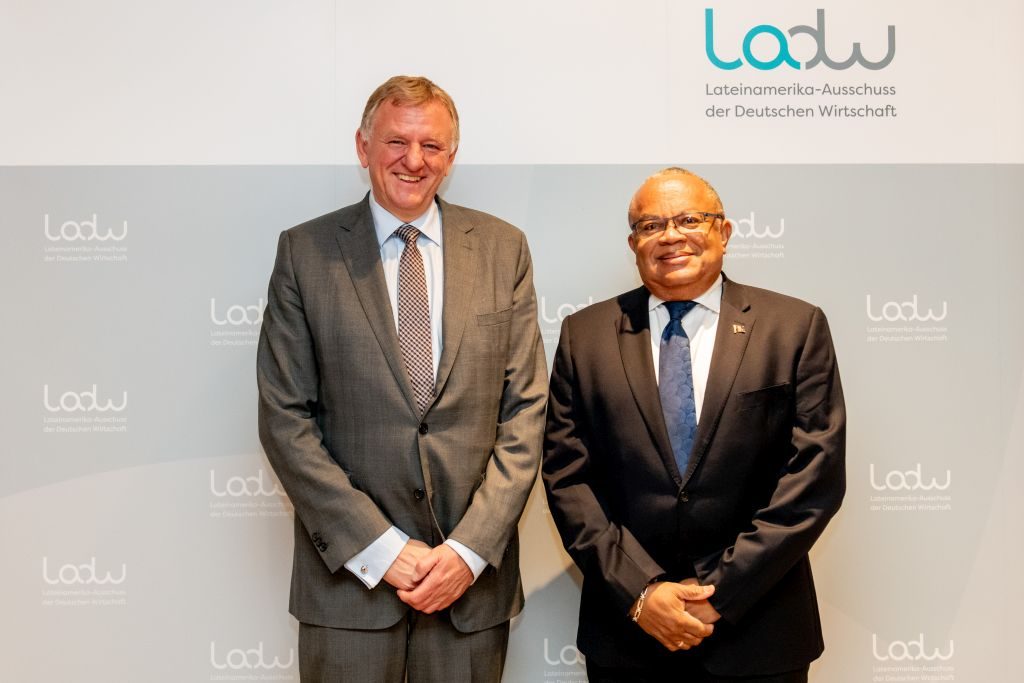
Guests of the LADW were the Foreign Ministers from Latin America, who travelled to Berlin for the Latin America-Caribbean Conference of Federal Foreign Minister Heiko Maas on 28 and 29 May 2019, as well as the ambassadors of the region in Berlin and selected representatives of German politics. During a dinner at the Hotel Adlon, a preview of McKinsey’s “CEO Agenda for Economic Cooperation with Latin America” for the LADW was presented and provided an opportunity for intensive discussion.

More willingness to compromise on EU-Mercosur agreement

In a joint letter to Chancellor Merkel, Brazilian President Temer, EU Commissioner Malmström and Mercosur negotiator Csukasi, the LADW, the Federation of German Industries (BDI) and the Brazilian Federation of Industries (CNI) have advocated greater speed and willingness to compromise in the free trade agreement negotiations between the EU and Mercosur.

“The European Union and Mercosur member states have a unique opportunity to reach an agreement that will set a course for prosperous future economic relations,” according to said document. For these three organisations, current developments are threatening the entire system of the World Trade Organisation (WTO). In the light of this, the treaty is of even greater strategic significance.

The letter specifically details that: “Both sides are called upon to compromise on the few remaining points of contention, such as transitional periods in the reduction of customs duties on certain EU industrial goods, import quotas for Mercosur agricultural products, and protected appellations of origin. Individual interests must not stand in the way of the conclusion of a balanced agreement and the far-reaching benefits that this treaty could offer to the peoples and economy of both parties.”

German industry emphatically supports such an agreement. According to the Commission, the EU is Mercosur’s largest trading partner and foreign investor. An agreement between two of the five largest economic powers in the world would be a sign of open, rule-based trade, particularly in times of rising protectionism. The dismantling of tariff and non-tariff trade barriers would give the economic area that is home to some eight hundred million people the growth-impetus that both sides so urgently require. The savings for EU exporters alone from the abolition of tariffs are estimated at four billion euros per annum.


Further Information

EU Commission overview of the negotiations

Facts and figures on the agreement

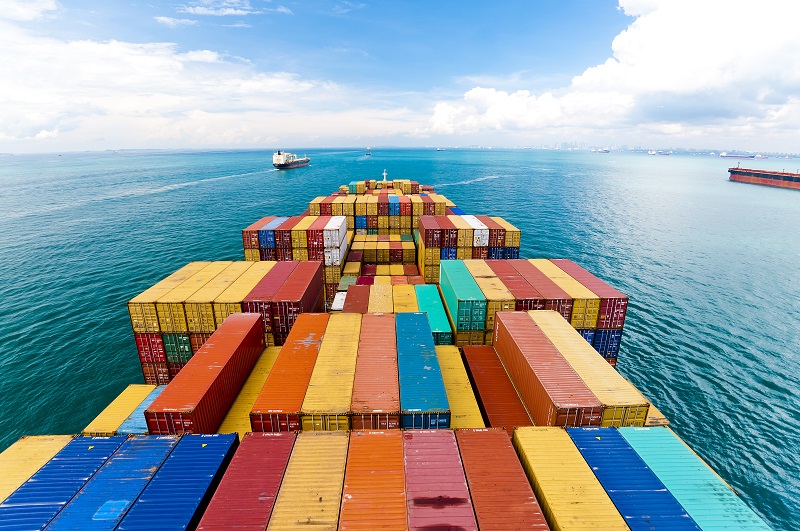
Cargo ship
© fotolia.de 82796060 donvictori_lf

A new phase of cooperation with Brazil

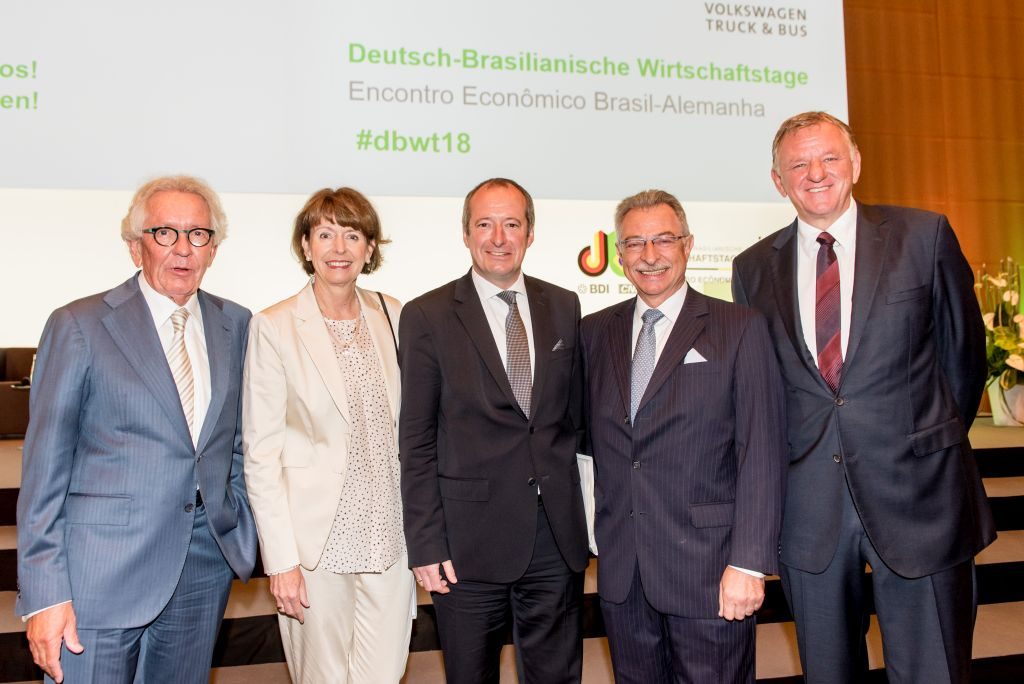
“A stable Brazil remains indispensable for us,” said Andreas Renschler, Chairman of the LADW, member of the Group Board of Management of Volkswagen AG and CEO of TRATON AG, from the Economic Policy Panel of this year’s German-Brazilian Economic Meeting in Cologne, before continuing to remark that the country is not only home to 1500 companies with a German background and over 20 billion euros in direct investments in local value chains, but that Brazil also offers a solid platform for the development of products and technologies, it being a place where innovation-orientation meets legal security.

Over 500 representatives from business and politics from both countries came to Cologne in June 2018. An important focus of the conference, organised by the BDI and its Brazilian partner-association CNI, was the great opportunities afforded by the digital transformation of Brazil in the expansion of bilateral relations. Opportunities for cooperation in the areas of health management, sustainable urban concepts, energy and infrastructure were closely discussed in various forums. A separate forum and over 100 matchmaking conversations targeted the promotion of cooperation between small-to-medium-sized companies.

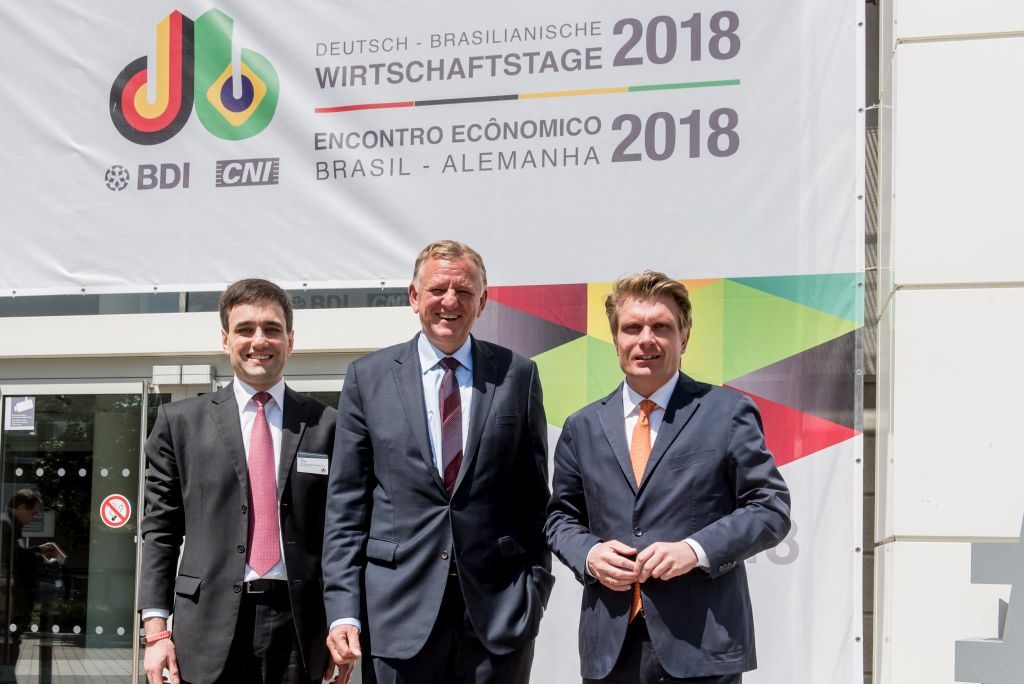
In the Joint Economic Commission where Andreas Renschler and Thomas Bareiß, State Secretary in the Federal Ministry for Economic Affairs and Energy, are the heads of delegation for the German side, the onus was on expanding cooperation in the fields of infrastructure and digitisation. The two governments also intend to launch bilateral digital dialogue at a political level. The exchange on the matter of double taxation agreements is to be revived.

The next German-Brazilian Economic Meeting will be held in September 2019 in Natal in the Brazilian state of Rio Grande do Norte.

German-Brazilian Economic Meeting Cologne 2018
© BDI, Christian Kruppa
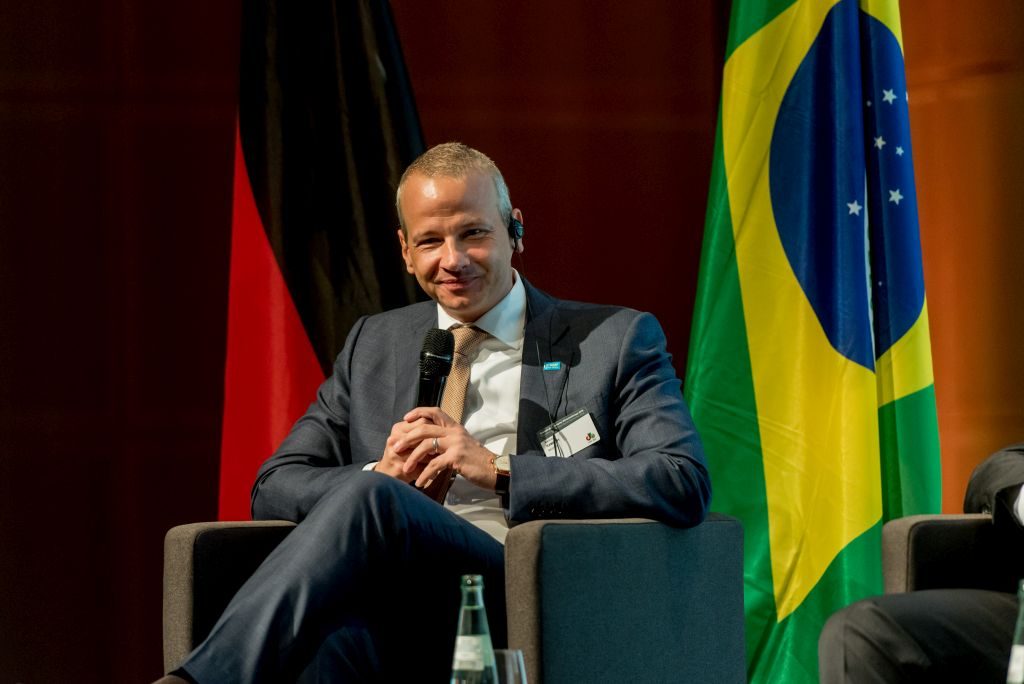
Dr. Markus Kamieth, BASF SE
© BDI, Christian Kruppa
Parliamentary Secretary of State Bareiß
© BDI, Christian Kruppa