

2023 – the year geopolitics came to South America

The region is increasingly being drawn into the disputes of the world powers and local conflicts are threatening to become geopolitically charged.

by Alexander Busch, Latin America correspondent for Handelsblatt and Neue Zürcher Zeitung


At the beginning of this year, the dominant view in South American politics was that the major geopolitical disputes had little influence here. Ukraine-Russia, China-USA – all of this was taking place so far away that these conflicts could hardly have any impact in the region. On the contrary, there was a faint hope that South America could be the winner of the crisis.

The world suddenly needed more raw materials and energy from there. This applied to food and oil as well as ores such as lithium or copper. South America seemed to be the region that could fill in for shortfalls and changes on the global market: For the threatened harvests in Ukraine, the Russian oil subject to sanctions and for the technologies needed for the energy transition, which required raw materials.

What’s more, there were even hopes in South America that the economies of these countries could benefit from new investments by foreign companies. Keyword: friend- or nearshoring. This means that multinationals around the world could withdraw their factories from China and relocate them to other regions.

But things turned out differently: there is still no sign of nearshoring in South America – it may be different in Mexico or Central America. But the multinationals are actually holding back on investments here.

The region did indeed benefit at times from rising prices for agricultural products, energy and industrial raw materials, but the effect has since fizzled out.

However, the idea that global tensions would only reach South America in a filtered form proved to be wrong.

One example of this was the inauguration of President Javier Milei in Buenos Aires. An unusual scene occurred there: Hungarian President Victor Orbán and Volodymyr Zelenskyy from Ukraine suddenly found themselves face to face and engaged in an intense dispute. It had little to do with Argentina or South America.

Conflicts are also simmering in their own neighborhood, as is now the case between Venezuela and Guyana. These regional disputes threaten to become geopolitically charged.

Because in the Caribbean, the USA is on Guyana’s side and Russia is supporting Venezuela. Putin has armed the Caribbean country militarily. China is also pulling strings in the background, as it has close political and economic ties with both countries. Venezuelan ruler Maduro seems to have taken Putin’s approach to Ukraine as a blueprint.

Now everyone is looking to Brazil as a regional power: can President Luiz Inácio Lula da Silva resolve the conflict on his doorstep? Brazil is facing its biggest foreign policy problem for years. President Lula rightly says: “What we really don’t need in our region is a war.”

In fact, it has long been an advantage of South America that there are hardly any regional conflicts. Although public safety is low due to the high crime rate, there have been no wars between nations for a long time, apart from the brief conflict between Peru and Ecuador almost 30 years ago.

This is currently changing: it seems as if geopolitics has suddenly come to South America. The region is increasingly being drawn into the conflicts of the major powers and is no longer the distant continent in global politics as it used to be.
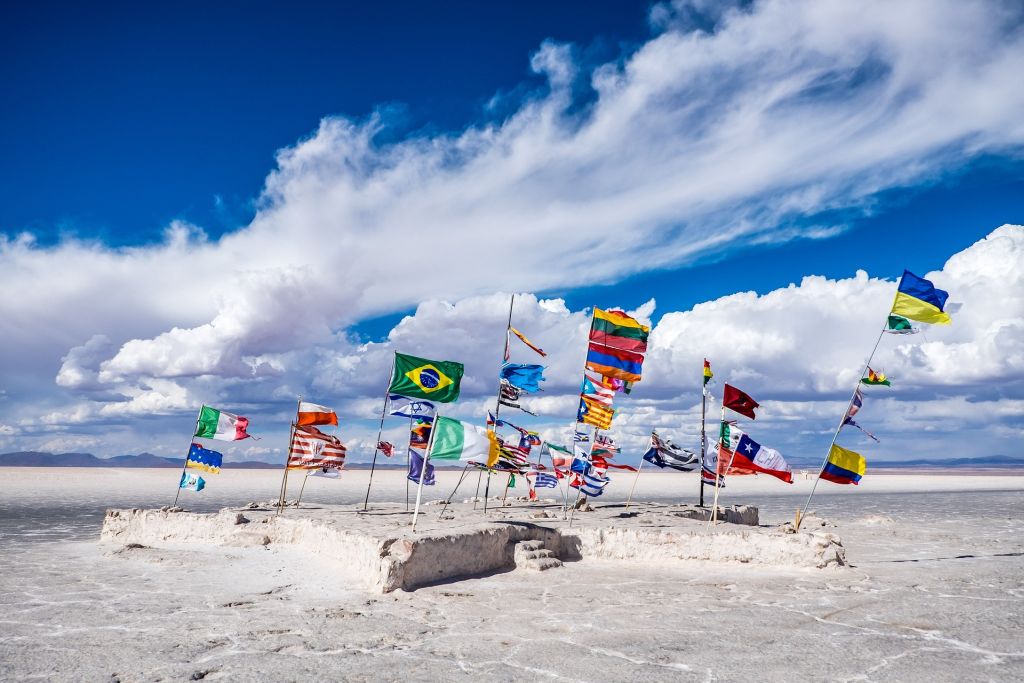

bolivia_flags
© Pixabay/Maik

Are the EU and Mercosur in the final sprint towards an agreement?

It is likely to be the last attempt to save the treaty between the EU and South America. Brazilian President Luiz Inácio Lula da Silva in particular is working hard to achieve a result. Will the EU go along?

by Alexander Busch, Latin America correspondent for Handelsblatt and Neue Zürcher Zeitung


Brazilian President Lula had not traveled abroad for two months following his hip operation. But now he has started a furious tour which – with a little luck and skill – could end with a crowning finale. Hopes are high in Brazil that, following his state visits to Dubai and Berlin, Lula will be able to announce the agreement on the world’s largest free trade zone with the other South American presidents at the Mercosur meeting in Rio de Janeiro on December 7.

The timing of Lula’s agenda is perfect: in Dubai, Lula will appear at the climate conference as a global climate protector. The presidents of the USA and China are not attending. This should give the Brazilian president more attention. With 2,400 participants, the Brazilian delegation is the largest at the conference.

Lula will announce there that since he took office in January of this year, deforestation in the Amazon region has fallen by almost 50 percent by October. This is a great success – and will take the wind out of the sails of opponents of the Mercosur agreement in the EU. In Dubai, Lula also wants to meet with EU Commission President Ursula von der Leyen in order to remove the last obstacles to the agreement.

Lula will then appear in Berlin from December 4 for the German-Brazilian government consultations with his most important ministers. Two dozen bilateral agreements are to be signed.

Brazil is the only country in North and South America with which Germany holds intergovernmental consultations. The first – and last – time they took place was in 2015. Berlin wants to intensify cooperation again with the Lula government. Lula will also discuss future cooperation between the EU and Mercosur with the Federal Chancellor.

The agreement could then be announced at the Mercosur summit in Rio de Janeiro on December 7. It is important to note that Argentina’s designated foreign minister has just declared in Brasília that the government under President Javier Milei, which will take office on December 10, supports the EU-Mercosur agreement.

Now or never – the chances of the agreement being negotiated and concluded next year are slim.

Paraguay’s head of state Santiago Peña Palacios has already announced that Mercosur will not continue to negotiate with the EU under his presidency, which will begin in Rio. Uruguay’s President Luis Alberto Lacalle Pou declared last week during his state visit to Beijing that he wanted to negotiate a bilateral agreement with China and Mercosur. The argument: the EU is not making progress.

Mercosur diplomats have already made provisions in case the agreement with the EU fails at the last minute: Bolivia is to be accepted as a full member of Mercosur in Rio. At the same time, the South American economic community will conclude a free trade agreement with Singapore.

The summit could therefore be celebrated as a success – even without an agreement with the EU.

Competition
©Pixabay/Pexels

Latin America is becoming more important as an oil supplier for the global market

Within Latin America, the ratios between oil producers are shifting: Guyana, Brazil and Argentina will increase their production by 2030. Ecuador, Mexico and Colombia, on the other hand, will lose importance – as will Venezuela.

by Alexander Busch, Latin America correspondent for Handelsblatt and Neue Zürcher Zeitung


Latin America has the second largest oil and gas reserves in the world after the Middle East. However, the majority of the around eight million barrels per day (bpd) produced by these countries are consumed in the region.

But that could change – if you look at the forecasts of the International Energy Agency (IEA). According to these forecasts, Latin America’s oil production will grow to between ten and eleven million bpd by 2030 – depending on whether or not the countries comply with the climate emissions pledged under the Paris Agreement. This means that a quarter of the world’s growing oil production will come from Latin America.

The balance within the region is shifting – as it has in recent years. Brazil currently produces around 35% of the oil in Latin America. Mexico follows with 25 percent. Colombia, Venezuela and Argentina each contribute less than ten percent to regional production.

However, traditional oil-producing countries such as Mexico, Colombia and Ecuador will continue to reduce their oil production. In Colombia and Ecuador, the governments do not want to issue any new production licenses for climate policy reasons. In Ecuador, the population has just rejected oil production in the rainforest in a referendum. In Colombia, President Gustavo Petro wants to reduce oil and gas production.

In Mexico, on the other hand, President Andrés Manuel López Obrador is firmly committed to oil production rather than renewable energies. However, the state-owned company Pemex is the most indebted oil company in the world and is not in a position to develop the deep-sea deposits in the Caribbean.

Brazil, on the other hand, has concentrated fully on developing the so-called Pré-Sal deposits following the discovery of deep-sea deposits off Rio de Janeiro in 2007. The state-owned company Petrobras and private oil companies have increased production from 40,000 barrels to 2.2 million bpd. Brazil is now the number 8 oil-producing country in the world.

Further large deposits are suspected in the north of Brazil, near the mouth of the Amazon. A political tug-of-war is currently taking place in Brazil between environmentalists and the oil industry as to whether these deposits should be developed or not.

The oil industry is confident that large oil reserves exist north of the equator. Not far from there, the oil company Exxon discovered the world’s largest new oil reserves in Guyana in 2015. Production in the Caribbean is expanding rapidly. By 2030, production off the coast of Guyana can be increased from the current 300,000 bpd to 1.2 million bpd.

Argentina could be the third country in Latin America to increase its production by 2030. Traditional oil reserves are drying up there. However, the country has huge shale oil reserves that private companies want to develop.

While Brazil and Guyana could each produce an additional one million bpd by 2030, the IEA estimates the increase for Argentina at half a million bpd. Oil production in Brazil and Guyana also releases significantly less carbon dioxide than the global average.

By contrast, the once most important oil country in the region, OPEC founding member Venezuela, will not be able to significantly increase its production in the foreseeable future, the energy agency expects.

There, the corrupt management of the state oil company and the lack of investment are preventing the country from regaining its former leading role as a South American oil power: The state-owned company produced three million barrels 25 years ago, when President Hugo Chávez came to power and used the company to further his political goals. Production has still not recovered from this. Venezuela currently still produces around 700,000 bpd.

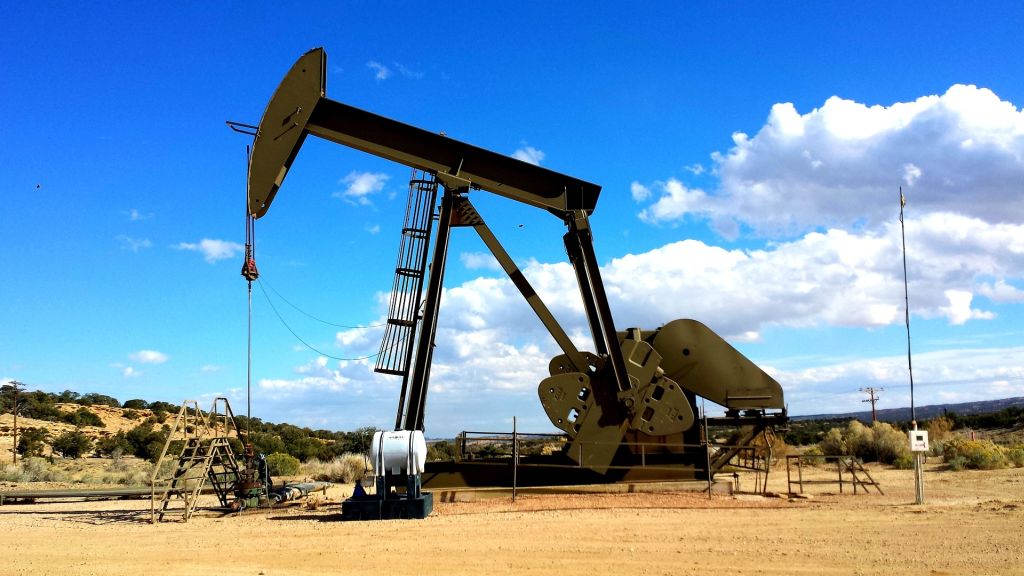
Oil pump
© Pixabay/J. R. Perry

The outlook for Argentina’s economy is better than it has been for a long time

The country could benefit more than almost any other from the changes in geopolitics and the energy transition. But this requires a clear reform course.

by Alexander Busch, Latin America correspondent for Handelsblatt and Neue Zürcher Zeitung


The outcome of the election in Argentina is completely open: If Sergio Massa, the incumbent economy minister of the left-wing Peronist government, and the right-wing libertarian candidate Javier Milei run in the run-off elections on November 19, it is hard to say today who will govern the country for the next four years.

For the Economist magazine, the candidates who qualified in the first round of voting are the worst alternatives for Argentina, the worst of all possible outcomes. Because – according to the Economist – neither candidate seems capable of solving Argentina’s problems.

In view of the justified pessimism, it is easy to overlook the fact that the prospects for Argentina’s economy have rarely been as good as they are at present: the changes in geopolitics, the growing demand for agricultural products and metals for the energy transition, rising prices for oil and gas, which Argentina has in large quantities – these are all reasons why the prospects for Argentina’s economy could brighten at present.

In detail:

The first 500 km section of the gas pipeline from the Vaca Muerta oil and shale gas reservoir has just been inaugurated. Argentina is thus on its way to becoming self-sufficient in fossil fuels. Given the high prices for liquid gas, this is important for the balance of trade.

Farmers are facing a good harvest of soy, maize and wheat – after this year’s disastrous drought. The Buenos Aires Grain Exchange is expecting a 138% increase in the soybean harvest. For maize, it could be 62 percent more. This normalization of agricultural exports will also be important for the inflow of dollars to Argentina.

Investments in the mining industry are continuing. Lithium and copper concessions are particularly sought after by foreign companies. Companies from China, Australia, Canada and South Korea are leading the way.

Foreign direct investment in Argentina has tripled from USD 4.7 billion (2020) to USD 15.1 billion – despite the country’s severe crisis. A fifth of the investment comes from mining and oil companies.

Argentina’s start-ups are also among the most successful in Latin America: online trading platforms such as MercadoLibre and OLX have been around for some time. Buenos Aires offers a creative environment for digital companies. The founders are forced to think beyond the national market.

Conclusion: The next government will get some tailwind from the economy. Hopefully it will take the opportunity to implement the necessary reforms.

Buenos_Aires_Port
© Pixabay/Daniel Nebreda

Venezuela’s oil industry returns to the world market

The country’s government has promised the opposition clean elections for 2024. In return, the U.S. wants to gradually ease its sanctions. It is uncertain whether President Maduro will keep his side of the bargain.

by Alexander Busch, Latin America correspondent for Handelsblatt and Neue Zürcher Zeitung


Finally, some good news from Venezuela: The U.S. Treasury Department announced on Thursday that the previously banned trade in oil from the Venezuelan state oil company PDVSA is now permitted again.

Foreign companies are allowed to act as suppliers to the state-owned company in Venezuela’s oil sector without having to fear sanctions from the U.S. authorities. Financial transactions, such as trading in Venezuelan government bonds, are also permitted, as is the insurance of tankers carrying Venezuelan oil. Trading in Venezuelan gold is also permitted with immediate effect.

In a first step, these permits will initially be valid until mid-April 2024. This is the first time the U.S. administration has softened the sanctions against Venezuela, which have been in place for four years. In 2019, U.S. President Donald Trump had imposed tough sanctions on Venezuela because the regime of Nicolás Maduro had previously apparently rigged elections.

But now, after several rounds of secret negotiations with the U.S., the government in Caracas has pledged to hold clean elections in the second half of 2024. It pledged to do so in a joint declaration signed by the opposition and government representatives in Barbados on Tuesday of this week.

The government wants to allow foreign election observers. Whether it will actually allow opposition candidates to participate in the elections remains to be seen. The judiciary has stripped the main opposition leaders of their right to stand for election. The U.S. government has made clear that it expects progress on allowing opposition candidates to run by November. The sanctions relief can be lifted at any time.

The background to the rapprochement between the USA and Venezuela is the high oil prices. For strategic reasons, the USA wants the country with the world’s largest oil and gas reserves to supply the world market again. This will only be possible slowly because Venezuela has not invested in the oil industry for many years. Venezuela could soon export an additional 200,000 barrels a day.

The agreement is beneficial for all sides: Venezuela’s economy will get a boost in growth and investment from the lifted sanctions. For the first time, private companies will be able to invest legally in the Caribbean country again.

This is also interesting for German companies, which have traditionally been strong in Venezuela, but had withdrawn in recent years due to the country’s severe crisis.

The government, in turn, will be able to sell oil without the usual discount. Until now, customers such as China and India have demanded a discount on Venezuelan oil of up to 40 percent on the world market price. Traders and importers are thus compensating themselves for the risk of being caught in the crosshairs of the US judiciary.

Finally, the opposition would have the chance for fair elections, which it has largely been denied in the ten years Maduro has now been in power. It is to be hoped that the easing of sanctions can trigger a political momentum in addition to an economic one.

Because so far Maduro has never really shown any willingness to reach out to the opposition. It is hard to imagine that the autocrat would allow free elections with fair starting chances for all if there were a risk that he would be voted out of office.

Whether the regime is actually willing to give the opposition more room to maneuver will be seen next Sunday. The latter has called for nationwide primaries. The government had previously eliminated the electoral court by tactically withdrawing its judges because of the lack of a quorum.

The opposition faces the logistical challenge of organizing primaries in a country the size of France and Germany combined, without being able to use public buildings or otherwise count on government support. Given the constant intimidation and threats from the security forces, it takes a great deal of personal courage to participate in the electoral act.

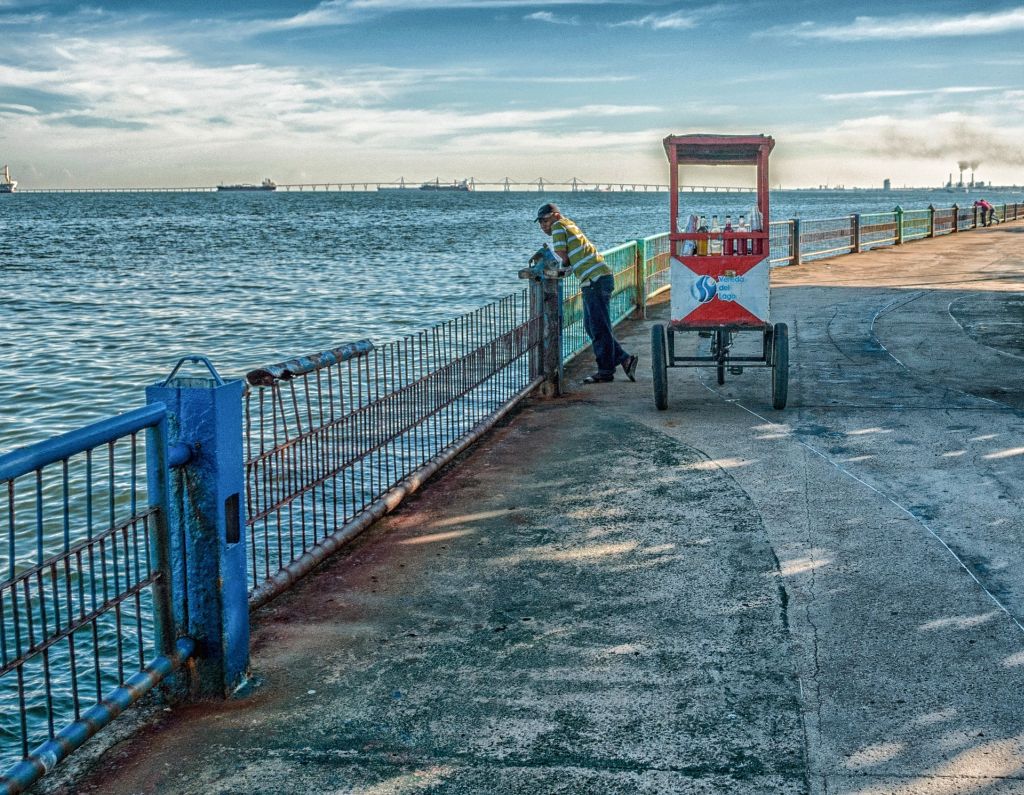
Maracaibo
© Pixabay/12019

Mercosur is at odds

One against all: In Mercosur, the states are at odds with Argentina over water rights on the Río Paraná. With the upcoming elections in the country, it could become even more difficult to find a common position in South America.

by Alexander Busch, Latin America correspondent for Handelsblatt and Neue Zürcher Zeitung


A dispute over tolls on the Río Paraná shows how fragile the political and economic harmony in Mercosur is – at a time when the South American economic community actually wants to show unity in negotiations with the EU.

For example, since January 1, Argentina has imposed a freight charge of $1.47 per ton on all cargo ships passing through the Río Paraná at the level of the river town of Rosário.

Initially, it was mainly the governments of the landlocked countries of Bolivia and Paraguay that protested against the unilaterally imposed toll on the most important waterway in the center of South America. In the meantime, Brazil and Uruguay are also against the river toll.

But despite massive opposition from neighboring states and several crisis meetings in Asunción and Buenos Aires, no agreement is in sight.

As a countermeasure, Paraguay has now stopped supplying electricity to Argentina via the Yacyretá hydropower plant, which is jointly operated on the Río Paraná. Since then, Argentina has been forced to import electricity from Brazil at a higher price.

Argentina justifies the unilaterally levied toll with dredging works, which it would carry out to keep the river navigable. But the government refuses to make the investment figures transparent.

It is unlikely that there will be any movement soon in the muddled situation: Argentina is experiencing a severe economic crisis, its foreign currency coffers are empty – and at the same time a new government will be elected on October 22. Dollar revenues are vital for the government to be able to pay for imports of medicines and electricity, for example.

Argentina does not have a good reputation in the smaller Mercosur countries Uruguay and Paraguay. Its governments are traditionally considered difficult partners there.

From 2007 to 2010, for example, Argentina had the most important bridge connection to Uruguay blocked – by environmental protection movements in protest against a cellulose factory in Uruguay.

Santiago Peña has been in office as president of Paraguay for six weeks. He has already made it clear that he will not resign himself to the role of junior partner in Mercosur alongside the much larger economies of Brazil and Argentina.

If no agreement with the EU is reached by December 6, when Paraguay takes over the Mercosur presidency, he would break off negotiations and start trying with new economic partners in Asia and the Middle East.

But until then, Mercosur could face new potential for conflict. Argentina’s favored presidential candidate Javier Milei thinks little of Mercosur. He would rather look for new trading partners worldwide, he said during the election campaign.

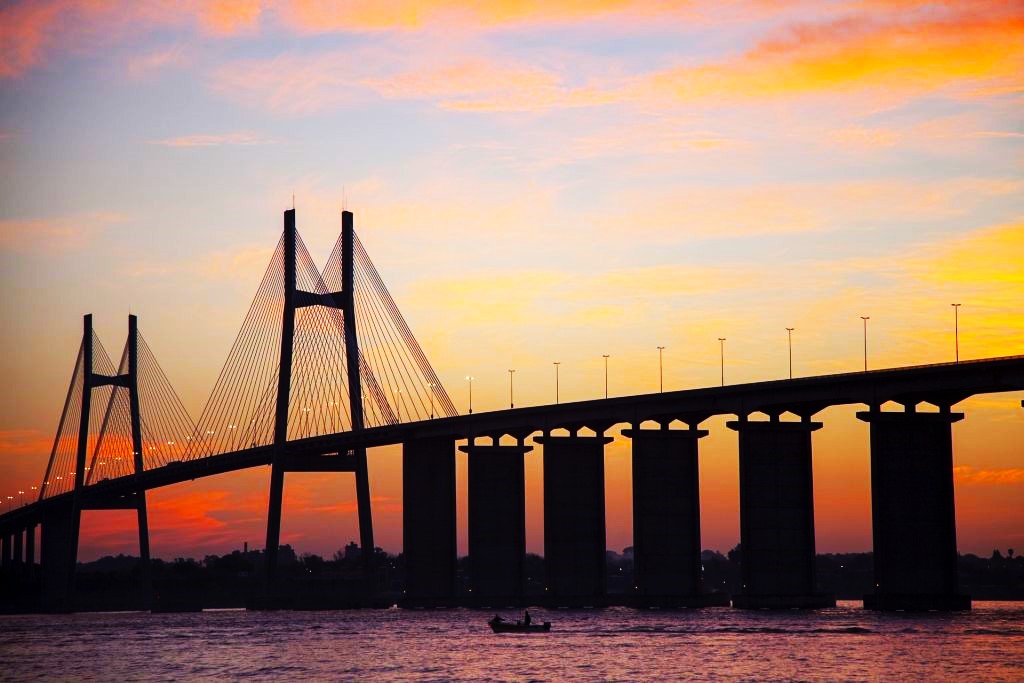
Rosario-Victoria-Bridge
© Pixabay/Elías Alarcón

“Latin America’s GDP is twice that of India….

…but with only a third of the population”. Megainvestor Marcelo Claure believes Latin America could be in for its best years in a long time. Above all, the largest economies will drag the region along with them.

by Alexander Busch, Latin America correspondent for Handelsblatt and Neue Zürcher Zeitung


The 52-year-old Marcelo Claure from Bolivia has a legendary reputation as an investor in Latin America. At the beginning of his career, he sold used cell phones from the U.S. to his home country. Later, he headed the legendary startup investment fund Softbank: alongside its founder Masayoshi Son, he was one of the world’s most powerful startup investors for years.

After parting ways last year, he has refocused on Latin America. On Harry Stebbing’s podcast recently, he explained why he thinks the continent’s future is so bright. They are illuminating insights.

Claure believes Latin America is being underestimated right now. “Latin America’s GDP is twice the size of India’s – but with one-third the population.”

For him, Latin America is so interesting as an investment location because there are more opportunities than capital, he said. “Everywhere else it’s the other way around: there’s more capital than investment opportunities – which drives up valuations.”

For example, a quarter of the world’s fintechs are located in Latin America. Brazil in particular has a highly developed financial market capable of handling complex financial transactions. The success of the online bank Nubank shows this.

Claure is confident about the future of the two most important markets in Latin America – Mexico and Brazil.

There are two reasons for this: “Nearshoring, or supply chain diversification, and the region’s rich raw material deposits form the basis for Latin America’s future economic stability and dynamism.”

Brazil, like Argentina, Chile and Peru, is benefiting from the global energy revolution. The region is the most important exporter of the ores and metals needed for e-mobility.

Mexico and Central America, in turn, would benefit above all from nearshoring and trigger a long-lasting growth spurt there. More and more corporations are relocating their production to Mexico. This gives them access to the large North American free trade zone USMCA.

What happens in Brazil and Mexico will determine the economic performance of the entire region: Together, the two economies account for around two-thirds of Latin America’s economic power and more than half of its population.

In a nutshell, it can be said that when these economies grow, they pull all the states in the entire region along with them. The reverse is not true.

But Claure also sees positive signs in chronic crisis states like Argentina, such as the skilled workforce there and the country’s potential in the technology sector. Some of the most successful former startups are now global corporations, such as the online retailer Mercado Libre or the software developer Globant.

For the Bolivian, Latin America is therefore facing its best decade in a long time. It is to be hoped that his previously proven instinct for investment will apply this time as well.

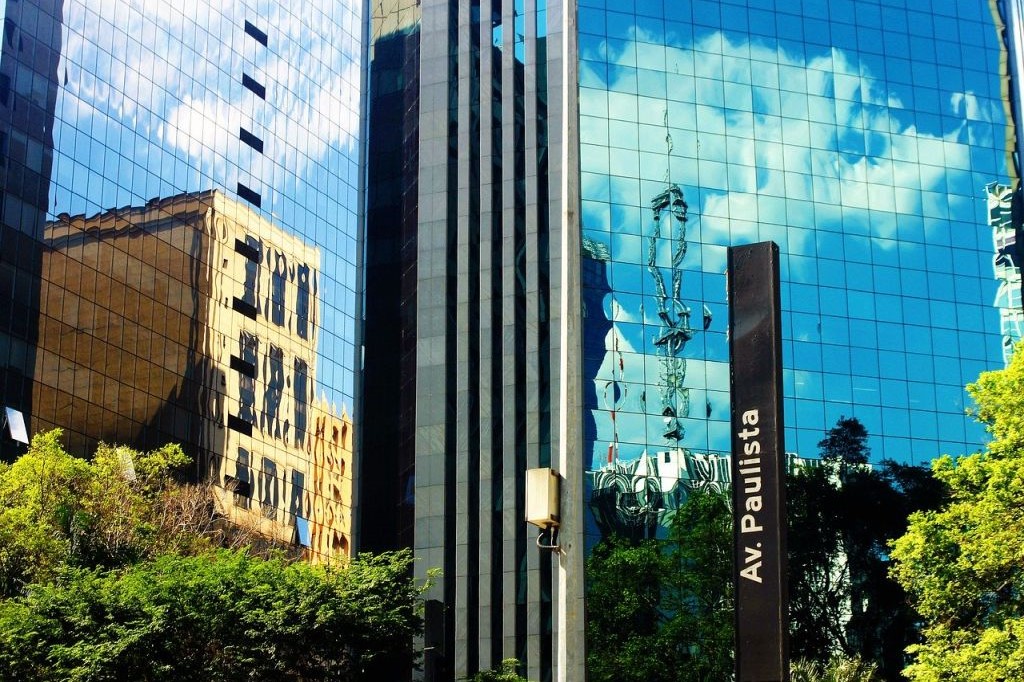
São Paulo
© Pixabay/Lteixeira

“China’s loss is not Mexico’s gain”

The country continues to rely on an investment boom due to the decoupling of the USA from China. The potential has only been partially exploited.

by Alexander Busch, Latin America correspondent for Handelsblatt and Neue Zürcher Zeitung


Mexico has overtaken China as the U.S.’s trading partner for the first time this year – the first time since 2014, when China took the top spot in the U.S. trade balance. The volume of trade between Mexico and the U.S. is impressive, with $263 billion in goods exchanged from January to April. By comparison, Brazil and the U.S. traded only ten percent of the value with each other in the same period, at $26 billion.

So it all looks like the recent predictions for nearshoring between the U.S. and Mexico will come to pass: After Donald Trump’s administration launched a trade war with China starting in 2019 and began to decouple from Asia’s largest economy, many economists expected Mexico in particular to benefit.

U.S. companies would locate their suppliers closer to them to reduce the risk of disruption to production chains. The Inter-American Development Bank (IDB) estimated last year that nearshoring in Latin America and the Caribbean could lead to $78 billion in additional goods and services exports annually in the short and medium term. Mexico should contribute the largest share of this.

This has partially come to pass. Like exports from Mexico to the U.S., foreign direct investment in Mexico has increased in order to upgrade the country as a supplier to the U.S.

Nevertheless, nearshoring as a whole remains below its potential. This is because Mexico’s exports to the USA have grown less than from countries such as Vietnam, India or Taiwan. At the same time, Mexican exports are concentrated mainly on industrial raw materials and foodstuffs, in addition to vehicles and parts.

Industrial products or machinery have been less prominent in Mexico’s export portfolio to the US. Oxford Economics puts it in a nutshell: “China’s loss is not Mexico’s gain”.

There are several reasons for this:

The government of President Andrés Manuel López Obrador is not business-friendly. The left-wing populist president is blocking investments in sustainable energy, and the state is hardly investing in other infrastructure either. But foreign companies in Mexico increasingly need energy that has been produced sustainably.

In addition, Mexico’s industry still functions primarily as a “maquiladora”: companies import parts from the USA, have them assembled in Mexico and export the finished products back to the USA. In the process, local value creation is low.

It only works with cheap labor. But labor is becoming more expensive in Mexico, too. In addition, companies need fewer and fewer simple workers. But Mexico also has a shortage of high-tech workers.

At the same time, local companies and the state are investing too little. Investment by foreign companies alone is not enough to advance Mexico’s industry as a whole.

Individual trailblazers like automaker Tesla, which is now investing in a $5 billion plant near Monterrey, or a manufacturer like BMW, which plans to produce cars with electric powertrains and batteries in Mexico, are important for Mexico’s strong automotive industry to remain competitive.

But they are not enough for Mexico to replace both China and other Asian producers as an industrial high-tech location. Oxford Economics analyzes: “The lack of domestic (public and private) investment prevents the country from taking full advantage of the nearshoring trend.”

Train Mexico
© Pixabay/jdblack

Good news from the Amazon – but how is the EU reacting now?

Brazil’s Amazon clearing is falling again for the first time. At the same time, President Lula wants to unite South America’s governments to save the rainforest. The region is taking responsibility for protecting the Amazon.

by Alexander Busch, Latin America correspondent for Handelsblatt and Neue Zürcher Zeitung


In the last few days there has been quite a bit of good news from the South American rainforest:

In Brazil, deforestation under President Luiz Inácio Lula da Silva has fallen by almost half in the first seven months of his term in office. The deforested area amounted to around 3,000 square kilometers, about as much as last in 2018. The restored state controls in particular are likely to have led to the decline in clearing in the Amazon.

At the same time, Lula held a summit of the Amazon states. There he met with representatives of the governments of Bolivia, Colombia, Ecuador, Guyana, Peru, Suriname and Venezuela to revive the Amazon Pact of 1978, which had fallen asleep.

Brazil automatically has the leading role in the initiative. Around 60 percent of the Amazon rainforest is located here, 13 percent in Peru, and ten percent in Colombia.

The negotiations were not easy: The countries were unable to agree on a deforestation freeze, which Brazil and Colombia are aiming for by 2030. This is problematic, because it is precisely in countries like Bolivia with far less rainforest that deforestation rates have skyrocketed. Last year, the country burned almost as much rainforest as the much larger Brazil.

It also remains open whether oil, gas or coal may be extracted from the rainforest in the future. Almost all countries do so. But Colombia – itself an important coal producer, but with oil sources that are drying up – wants to stop all exploration in order to avoid further greenhouse gas emissions.

The states were able to agree on increased coordination against increasing crime and organized crime in the Amazon region. A supra-regional scientific panel involving indigenous and other traditional Amazon forest dwellers has also now been established, modeled on the United Nations Climate Council. This is intended to provide scientific underpinning for government rainforest policy.

Despite the differing views on rainforest protection, the summit is a political success for South America and President Lula in particular. Because with his initiative, South America could contribute far more to rainforest protection than if Brazil or any country were to focus only on its share of the Amazon.

Lula has higher-flying plans. He doesn’t just want to act as South America’s spokesman on the Amazon. The Brazilian wants to convince other countries around the world that have rainforests and want to protect them to take joint action.

Lula is thus sending a strong signal to Europe. This applies above all to the negotiations on a free trade zone between the EU and Mercosur. To all those who have so far seen Brazil’s environmental policy as an obstacle to an agreement, Lula shows that South America has moved on the Amazon issue. Now it’s up to Europe to recognize that.

Amazon_rainforest
© Pixabay/TNeto

The EU and Latin America reconnect

The recent summit between the EU and Latin America ended with few concrete results. Nevertheless, the summit should not be underestimated: It served above all to take stock and update relations after almost eight years of speechlessness.

by Alexander Busch, Latin America correspondent for Handelsblatt and Neue Zürcher Zeitung


Nothing but expenses – one might think in view of the gigantic event that took place in Brussels on July 17 and 18. It was the third summit of the European Union and the Community of Latin American and Caribbean States (CELAC), the first of the EU member states and the 33 CELAC states in eight years. More than 50 heads of state met for two days – and little concrete came out of it.

But the governments on both sides of the Atlantic had prepared too little for this: Above all, many had hoped for the announcement of the agreement between the South American Mercosur and the EU.

Initially, Brazilian President Luiz Inácio Lula da Silva had stated that the treaty should be ready for signature by mid-year. But now the Brazilian government took two months to prepare a joint Mercosur negotiating offer in response to some important amendments proposed by the EU. Thus, there was no bid on the table in Brussels to negotiate either.

On the positive side, however, there appears to be continued confidence in both the EU and South America that the agreement will be reached this year after all. “I have rarely seen so much economic and political interest from the EU in Latin America,” said President Lula.

To be sure, the EU pledged $45 billion in infrastructure investments for Latin America. The EU wants to use this to implement its global gateway strategy in Latin America – the European response to China’s Silk Road initiative. The EU also wants to offer its partners capital for investment in infrastructure, as Beijing has been doing on a grand scale around the world for more than a decade. But so far, the EU has lacked flagship projects – especially in Latin America.

Chilean President Gabriel Boric scored a success in this context: The Andean country has now signed a declaration of intent with the EU for a future close partnership in sustainable raw material value chains.

This is of great importance for Europe: Chile is the world’s leading producer of the raw materials lithium and copper, which are important for the energy transition – and could soon become a supplier of green hydrogen.

But Chile could also benefit from the agreement: The EU not only wants to support the sustainable production of raw materials and purchase them from there. European companies will invest in the Andean country in order to increase the value-added share in the processing chain in South America. In the future, Chile could thus not only supply lithium, but possibly also produce batteries for e-cars.

But the summit also showed how difficult it is to build consensus in the regions themselves. For example, after initial hesitation, Latin American states wanted to agree to criticize Russia as an aggressor in Ukraine. But Nicaragua in particular – an ally of Russia in Central America – resisted, to the chagrin of many heads of state.

Conclusion: It will become clear in the coming months whether the establishment of contacts between Europe and Latin America in Brussels will lead to more intensive cooperation. The links between the regions have now been taken stock of and updated. Much more could hardly be expected after eight years of speechlessness.

Chile Atacama Desert
© Pixabay/Sebastian Basczyj